Dutch Guiana: The History and Evolution of Dutch Colonisation in South America
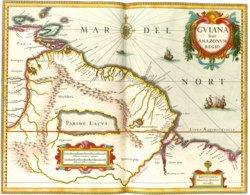
The story of Dutch colonisation in the Guianas is a complex narrative of trade, territorial disputes, and shifting alliances. Located along the coastal region between the Orinoco and Amazon rivers in South America, this area was once known to the Dutch as de Wilde Kust (the Wild Coast). While the Netherlands initially claimed vast stretches of this territory, the actual land they settled and controlled eventually became known as Dutch Guiana (Nederlands-Guiana).
Over the centuries, the region evolved from a series of fragmented trading posts into a structured colonial presence, eventually giving rise to the modern Republic of Suriname.
Key Facts
- Established: 1621, with the creation of the Dutch West India Company.
- Primary Capital: Paramaribo.
- Major Colonies: Suriname, Berbice, Essequibo, and Demerara.
- Key Transition: In 1814, Britain gained control of Berbice, Essequibo, and Demerara.
- Independence: Suriname gained independence from the Netherlands in 1975.
- Official Language: Dutch.
The Origins of Dutch Settlement
Dutch interest in the region began in the late 16th century. In 1598, a fleet of three Dutch ships recorded passing the "Surinamo" river. By 1599, the Flemish geographer Jodocus Hondius produced the first cartographic reference to the area based on these voyages. Early settlement began around 1581, primarily driven by colonists from the province of Zeeland.
These early pioneers established bartering posts and trading hubs near the Pomeroon, Essequibo, Berbice, and Suriname rivers. However, these early commercial establishments—often shared by French and English colonists—were frequently short-lived due to the prevalence of disease and attacks from indigenous populations.
Administrative Structure and Expansion
The formalization of Dutch control occurred in 1621 with the establishment of the Dutch West India Company (WIC), which was granted unsupervised control over South American colonies. Under the administration of explorer Abraham van Peere, who founded Berbice, the Dutch presence solidified.
It is important to note that "Dutch Guiana" was originally a geographical term rather than a single political entity. The region was managed by different bodies:
- Dutch West India Company: Controlled Essequibo and Demerara.
- Society of Berbice: Controlled Berbice.
- Society of Suriname: Controlled Suriname.
The Dutch also expanded their reach beyond these core areas. Between 1630 and 1654, they controlled northern Brazil, including the region known as Portuguese Guiana (modern-day Amapá). Additionally, they briefly held control of Cayenne (French Guiana) between 1660–1664 and 1676–1677.
Conflict and Territorial Shifts
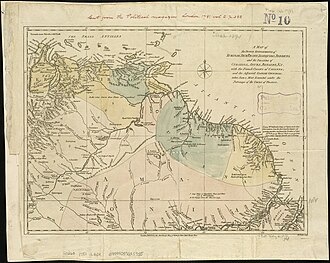
The ownership of these territories was frequently contested through a series of Anglo-Dutch Wars. A pivotal moment occurred following the Third Anglo-Dutch War, when England ceded the colony of Suriname to the Netherlands in exchange for New Amsterdam (modern-day New York City).
The geopolitical landscape shifted again during the Napoleonic Wars. Under the Batavian Republic, much of the region was occupied by the British. By 1814, the United Kingdom gained permanent control of the colonies west of the Courantyne River—Demerara, Berbice, and Essequibo. These were later united in 1831 to form British Guiana (modern-day Guyana).
The Five Guianas
Following the reorganization after 1815, the region was divided into five distinct areas based on the dominant colonial language:
| Colonial Name | Modern State/Region |
|---|---|
| Spanish Guayana | Venezuela |
| British Guiana | Guyana |
| Dutch Guiana | Suriname |
| French Guiana | French Guiana |
| Portuguese Guiana | Brazil |
Geography and Cultural Legacy
At its peak, Dutch Guiana encompassed much of the Guiana Shield, a highland region of South America. Its borders stretched from the Orinoco Delta in the northwest to the Marajó island in the Amazon River delta to the southeast.
The colonial era left a lasting imprint on the region's demographics. Through a history of colonisation, slavery, and immigration, a multicultural society emerged. This population includes Creoles, East Indians, Javanese, Amerindians, and Maroons (descendants of escaped slaves). This diversity is reflected in the linguistic landscape, where Dutch remains official, but Sranan Tongo serves as the lingua franca. The cultural blend is most evident in the region's music, such as kaseko, and its diverse cuisine.
Frequently Asked Questions
What was the difference between Dutch Guiana and Suriname?
Historically, Dutch Guiana was a broad geographical term encompassing all Dutch colonies in the region, including Berbice, Essequibo, and Demerara. After 1814, when the other colonies became British, the term was often used unofficially to refer specifically to the remaining colony of Suriname.
How did the Dutch acquire Suriname?
The Netherlands acquired Suriname from England following the Third Anglo-Dutch War, as part of a territorial exchange in which England received New Amsterdam.
Which organization managed the early Dutch colonies?
The colonies were managed by different entities: the Dutch West India Company (WIC) handled Essequibo and Demerara, while the Society of Berbice and the Society of Suriname managed their respective colonies.
When did the Dutch presence in the Guianas officially end?
The Dutch colonial presence officially ended in 1975 when Suriname gained its independence and became the Republic of Suriname.