Surinam: The History and Evolution of the Dutch Plantation Colony
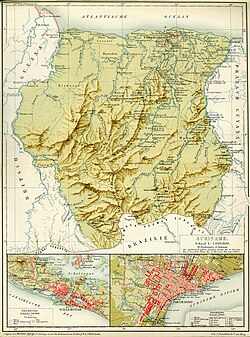
From 1667 to 1954, Surinam (also known as Dutch Guiana) served as a pivotal Dutch plantation colony in South America. Located in the Guianas region, it was bordered by the Dutch colony of Berbice to the west and the French colony of Cayenne to the east. Over nearly three centuries, the territory evolved from a captured English outpost into a complex society shaped by forced labor, diverse immigration, and the exploitation of vast natural resources.
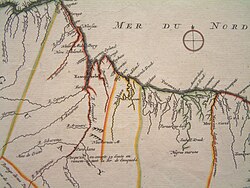
Key Facts
- Colonial Period: 1667 to 1954.
- Official Capital: Paramaribo.
- Primary Economy: Initially plantation-based, later shifting to gold and bauxite mining.
- Key Treaties: Treaty of Breda (1667) and the Charter for the Kingdom of the Netherlands (1954).
- Slavery Abolition: Officially abolished on July 1, 1863.
The Era of Colonization
The Dutch established sovereignty over Surinam on February 26, 1667, after capturing the English colony led by Francis Willoughby during the Second Anglo-Dutch War. This acquisition was formalized in the Treaty of Breda on July 31, 1667, and later confirmed by the Treaty of Westminster in 1674. These agreements solidified a strategic exchange: the Dutch secured Surinam while the English retained New Netherland.
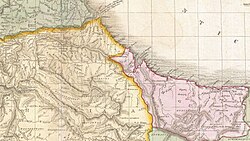
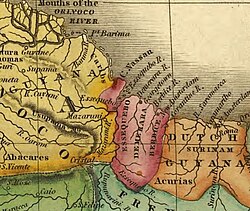
The Concept of Dutch Guiana
While officially named Surinam, the territory was often referred to as Dutch Guiana. This term was historically used to describe all Dutch holdings in the region, including Berbice, Essequibo, Demerara, and Pomeroon. However, after the British seized most of these territories in 1814, the name Dutch Guiana became more specifically associated with Surinam, mirroring the nomenclature of British and French Guiana.
Plantation Economy and Forced Labor
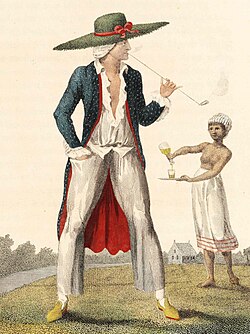
Surinam's early economy relied heavily on a plantation system powered by enslaved labor. This system faced severe disruptions in 1773 following the crash of the Amsterdam Stock Exchange. The economic strain intensified after the British abolished the slave trade in 1807, a move followed by King William I of the Netherlands via a royal decree in June 1814 and the Anglo-Dutch Slave Trade Treaty of 1818. These changes led to widespread plantation bankruptcies and the merging of estates to maintain efficiency.
Abolition and Indentured Servitude
Slavery was officially abolished on July 1, 1863—a date now commemorated as Ketikoti—though full release did not occur until 1873 after a ten-year transition. To fill the resulting labor void, the Dutch government signed a treaty with the United Kingdom in 1870 to bring in indentured laborers from British India. This was supplemented by contracted workers from the Dutch East Indies (Javanese and Chinese). These laborers often faced harsh conditions, leading to rebellions, such as the 1884 uprising led by Janey Tetary.
20th Century: Resource Extraction and Unrest
As the plantation economy waned, the focus shifted toward the extraction of natural resources, specifically rubber, gold, and bauxite. The discovery of gold on the Lawa River led to the construction of the Lawa Railway in 1902, though the project was eventually halted due to disappointing yields.
In 1916, the U.S. company Alcoa began mining bauxite—the primary ore for aluminum—near Moengo, later establishing a smelter in Paranam in 1938. Despite these industrial gains, the 1930s were marked by the Great Depression, causing mass unemployment and social unrest. This period saw the rise of nationalist Anton de Kom, who organized workers against Governor Johannes Kielstra, eventually leading to his imprisonment and deportation to the Netherlands.
Surinam in the Second World War
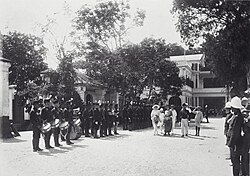
During World War II, the Netherlands was occupied by Nazi Germany, leaving the Dutch government and Royal family to operate in exile from the UK and Canada. Surinam became strategically vital as a primary supplier of bauxite for the Allied aircraft industry. To ensure its security, U.S. troops arrived in Paramaribo in November 1941.
The war effort also spurred local military organization. Conscripts formed the Schutterij (national guard), while volunteers joined the Burgerwacht (Civic Guard) and Stad en Landwacht (City and Country Guard). These forces provided essential coastal and anti-aircraft defense.
Path to Autonomy
Following the 1941 Allied Atlantic Charter, the Dutch government-in-exile pledged to grant far-reaching autonomy to its overseas territories. This process began with the 1948 revision of the Basic Law, which introduced universal suffrage and a Board of General Government. The transition culminated on December 15, 1954, with the Charter for the Kingdom of the Netherlands, which established Suriname as an equal partner within the Kingdom. This arrangement lasted until 1975, when Suriname achieved full independence.
| Period | Political Status | Key Event/Characteristic |
|---|---|---|
| 1667–1795 | Colony of the Dutch Republic | Captured from England; Treaty of Breda |
| 1795–1815 | Batavian Republic / UK Occupation | Nationalization and periods of British rule |
| 1815–1954 | Colony of the Netherlands | Abolition of slavery (1863); Bauxite mining |
| 1954–1975 | Constituent Country of the Kingdom | Equal status under the Kingdom Charter |
Frequently Asked Questions
Why was Surinam referred to as Dutch Guiana?
While officially named Surinam, the term Dutch Guiana was used unofficially to describe all Dutch colonies in the Guianas region. After the British took over other Dutch territories in 1814, the name became a convenient way to refer to Surinam in analogy to British and French Guiana.
When was slavery abolished in Surinam?
Slavery was officially abolished on July 1, 1863. However, a ten-year transitory period was implemented, meaning many enslaved people were not fully released until 1873.
What was the significance of bauxite in Surinam?
Bauxite is the primary ore used to produce aluminum. During World War II, Surinam's bauxite deposits were critical for the Allied war effort, specifically for the production of military aircraft.
Who was Anton de Kom?
Anton de Kom was a nationalist leader who arrived in Surinam during the 1930s to organize workers. He led demonstrations against the colonial governor and was eventually imprisoned and deported to the Netherlands.
How did Surinam transition to independence?
The transition began with the 1954 Charter for the Kingdom of the Netherlands, which granted Surinam equal status as a constituent country. This period of autonomy served as the precursor to full independence in 1975.