Viceroyalty of the Río de la Plata
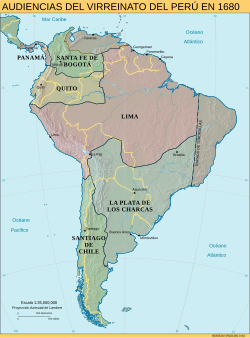
The Viceroyalty of the Río de la Plata was a Spanish colonial administrative district in South America that existed from 1776 to 1825. Established by King Charles III, it was carved out of the massive Viceroyalty of Peru to improve administrative efficiency and secure Spanish territories against Portuguese and British interests. With its primary capital in Buenos Aires, the viceroyalty served as a strategic hub for trade and military defense in the southern cone of the continent.
The creation of this entity marked a shift in Spanish colonial policy, moving away from the centralized control of Lima toward a more localized governance structure that could better manage the vast distances and emerging economic opportunities of the Atlantic coast.
Key Facts
- Established: August 1, 1776, by King Charles III.
- Capitals: Buenos Aires (1776–1811), Córdoba (1806), and Montevideo (1811–1814).
- Population: Approximately 1,240,000 according to the 1801 census.
- Official Language: Spanish, alongside various indigenous languages.
- Religion: Catholicism.
- Formal Abolition: April 1, 1825.
Origins and Establishment
The impetus for the viceroyalty's creation was both administrative and geopolitical. By the mid-18th century, the distance between Lima and Buenos Aires made governance inefficient. Furthermore, Portuguese expansion from Brazil threatened Spanish claims in the region.
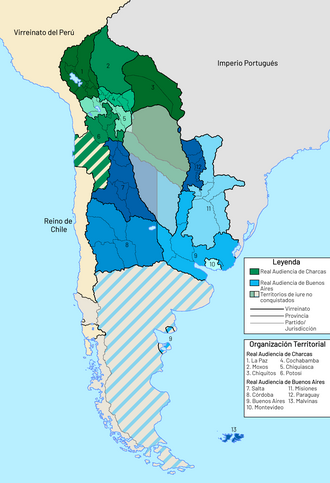
In 1776, King Charles III appointed Pedro de Cevallos as viceroy and general captain to lead a military expedition to recover lost territories and punish Portuguese incursions. Although initially intended as a temporary military command over the Royal Audiencia of Charcas and the corrigimiento of Cuyo, the arrangement proved successful. On October 27, 1777, the Spanish Crown formalized the viceroyalty, citing the inefficiency of managing the region from Lima.
Cevallos implemented significant economic reforms, including the Auto de libre internación, which allowed free trade between Buenos Aires, Chile, and Peru. He also mandated that all unminted gold and silver from Potosí be shipped via the Port of Buenos Aires, challenging the commercial monopoly of Lima and favoring merchants in Cádiz.
Military Challenges and British Invasions
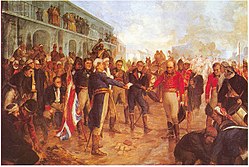
The stability of the viceroyalty was severely tested in June 1806 when a British military expedition, led by William Carr Beresford and planned by Home Riggs Popham, captured Buenos Aires. The British established a provisional government and decreed free trade with Britain.
The Spanish Viceroy, Rafael de Sobremonte, retreated to Córdoba, declaring it the provisional capital. However, Santiago de Liniers, a French-born Spanish military officer in Montevideo, organized a volunteer army and cavalry unit. In a campaign known as La Reconquista (The Reconquest), Liniers successfully recovered Buenos Aires 46 days after its fall, leading to Beresford's surrender.
The Path to Independence
The Napoleonic Wars in Europe triggered political instability within the viceroyalty. In 1808, Viceroy Liniers proclaimed neutrality during the Peninsular War, governing as an autonomous entity in the name of Ferdinand VII. This move was viewed as treason by Javier de Elío, the governor of Montevideo, who established his own provisional junta.
Early Revolutionary Movements
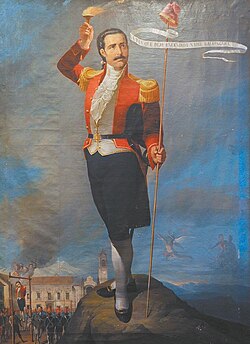
Revolutionary sentiment spread to Upper Peru (modern-day Bolivia). In May 1809, the Royal Audiencia of Charcas (a high court with administrative powers) in Chuquisaca dismissed its president and formed a governing junta. This was followed in July 1809 by the creation of the Junta Tuitiva (Guardianship Board) in La Paz, led by Pedro Domingo Murillo, which explicitly sought independence.
The May Revolution and Collapse
The definitive break occurred during the May Revolution on May 25, 1810, in Buenos Aires. This movement led to the creation of the Primera Junta, which rejected Spanish authority. While the provinces of Salta, Córdoba, and Buenos Aires joined this new government, other regions resisted. Paraguay declared its independence in 1811, and Upper Peru was annexed by the Viceroyalty of Peru.
The remaining royalist stronghold in Montevideo fell in June 1814 after a two-year siege. Although Spain continued to appoint viceroys—including Pedro Antonio Olañeta in 1825—these appointments were purely symbolic. The viceroyalty was formally abolished as a Spanish political entity on April 1, 1825, following the death of Olañeta.
Society and Economy
The viceroyalty's population was concentrated primarily in the north and the littoral regions. Society was strictly stratified into several distinct classes:
- Bureaucratic Class: High-ranking officials, judges, and ecclesiastical authorities.
- Merchant Aristocracy: Those benefiting from the Spanish commercial monopoly.
- Merchant Bourgeoisie: Comprising British traders and criollos (people of Spanish descent born in the Americas), many of whom engaged in smuggling.
- Livestock Bourgeoisie: Wealthy landowners focused on cattle and sheep.
- Lower Classes: Including farmers, market gardeners, lawyers, doctors, and a large population of enslaved people.
| Feature | Details |
|---|---|
| Time Period | 1776–1825 |
| Primary Capital | Buenos Aires |
| Key Monarchs | Charles III (Founder), Ferdinand VII (Last) |
| Major Economic Hubs | Buenos Aires, Potosí, Montevideo |
| Successor States | Argentina, Bolivia, Paraguay, Uruguay |
Frequently Asked Questions
Why was the Viceroyalty of the Río de la Plata created?
It was created to provide more efficient administration of the southern territories, which were too far from Lima to be managed effectively, and to defend the region against Portuguese expansion and British interests.
What was the significance of the May Revolution?
The May Revolution of 1810 in Buenos Aires marked the beginning of the end for Spanish rule in the region, leading to the establishment of a local government (the Primera Junta) and sparking independence movements across the territory.
Who was Pedro de Cevallos?
Pedro de Cevallos was the first Viceroy of the Río de la Plata. He led the military expedition that secured the region's borders and implemented trade reforms that boosted the economic importance of Buenos Aires.
What happened to Upper Peru and Paraguay?
Paraguay declared itself an independent nation in 1811, while Upper Peru (modern-day Bolivia) resisted the Buenos Aires government and was temporarily annexed by the Viceroyalty of Peru.
How did the British Invasions affect the colony?
The British Invasions of 1806-1807 demonstrated the weakness of the Spanish colonial administration and empowered local militias, which later played a crucial role in the independence movements.