Barracas: The Industrial Heart and Cultural Soul of Buenos Aires
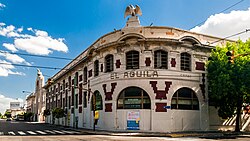
Located in the southeastern reaches of the Autonomous City of Buenos Aires, Barracas is a neighborhood defined by its resilience and transformation. Bound by the Riachuelo River to the south and the Ferrocarril General Manuel Belgrano railroad, this district serves as a living museum of Argentina's social and industrial evolution. The name "Barracas" is derived from the Spanish word barraca, referring to rudimentary temporary housing, a nod to the area's humble beginnings.
From its origins as a strategic riverside hub to its current status as a burgeoning center for design and art, Barracas offers a unique glimpse into the working-class identity of the Argentine capital.
Key Facts
- Location: Southeastern Buenos Aires, Argentina (Comuna C4).
- Total Area: 7.6 km² (2.9 sq mi).
- Population: 77,474 (as of 2001), with a density of 10,000/km².
- Defining Geography: Situated between the Riachuelo River and the Belgrano railroad.
- Cultural Landmark: Home to the "Sistine Chapel of Football."
- Economic Shift: Transitioned from a colonial slave quarter and industrial hub to a modern Design District.
A Journey Through History
During the 18th century, Barracas grew along the banks of the Riachuelo River. In its early years, the area functioned as a slave quarter and was dominated by abattoirs and leather tanneries. Its strategic importance was cemented on March 24, 1791, with the construction of a bridge that played a vital role during the British invasions of the Río de la Plata.
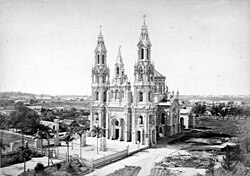
While the 19th century saw Barracas as a residence for some of the city's wealthiest families—with Santa Lucía Avenue serving as a premier shopping destination—this era ended abruptly in 1871. A devastating yellow fever epidemic forced the wealthy and middle classes to migrate north, transforming Barracas into a predominantly working-class neighborhood.
Throughout the 20th century, the area became a haven for immigrants, particularly from Italy. The economy was driven by factories until approximately 1980. However, the 1980s brought challenges, including the closure of factories and the construction of freeways that resulted in the loss of two public parks and over 20 residential buildings.
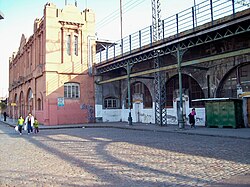
This atmosphere of working-class struggle and camaraderie was immortalized in the 1987 film Sur (South) by director Fernando Pino Solanas, which chronicled the lives of stockyard workers during Argentina's last dictatorship.
Architecture and Urban Renewal
In recent decades, Barracas has embraced artistic and architectural revitalization. In the 1990s, local artist Marino Santa María painted the colorful façades of Calle Lanín, sparking a wave of redevelopment. A notable example of this trend is the conversion of the former Piccaluga textile factory into luxury lofts, completed in 2008.
The Design District
To further its modernization, the city established a Design District. This initiative aims to consolidate Buenos Aires as a UNESCO city of design by attracting entrepreneurs to the area between Pedro de Mendoza and Velez Sarfield avenues. To encourage growth, the project offers subsidies for repairing old real estate, tax exceptions, and preferred loans.
Art and Cultural Icons
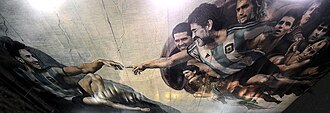
Barracas is home to one of the city's most viral artistic treasures: the "Sistine Chapel of Football." Located at the Sportivo Pereyra club, this mural was created in 2014 by graphic designer Santiago Barbeito (Santuke). The artwork is a recreation of Michelangelo's The Creation of Adam, replacing the biblical figures with football legends Diego Maradona and Lionel Messi.
The mural also honors other Argentine greats, including Juan Román Riquelme, Gabriel Batistuta, Mario Kempes, Sergio Agüero, Claudio Caniggia, Ricardo Bochini, and Ariel Ortega. While created in 2014, it gained global fame in May 2018 after an amateur video went viral on social media.
Neighborhood Summary
| Category | Details |
|---|---|
| Administrative Division | Comuna C4, Buenos Aires |
| Primary Industry (Past) | Tanneries, Abattoirs, Textile Factories |
| Primary Industry (Present) | Design, Manufacturing, Arts |
| Key Landmark | Sistine Chapel of Football |
| Notable Street | Calle Lanín (Colorful façades) |
Frequently Asked Questions
What does the name "Barracas" mean?
The name comes from the word barraca, which refers to temporary houses built from rudimentary materials.
Why did the wealthy families leave Barracas in the 19th century?
Most wealthy and middle-class families relocated to the north of the city following a yellow fever epidemic in 1871.
What is the "Sistine Chapel of Football"?
It is a mural at the Sportivo Pereyra club created by artist Santiago Barbeito. It depicts football stars like Lionel Messi and Diego Maradona in a style inspired by Michelangelo's The Creation of Adam.
What is the goal of the Barracas Design District?
The district aims to create a center for design and manufacture to help the southern part of the city and support Buenos Aires' status as a UNESCO city of design through tax incentives and subsidies.
Which famous film was set in Barracas?
The 1987 film Sur (South), directed by Fernando Pino Solanas, used the neighborhood as a setting to chronicle the lives of working-class Argentines during the country's last dictatorship.