United States v. Wong Kim Ark and the Foundation of Birthright Citizenship
The concept of birthright citizenship—the principle that anyone born on United States soil is automatically a citizen—is a cornerstone of American identity. However, this right was not always explicitly defined in the Constitution. It took a landmark legal battle involving a man named Wong Kim Ark to solidify this interpretation of the law.
In the late 19th century, the United States was gripped by nativism and the restrictive policies of the Chinese Exclusion Acts. Amidst this climate, the Supreme Court was called upon to decide whether a child born in the U.S. to foreign parents could be denied citizenship. The resulting decision in United States v. Wong Kim Ark (1898) remains one of the most significant rulings in the history of U.S. nationality law.
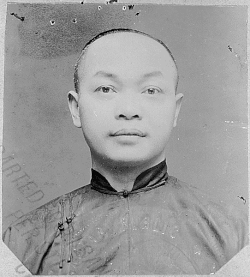
Key Facts
- Case Name: United States v. Wong Kim Ark (169 U.S. 649).
- Decision Date: March 28, 1898.
- Core Ruling: A child born in the U.S. to parents of Chinese descent is a U.S. citizen at birth.
- Legal Basis: The first clause of the Fourteenth Amendment to the U.S. Constitution.
- Legal Doctrine: Affirmed the common law rule of jus soli (law of the soil).
The Legal Conflict: Jus Soli vs. Jus Sanguinis
To understand the case, one must first understand two competing legal theories of citizenship. Jus soli, or the "law of the soil," grants citizenship based on the place of birth. Conversely, jus sanguinis, or the "law of the blood," grants citizenship based on the nationality of the parents.
Before 1866, U.S. citizenship was not defined by a federal statute or the Constitution, though the common law rule of jus soli was generally followed. The Civil Rights Act of 1866 and the subsequent Fourteenth Amendment sought to codify this, stating that "all persons born or naturalized in the United States, and subject to the jurisdiction thereof, are citizens of the United States."
The conflict arose because the U.S. government argued that children of Chinese subjects—who were ineligible for naturalization under the Chinese Exclusion Acts—were not "subject to the jurisdiction" of the U.S. in a way that conferred citizenship.
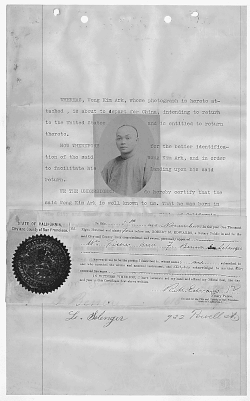
The Case of Wong Kim Ark
Wong Kim Ark was born in San Francisco in 1873 to parents who were subjects of the Emperor of China. His parents had a permanent domicile and residence in the U.S., where they carried on business and were not employed in any diplomatic or official capacity for the Chinese government.
When Wong Kim Ark attempted to return to the U.S. after a trip abroad, he was denied entry on the grounds that he was not a U.S. citizen. He filed a writ of habeas corpus—a legal action used to challenge unlawful detention—claiming that his birth in San Francisco made him a citizen by right.
The case eventually reached the Supreme Court, where the justices had to determine if the Fourteenth Amendment's citizenship clause applied to children of immigrants who were legally barred from becoming citizens themselves.
The Supreme Court's Decision
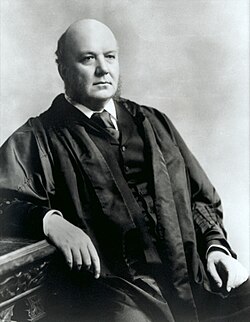
The Court ruled in favor of Wong Kim Ark. Associate Justice Horace Gray wrote the majority opinion, joined by Justices Brewer, Brown, Shiras, White, and Peckham. The Court held that the Fourteenth Amendment should be interpreted in light of the common law principles known to the framers of the Constitution.
The majority concluded that any person born in the U.S. is a citizen, provided they are not born to foreign diplomats or during a foreign military occupation. Because Wong Kim Ark's parents were permanent residents and not diplomats, he was "subject to the jurisdiction" of the United States at the time of his birth.
The Dissenting View
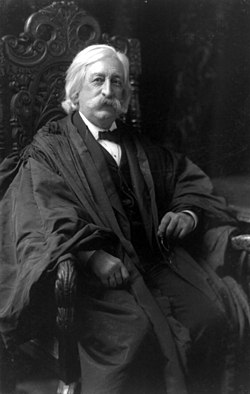
Chief Justice Melville Fuller, joined by Justice Harlan, dissented. Fuller argued that the common law of England should not control the question and that the intent of the Fourteenth Amendment was not to grant citizenship to children of those who owed allegiance to a foreign power.
Legacy and Subsequent Impact
The ruling in United States v. Wong Kim Ark established a powerful precedent that has been cited in numerous later cases. It confirmed that birthright citizenship is a constitutional right that cannot be stripped away by Congress or the Executive branch.
Over the decades, this precedent has been applied to children of various immigrant groups, including those of Japanese descent (Morrison v. California) and children of undocumented immigrants. While there have been legislative and executive attempts to overturn or limit this ruling, the courts have consistently upheld the principle of jus soli.
| Feature | Details |
|---|---|
| Primary Legal Question | Does the 14th Amendment grant citizenship to children born in the U.S. to foreign parents? |
| Majority Opinion | Yes; birth on U.S. soil confers citizenship (jus soli). |
| Dissenting Opinion | No; citizenship should depend on the parents' legal status/allegiance. |
| Key Constitutional Clause | Fourteenth Amendment Citizenship Clause. |
| Long-term Effect | Solidified birthright citizenship for nearly all persons born in the U.S. |
Frequently Asked Questions
What is the difference between jus soli and jus sanguinis?
Jus soli is the "law of the soil," meaning citizenship is determined by where a person is born. Jus sanguinis is the "law of the blood," meaning citizenship is inherited from the parents regardless of birth location.
Who is NOT considered "subject to the jurisdiction" of the U.S.?
The Court noted exceptions for children born to foreign diplomats or officials acting in an official capacity for a foreign government, as well as those born during a foreign military occupation.
Did the Chinese Exclusion Acts affect this ruling?
Yes, the government used the Exclusion Acts to argue that since the parents could not become citizens, their children should not be citizens by birth. The Court rejected this, ruling that the Fourteenth Amendment overrode these statutory restrictions.
Can the U.S. government end birthright citizenship via executive order?
Based on the precedent of Wong Kim Ark and subsequent rulings, birthright citizenship is a constitutional right. Legal consensus and court decisions indicate that it cannot be ended by executive order or simple legislation, but would likely require a Constitutional Amendment.