New Orleans Massacre of 1866: A Turning Point in Reconstruction
On July 30, 1866, the city of New Orleans became the site of one of the most brutal episodes of the Reconstruction era—the period following the American Civil War dedicated to reintegrating the Southern states and defining the legal status of millions of newly freed African Americans. What began as a peaceful demonstration for civil rights ended in a coordinated mass murder, leaving dozens dead and hundreds wounded.
The violence erupted outside the Mechanics Institute, where a reconvened Louisiana Constitutional Convention was meeting. The clash was not merely a spontaneous riot but the culmination of deep-seated social conflicts and a violent resistance to the dismantling of white supremacy in the South.
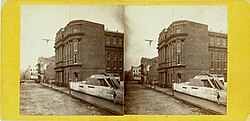
Key Facts
- Date: July 30, 1866.
- Location: Mechanics Institute, New Orleans, Louisiana.
- Casualties: Official reports cite 38 dead; unofficial estimates range from 34 to 200 African Americans killed, plus 4 white victims.
- Perpetrators: Ex-Confederate soldiers, white supremacists, and members of the New Orleans Police Force.
- Political Impact: Catalyzed the passage of the Fourteenth Amendment and the Reconstruction Acts.
The Road to Violence: Political Tension in Louisiana
Following the Civil War, New Orleans existed in a state of extreme volatility. While the Union had imposed martial law, the political landscape shifted on May 12, 1866, when John T. Monroe—a staunch supporter of the Confederacy—was reinstated as acting mayor. Simultaneously, a Constitutional Convention was reconvened under Chairman R. K. Howell with the goal of removing Black Codes (restrictive laws designed to limit the freedom of African Americans) and expanding voting rights.
These goals were met with fierce opposition from white Democrats. The state party platform of 1865 explicitly declared the government to be for the "exclusive political benefit of the White Race," denying that people of African descent could be considered citizens. This ideological divide created a powder keg: more than half of the white population were Confederate veterans, while nearly half of the Black population were veterans of the Union army.
The Massacre at the Mechanics Institute
On July 27, 1866, abolitionist activists, including Anthony Paul Dostie and former Governor Michael Hahn, encouraged Black supporters and war veterans to organize a parade to show their support for the convention. On July 30, as the convention members exited the Mechanics Institute, they were met by the marchers and their band.
Waiting for them at the corner of Common and Dryades streets was a mob of armed white men, largely composed of ex-Confederates and Democrats. A battle erupted in the streets, though the Black marchers were largely unarmed and unprepared. The mob pursued the demonstrators into the Mechanics Institute, where the violence turned sadistic.
Witness accounts and historical records describe a scene of horror: police smashed windows and fired indiscriminately into the building. Those who attempted to flee by jumping from windows were shot, and wounded victims were stabbed or beaten with bricks. Federal troops eventually intervened to suppress the riot, and the governor placed the city under martial law until August 3.
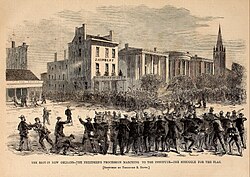
National Outrage and Political Consequences
The massacre, occurring shortly after the Memphis riots of 1866, sparked national outrage. This sentiment shifted the balance of power in Washington, D.C., helping the Radical Republicans—a faction favoring strict requirements for Southern readmission and full civil rights for freedmen—win a majority in both houses of Congress during the 1866 midterm elections.
This political shift allowed Congress to override the vetoes of President Andrew Johnson, who was seen by many as tacitly approving the violence. The resulting legislative wave led to:
- The Fourteenth Amendment: Granting full citizenship and suffrage to freedmen.
- The Reconstruction Acts: Establishing military districts to oversee the South and ensure the protection of civil rights.
Louisiana was placed under the Fifth Military District, commanded by Philip Sheridan. Displeased with the city's failure to bring the perpetrators of the massacre to justice, Sheridan removed Mayor Monroe and other officials, replacing them with Republicans and mandating that half of the New Orleans police force consist of Union Army veterans.
Summary of the 1866 New Orleans Massacre
| Category | Details |
|---|---|
| Primary Target | Anti-racist marchers and convention delegates |
| Death Toll | 34 to 200 African Americans; 4 whites |
| Key Perpetrators | Ex-Confederates and New Orleans Police |
| Immediate Result | Martial law in New Orleans |
| Long-term Result | Passage of the 14th Amendment and Reconstruction Acts |
Frequently Asked Questions
What was the primary cause of the New Orleans massacre?
The massacre was caused by violent resistance from white supremacists and ex-Confederates toward a peaceful demonstration supporting a Constitutional Convention that sought to grant voting rights to Black citizens and abolish the Black Codes.
Who were the perpetrators of the attack?
The attack was carried out by a mob of white rioters, many of whom were former Confederate soldiers, with active participation and assistance from members of the New Orleans Police Force.
How many people were killed in the massacre?
Official reports stated 38 people were killed, including 34 Black freedmen. However, unofficial estimates are significantly higher, with some historians suggesting up to 200 African Americans were killed.
How did the U.S. government respond to the event?
The national outrage led to the rise of the Radical Republicans in Congress, the passage of the Fourteenth Amendment, and the implementation of the Reconstruction Acts, which placed the South under military district governance.
What role did President Andrew Johnson play?
President Johnson was accused by critics and some members of Congress of tacitly approving the massacre by refusing to use federal power to stop ex-Confederate paramilitary actions. This contributed to the efforts to impeach him, although the massacre was not ultimately used as a formal article of impeachment.