United States Citizenship: Rights, Pathways, and Legal Status
United States citizenship is a legal status that provides individuals with a specific set of rights, duties, protections, and benefits. This status serves as the foundation for fundamental liberties protected by the U.S. Constitution and federal laws, ensuring that citizens can participate fully in the civic and economic life of the nation.
From the right to vote and live permanently in the country to receiving federal assistance and the protection of due process, citizenship is the primary mechanism for securing legal standing within the United States. While often used interchangeably with nationality, citizenship is a specific legal category with distinct requirements and privileges.
Key Facts

- Two Primary Paths: Citizenship is acquired either through birthright (jus soli/jus sanguinis) or through the legal process of naturalization.
- Constitutional Basis: The Fourteenth Amendment establishes the principle of birthright citizenship for those born within U.S. territorial limits.
- Dual Nationality: The U.S. permits dual citizenship; citizens do not lose their status by acquiring another nationality unless they officially renounce it.
- Tax Obligations: U.S. citizens are required to file taxes regardless of where they reside globally.
- National vs. Citizen: Some individuals, such as those born in American Samoa, are considered U.S. nationals but not U.S. citizens.
Pathways to Citizenship
Birthright Citizenship
Birthright citizenship is primarily governed by the Citizenship Clause of the Fourteenth Amendment. Generally, persons born within the territorial limits of the United States are presumed to be citizens. Additionally, individuals born abroad to at least one U.S. citizen parent may acquire citizenship, provided specific legal requirements are met.
However, this does not apply uniformly to all U.S. territories. While people born in Puerto Rico, Guam, the U.S. Virgin Islands, and the Northern Mariana Islands (on or after November 4, 1986) are citizens by law, those born in American Samoa are not. Court rulings in 2016 and 2021 upheld the government's position that American Samoa is not "in the United States" for the purposes of the Fourteenth Amendment.

Naturalization
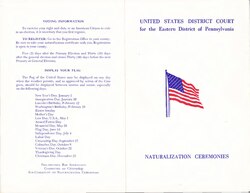
Naturalization is the process by which eligible legal immigrants apply for and are granted citizenship. This pathway often involves meeting residency requirements, passing a citizenship test on U.S. history and government, and taking an oath of allegiance during a citizenship ceremony.

Military service has historically served as a significant catalyst for naturalization. For example, during World War II, an honorable service record could reduce the residency requirement for citizenship from five years to three. Even today, the U.S. military may offer expedited paths to citizenship for skilled immigrants serving in the armed forces.

Rights, Duties, and Benefits

Rights and Benefits
Citizens enjoy comprehensive protections, including freedom of expression and the right to due process. They possess the legal right to live and work indefinitely in the U.S. and are eligible for federal assistance programs. One of the most tangible benefits is the right to a U.S. passport, which serves as proof of citizenship and identity for international travel.
![United States nationality gives the right to acquire a United States passport.[1] The one shown above is a post-2007 issued passport. A passport is commonly used as an identity document and as proof of citizenship.](/images/f1/75/f175e054711e8b4aa61ff3d8a795a96d0cf361c82cb37f4709dcc21c391dcf1f.webp)
Civic Duties
With these rights come specific legal obligations. U.S. citizens may be summoned for jury duty to participate in the judicial process. Additionally, male citizens and non-citizens are required to register for the military draft within 30 days of their 18th birthday, although the U.S. military has been an all-volunteer force since the end of the Vietnam War.


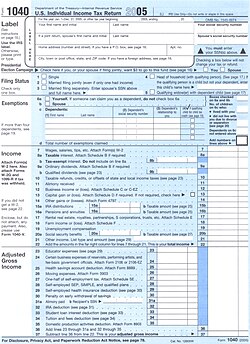
Financial obligations also extend beyond borders; citizens must file U.S. taxes even if they live outside the United States.
Legal Nuances and Special Statuses
Dual Citizenship
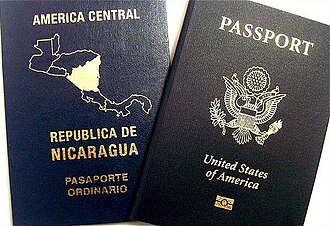
The United States allows dual citizenship, meaning a person can hold two passports and maintain legal ties to two different countries. According to the Supreme Court case Afroyim v. Rusk (1967), a citizen does not lose their U.S. citizenship by voting in a foreign election or acquiring another nationality, provided there is no intent to relinquish U.S. citizenship.
Non-Citizen Nationals
A distinction exists between a "citizen" and a "national." Non-citizen nationals owe permanent allegiance to the United States and are entitled to U.S. protection and a U.S. passport, but they lack certain rights, such as the right to vote in federal elections or hold certain government offices. This status currently applies to individuals born in American Samoa.
Loss of Citizenship
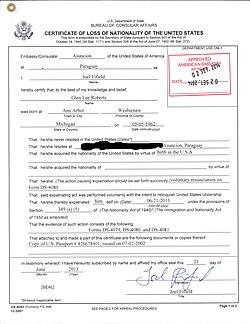
Citizenship can be lost through official renunciation or, in some cases, revocation if naturalization was obtained illegally. Historically, laws were more restrictive; between 1922 and 1940, a U.S. citizen woman could lose her citizenship simply by marrying a non-citizen ineligible for citizenship.
Summary of Citizenship Status
| Feature | U.S. Citizen | Non-Citizen National | Legal Permanent Resident |
|---|---|---|---|
| Right to Vote | Yes | No | No |
| U.S. Passport | Yes | Yes | No |
| Right to Work | Unrestricted | Unrestricted | Authorized |
| Tax Obligations | Global | Varies | Varies |
| Draft Registration | Required (Males) | Required (Males) | No |
Frequently Asked Questions
Can a U.S. citizen hold citizenship in another country?
Yes, the United States permits dual citizenship. A citizen does not lose their U.S. status by acquiring another nationality unless they formally renounce their U.S. citizenship.
What is the difference between a U.S. citizen and a U.S. national?
All U.S. citizens are U.S. nationals, but not all U.S. nationals are citizens. Non-citizen nationals (such as those from American Samoa) have U.S. nationality and can hold a U.S. passport, but they cannot vote in federal elections.
Do U.S. citizens living abroad still have to pay taxes?
Yes, U.S. citizens are required by law to file taxes with the United States regardless of their country of residence.
How is birthright citizenship determined?
Under the Fourteenth Amendment, birthright citizenship is generally granted to anyone born within the territorial limits of the United States, with the exception of American Samoa. It can also be acquired if a child is born abroad to a U.S. citizen parent.
Can U.S. citizenship be revoked?
Yes, citizenship can be revoked if it was obtained through fraud or illegally during the naturalization process. It can also be lost if a citizen officially renounces it.