German Nationality Law: Evolution from the Empire to Modern Reforms
The legal framework governing German citizenship has undergone a profound transformation, evolving from a fragmented system of state-level identities to a modern, inclusive federal law. Central to this journey is the Staatsangehörigkeitsgesetz (Nationality Act), first enacted on July 22, 1913, and administered today by the Federal Office of Administration. This legal evolution reflects Germany's turbulent history, including imperial unification, the atrocities of the Nazi era, Cold War division, and a recent shift toward multicultural integration.
Key Facts
- Current Residency Requirement: Reduced to five years under the 2024 reform.
- Dual Citizenship: Now permitted without restrictions as of June 2024.
- Birthright Citizenship: Available to children of residents who have lived in Germany for five years with indefinite residency permission.
- Historical Redress: Victims of Nazi-era denaturalisation and their descendants are eligible to reclaim citizenship.
- Foundational Law: The 1913 Nationality Act serves as a primary historical pillar of German citizenship legislation.
The Path to Unification and Imperial Law
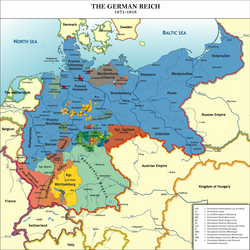
Before the creation of a unified national identity, citizenship in Germany was decentralized. Following the dissolution of the Confederation in 1866 after the Austro-Prussian War, Prussia established the North German Confederation. While the four southern states—Baden, Bavaria, Hesse, and Württemberg—remained independent until the Franco-Prussian War of 1870, Prussia's 1842 citizenship law provided the blueprint for federal regulations.
Even after the formal unification of the German Empire in 1871, a dual system persisted: individuals maintained citizenship in their specific German state while simultaneously holding citizenship in the German Empire.
The Nazi Era: Systemic Exclusion and Expansion
Between 1933 and 1945, the German state weaponized nationality law to target "undesirables," specifically Jews and political dissidents. These individuals were stripped of their civil and political rights through denaturalisation (the revocation of citizenship).
Simultaneously, the Reich expanded its citizenship through territorial annexation:
- Austria: Following the Anschluss on March 13, 1938, all Austrians were granted Reich citizenship by July 3, 1938.
- Sudetenland: Following the Munich Agreement on September 29, 1938, Sudeten Germans automatically became citizens. Czech citizens could apply based on residency as of 1910, subject to discretionary approval.
- Eastern Territories: Ethnic Germans in annexed Polish territories were granted citizenship in late 1939. Conversely, Polish citizenship was abolished, leaving many stateless unless they were selected for forced Germanisation.
Post-War Division and Reunification
After World War II, Germany was split into West Germany (FRG) and East Germany (GDR). West Germany maintained pre-war legislation and viewed all East Germans as its citizens. In contrast, East Germany implemented its own separate nationality law in 1967, which remained in effect until the reunification of Germany in 1990.
Modern Reforms and the 2024 Update
In recent decades, Germany has shifted from a strict system of jus sanguinis (right of blood/descent) toward jus soli (right of soil/birth). A major reform in 1999 introduced birthright citizenship for children born after January 1, 2000, to non-citizen parents who had resided in Germany for at least eight years.
The most significant recent change is the Nationality Modernisation Act, which came into force on June 27, 2024. This legislation drastically lowers barriers to integration by reducing the residency requirement for naturalisation from eight to five years and fully legalizing multiple nationalities.
| Feature | Pre-2024 Reform | Post-2024 Reform |
|---|---|---|
| Standard Residency Requirement | 8 Years | 5 Years |
| Dual Citizenship | Restricted/Required Renunciation | Permitted without restrictions |
| Birthright Residency Threshold | 8 Years | 5 Years (with indefinite permit) |
Acquiring and Reclaiming Citizenship
By Birth and Descent
Children born in Germany automatically receive nationality if at least one married parent is German. For those born overseas, the rules vary: children of parents born after December 31, 1999, who reside abroad, must be registered at a German diplomatic mission before their first birthday to acquire citizenship by descent.
Naturalisation
Beyond the standard five-year residency, the period can be reduced to three years for spouses of German citizens married for at least two years. In 2022, 168,775 individuals naturalised, with 74.2% retaining their original nationality via a Beibehaltungsgenehmigung (retention permit) prior to the 2024 law.
Reclaiming Citizenship
Germany provides a legal path for those stripped of citizenship between January 30, 1933, and May 8, 1945, on political, racial, or religious grounds. This entitlement extends to their direct descendants. Reforms in 2019 expanded this to include descendants of married women or unmarried fathers who were previously excluded.
Frequently Asked Questions
Can I hold dual citizenship in Germany?
Yes. Following the 2024 reform, dual and multiple citizenships are allowed without restrictions, removing the previous requirement to renounce foreign nationality upon naturalisation.
How long must I live in Germany to apply for citizenship?
Under the current law effective June 2024, the general residency requirement for naturalisation has been reduced to five years.
Who is eligible to reclaim German citizenship from the Nazi era?
Any person who had their citizenship revoked between 1933 and 1945 for political, racial, or religious reasons, as well as their direct descendants, are eligible to reclaim it.
Do children born in Germany automatically become citizens?
Not automatically unless at least one parent is German. However, children born to non-citizen parents who have resided in Germany for at least five years and hold an indefinite permit of residence can acquire birthright citizenship.
What is the residency requirement for spouses of German citizens?
The residency requirement for naturalisation may be reduced to three years for spouses who have been married to a German citizen for at least two years.