Fourteenth Amendment: Defining Citizenship and Equal Protection in America
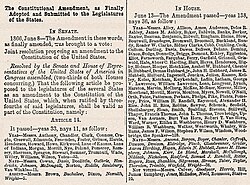
Adopted on July 9, 1868, the Fourteenth Amendment stands as one of the most consequential additions to the United States Constitution. Emerging from the turmoil of the American Civil War as one of the Reconstruction Amendments, it was designed to address the legal status and rights of freed slaves. Its enactment was a period of intense political conflict, and states from the defeated Confederacy were required to ratify the amendment as a condition for regaining their representation in Congress.
Today, the amendment serves as the bedrock for civil rights in the U.S., governing how citizenship is defined and ensuring that all individuals receive equal protection under the law across all levels of government.
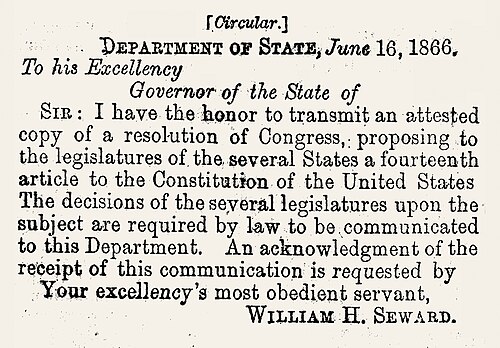
Key Facts
- Ratification Date: July 9, 1868.
- Primary Purpose: To guarantee citizenship and equal protection for all persons born or naturalized in the U.S., specifically addressing the rights of formerly enslaved people.
- Core Clauses: Includes the Citizenship, Privileges or Immunities, Due Process, and Equal Protection clauses.
- Legal Impact: Forms the basis for landmark Supreme Court rulings on segregation, marriage equality, and privacy.
- Incorporation: Used to apply the Bill of Rights to state governments, not just the federal government.
Section 1: Citizenship and Civil Rights
The first section of the Fourteenth Amendment is the most litigated portion of the Constitution. It establishes four critical legal pillars that define the relationship between the individual and the state.
The Citizenship Clause
The Citizenship Clause broadly defines who is a citizen of the United States. This clause was a direct response to the Supreme Court's decision in Dred Scott v. Sandford (1857), which had previously ruled that people of African descent could not be American citizens. By establishing birthright citizenship, it ensured that all persons born or naturalized in the U.S. are citizens of both the nation and the state where they reside.
The Privileges or Immunities Clause
This clause prevents states from making or enforcing laws that abridge the privileges or immunities of citizens. In the Slaughter-House Cases (1873), the Supreme Court interpreted this as a protection of federal rights, such as the freedom of movement.
![Rep. John Bingham of Ohio was the principal author of the Equal Protection Clause.[49]](/images/07/4c/074c31bef2656abaa123cfe08062de7edef96e230ba4992d49fd56484ad880c8.jpg)
The Due Process Clause
Building upon the Fifth Amendment, the Due Process Clause prohibits any level of government from depriving individuals of life, liberty, or property without substantive and procedural due process. This clause is the engine behind the incorporation doctrine, the legal process by which the Supreme Court has applied various protections from the Bill of Rights to the states.
The Equal Protection Clause
The Equal Protection Clause mandates that no state shall deny any person within its jurisdiction the equal protection of the laws. This applies to all people, including non-citizens. This clause has been the primary tool for dismantling systemic discrimination.
Other Key Sections of the Amendment
While Section 1 is the most famous, the remaining sections address governance, representation, and the aftermath of the Civil War.
Section 2: Apportionment of Representatives
This section superseded the Three-fifths Compromise, requiring that representation in the House of Representatives and the Electoral College be based on the entire adult male population. Notably, it allowed states to reduce voting rights for those participating in rebellion or other crimes, which provided the legal basis for felony disenfranchisement.
Section 3: Disqualification from Office
Section 3 prohibits anyone from holding federal or state office if they have previously taken an oath to support the Constitution and then engaged in insurrection or rebellion. In Trump v. Anderson (2024), the Supreme Court ruled that the application of this section for federal elections rests with Congress.
Section 4: Public Debt and Emancipation
This section affirms the validity of the public debt authorized by the United States government but explicitly refuses to compensate former slaveholders for the loss of their enslaved people following emancipation.
Section 5: Power of Enforcement
Section 5 grants Congress the power to enforce the amendment through legislation. While the Supreme Court initially viewed this as a tool to overturn "Black Codes," later rulings like the Civil Rights Cases (1883) clarified that this power does not extend to outlawing discrimination by private individuals. Consequently, much of the federal government's authority to regulate private conduct has shifted to the Commerce Clause.
Summary of Landmark Legal Impacts
| Legal Concept | Key Case | Outcome/Significance |
|---|---|---|
| Racial Segregation | Brown v. Board of Education (1954) | Prohibited segregation in public schools. |
| Interracial Marriage | Loving v. Virginia (1967) | Ended bans on interracial marriage. |
| Marriage Equality | Obergefell v. Hodges (2015) | Extended marriage rights to same-sex couples. |
| Affirmative Action | Students for Fair Admissions v. Harvard (2023) | Prohibited affirmative action in most college admissions. |
| Reproductive Rights | Roe v. Wade (1973) | Recognized federal right to abortion (overturned in 2022). |
Frequently Asked Questions
What is the incorporation doctrine?
The incorporation doctrine is a legal principle derived from the Due Process Clause of the Fourteenth Amendment. It allows the Supreme Court to apply specific protections found in the Bill of Rights (which originally only limited the federal government) to the state governments as well.
How did the Fourteenth Amendment change citizenship?
It established the Citizenship Clause, which granted citizenship to all persons born or naturalized in the United States. This effectively overturned the Dred Scott decision and ensured that formerly enslaved people were recognized as full citizens.
Can the Fourteenth Amendment be used to stop private discrimination?
No. According to the Civil Rights Cases (1883), the Fourteenth Amendment only restricts the actions of government entities (state actors), not private individuals. Legislation targeting private discrimination is typically upheld under the Commerce Clause instead.
What does the "Equal Protection Clause" actually guarantee?
It guarantees that states must treat individuals in similar situations equally under the law. It prohibits states from denying any person—regardless of citizenship status—the equal protection of the laws within that state's jurisdiction.
What is the significance of Section 3 regarding insurrection?
Section 3 disqualifies individuals from holding office if they engaged in insurrection or rebellion against the United States after swearing an oath to support the Constitution. Recent jurisprudence has clarified that Congress manages this for federal elections.