United Nations: History, Structure, and Global Impact
The United Nations (UN) is a premier intergovernmental organization dedicated to maintaining international peace and security, developing friendly relations among nations, and promoting social progress, better living standards, and human rights. Established in the wake of World War II, it serves as the primary forum for global diplomacy and collective action.
The organization is headquartered in an international zone at 760 United Nations Plaza in Manhattan, New York City. To facilitate global communication, the UN recognizes six official languages: Arabic, Chinese, English, French, Russian, and Spanish.
Key Facts
- Established: Charter signed June 26, 1945; entered into force October 24, 1945.
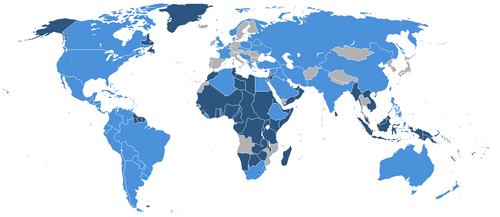
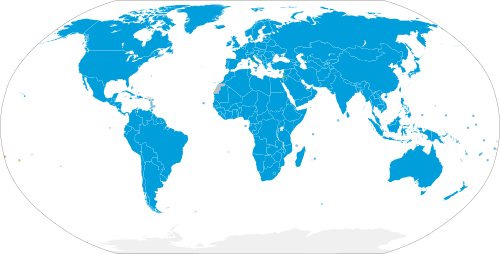
- Membership: 193 member states and 2 observer states.
- Current Leadership: Secretary-General António Guterres.
- Primary Goal: Maintenance of international peace and security.
- Funding: Primarily funded by member state contributions, with the United States and China as the largest contributors.
History and Evolution
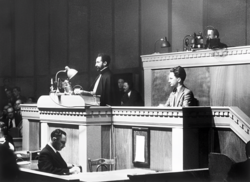
The United Nations was created to succeed the League of Nations, which had failed to prevent the outbreak of World War II and had been unable to intervene in crises such as Italy's 1936 invasion of Ethiopia.
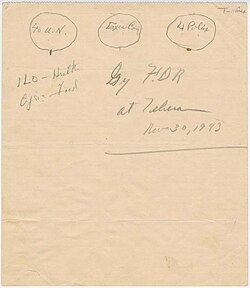
The foundation of the UN was laid through a series of Allied declarations between 1941 and 1944. In 1943, Franklin Roosevelt sketched an original vision for the organization consisting of three branches: an executive branch, the "Four Policemen," and an international assembly of forty member states.
The UN Charter was officially signed on June 26, 1945, and the organization began its operations on October 24, 1945. Since then, it has navigated the complexities of the Cold War, the transition to a post-Cold War era, and modern financial crises.
Organizational Structure
The United Nations operates through several principal organs, each with distinct responsibilities to ensure the organization functions effectively across legal, political, and social dimensions.
The General Assembly
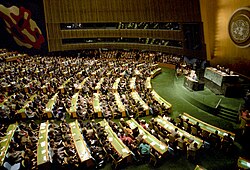
The General Assembly is the main deliberative body, consisting of all member states. It is responsible for adopting the budget, deciding on the admission of new members (upon recommendation from the Security Council), and resolving disputes between states that recognize its jurisdiction.
Work is organized through six main committees: Disarmament and International Security, Economic and Financial, Social, Humanitarian and Cultural, Special Political and Decolonization, Administrative and Budgetary, and Legal.
The Security Council
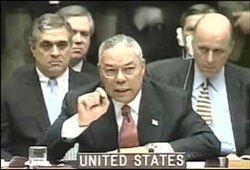
The Security Council is tasked with the maintenance of international peace and security. Unlike the General Assembly, the Security Council can adopt compulsory resolutions that member states are required to follow.
The Secretariat
The Secretariat is the administrative organ of the UN, led by the Secretary-General. This role is central to the UN's daily operations and diplomatic efforts.
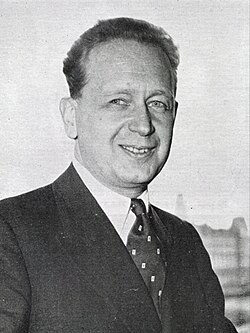
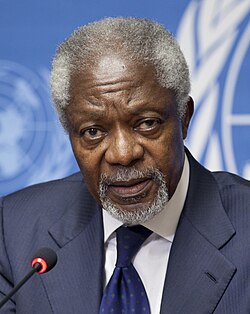
Notable Secretaries-General have included Dag Hammarskjöld, who was highly active from 1953 until 1961, and Kofi Annan, who served from 1997 to 2006.
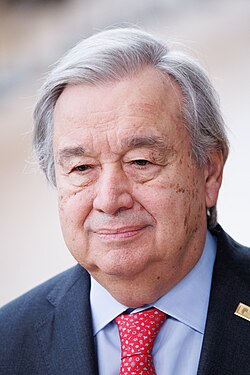
The current Secretary-General is António Guterres, who took office on January 1, 2017.
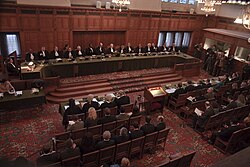
The International Court of Justice (ICJ)
The ICJ serves as the universal court for international law. It issues legal opinions and decides disputes between states. For example, the ICJ ruled that Kosovo's 2008 unilateral declaration of independence from Serbia did not violate international law.
Other Organs
- Economic and Social Council (ECOSOC): Coordinates cooperation on economic and social matters and manages specialized agencies.
- Trusteeship Council: Originally designed to manage colonial possessions (former League of Nations mandates); it is currently inactive.
Specialized Agencies and Programs
The UN operates a vast network of specialized agencies and funds to address specific global challenges, ranging from health and education to food security.
| Agency/Fund | Focus Area | Headquarters | Established |
|---|---|---|---|
| WHO | Public Health | Geneva, Switzerland | 1948 |
| UNESCO | Education, Science, Culture | Paris, France | 1945 |
| IMF | Global Monetary Cooperation | Washington, D.C., USA | 1945 (1944) |
| UNICEF | Children's Rights and Aid | New York City, USA | 1946 |
| WFP | Food Assistance | Rome, Italy | 1963 |
| UNHCR | Refugee Protection | Geneva, Switzerland | 1950 |
Global Initiatives and Impact
The UN's work spans several critical domains, including peacekeeping, human rights, and sustainable development.
Peacekeeping and Security
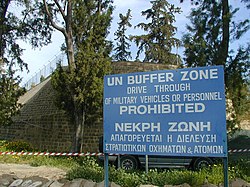
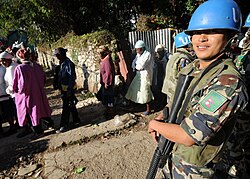
UN Peacekeeping forces are deployed to conflict zones to maintain ceasefires and protect civilians. This includes the establishment of buffer zones, such as the one in Cyprus created in 1974.
Human Rights and Development
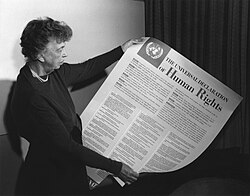
A landmark achievement was the 1949 Universal Declaration of Human Rights, championed by Eleanor Roosevelt. The UN also established the Millennium Development Goals to eradicate extreme poverty, promote gender equality, and combat diseases like HIV/AIDS and malaria.
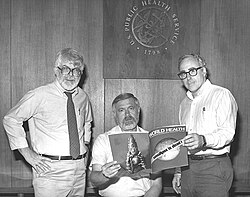
The UN has also achieved significant public health milestones, most notably the global eradication of smallpox in 1980.
Humanitarian Assistance
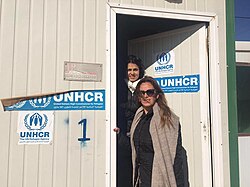
Through agencies like the UNHCR, the UN provides critical support to displaced populations, such as the management of the Zaatari refugee camp for Syrians in Jordan.
Funding and Membership
The UN is funded by contributions from its member states. The United States provides the largest share at 22%, followed closely by China at 20.004%. Other significant contributors include Japan, Germany, and the United Kingdom.
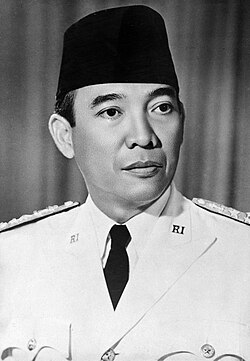
While membership is generally stable, Indonesia is the only country to have attempted to leave the organization under the leadership of Sukarno.
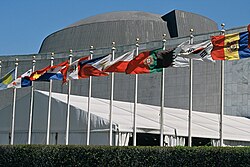
The organization's global reach is symbolized by the flags of its member nations flying at the New York headquarters.
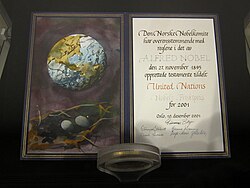
The UN's contributions to global peace were recognized with the Nobel Peace Prize in 2001.
Frequently Asked Questions
What is the difference between the General Assembly and the Security Council?
The General Assembly is a deliberative body where all member states have a voice, but its resolutions are generally non-compulsory. The Security Council focuses on international security and has the authority to issue compulsory resolutions that member states must implement.
Who is the current leader of the United Nations?
The current Secretary-General is António Guterres of Portugal, who has served in the role since January 1, 2017.
How is the United Nations funded?
The UN is funded through assessments and contributions from its member states. The United States and China are the largest financial contributors to the budget.
What are the official languages of the UN?
The six official languages are Arabic, Chinese, English, French, Russian, and Spanish.
What was the purpose of the Trusteeship Council?
The Trusteeship Council was originally created to manage colonial possessions that were former mandates of the League of Nations. It is currently inactive.