Understanding the Role of the United Nations Secretary-General
The Secretary-General of the United Nations (UN) serves as the organization's chief administrative officer. While the specific powers and duties of the office are outlined in Chapter XV of the United Nations Charter, much of how the role functions in practice has been shaped by long-standing custom and precedent. As the face of the UN, the Secretary-General manages the Secretariat and plays a pivotal role in international diplomacy.
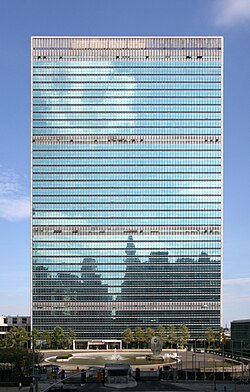
Key Facts
- Current Incumbent: António Guterres (since 1 January 2017).
- Term Length: Five years, renewable once.
- Selection Process: Nominated by the Security Council and appointed by the General Assembly.
- Official Residence: A townhouse at 3 Sutton Place, Manhattan, New York City.
- Annual Salary: $227,253 (2024).
- Core Requirement: By custom, the appointee cannot be a citizen of any of the five permanent members of the Security Council.
Selection and Tenure
The process of choosing a Secretary-General is often described as opaque, with some comparing the secretive deliberations to a papal conclave. Since 1981, the Security Council has conducted secret "straw polls" to select a candidate. Once a winner emerges, the name is submitted to the General Assembly for formal ratification. Historically, the General Assembly has never rejected a candidate, and only once in 1950 was a candidate put to a vote despite a Security Council veto.
Qualifications and Diversity
While the UN Charter does not list specific qualifications, precedent has established several unofficial rules. All previous holders of the office have been career diplomats. Furthermore, General Assembly resolution 51/241 suggests that when selecting the "best candidate," consideration should be given to gender equality and regional rotation (ensuring different parts of the world take turns holding the office). To date, no woman has served as Secretary-General.
Terms of Office
Although the length of a term is technically discretionary, all Secretaries-General since 1971 have served five-year terms. Most appointees have been re-selected for a second term. Notable exceptions include Boutros Boutros-Ghali, who was vetoed by the United States in 1996, and Kurt Waldheim, whose third term was blocked by China in 1981.
Modern Initiatives and Leadership
Recent Secretaries-General have used the platform to launch significant global strategies. Under the leadership of António Guterres, the UN has focused heavily on youth engagement and climate action.
Youth Engagement
- Youth 2030: A system-wide strategy launched in 2018 to strengthen global commitments to meeting the needs and rights of young people.
- Youth Advisory Group on Climate Change: Established in 2020, this group allows the Secretary-General to engage directly with young people on environmental issues. The group has expanded from seven to 14 members, with cohorts serving two-year terms.
Our Common Agenda
This initiative serves as a framework for the Secretary-General to drive global cooperation and address the most pressing challenges facing the international community.
Historical Overview of Secretaries-General
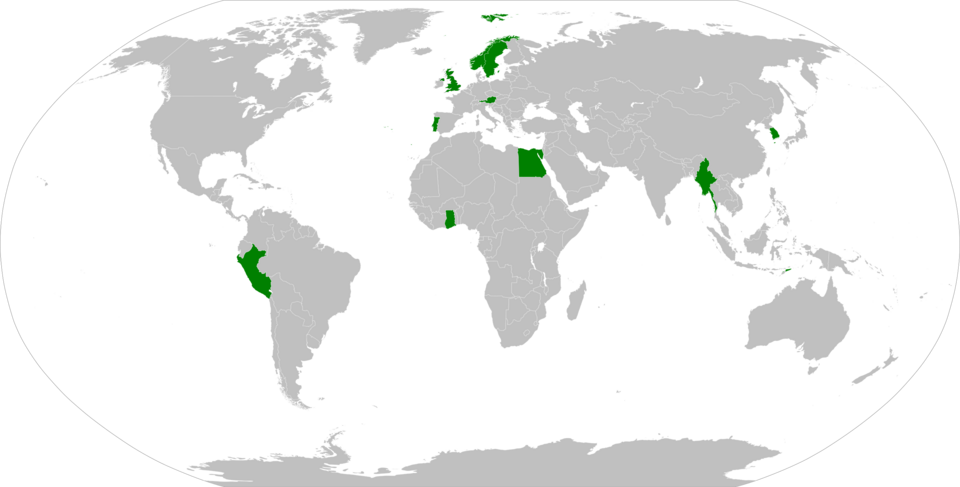
Since the UN's formation on 24 October 1945, the office has been held by leaders from diverse geographic regions. Below is a summary of the individuals who have led the organization.
| No. | Name | Country | Term Started | Term Ended |
|---|---|---|---|---|
| - | Gladwyn Jebb (Acting) | United Kingdom | 1945 | 1946 |
| 1 | Trygve Lie | Norway | 1946 | 1952 |
| 2 | Dag Hammarskjöld | Sweden | 1953 | 1961 |
| - | U Thant (Acting) | Burma | 1961 | 1962 |
| 3 | U Thant | Burma | 1962 | 1971 |
| 4 | Kurt Waldheim | Austria | 1972 | 1981 |
| 5 | Javier Pérez de Cuéllar | Peru | 1982 | 1991 |
| 6 | Boutros Boutros-Ghali | Egypt | 1992 | 1996 |
| 7 | Kofi Annan | Ghana | 1997 | 2006 |
| 8 | Ban Ki-moon | South Korea | 2007 | 2016 |
| 9 | António Guterres | Portugal | 2017 | Incumbent |
Frequently Asked Questions
Who is the current Secretary-General?
The current Secretary-General is António Guterres, who has been in office since 1 January 2017. He is the first former head of government to hold the position.
How is a Secretary-General chosen?
The Security Council selects a candidate through a series of secret votes known as straw polls. Once a candidate is chosen, the General Assembly must ratify the appointment.
Can a Secretary-General serve more than two terms?
While there is no formal term limit in the UN Charter, custom has dictated that Secretaries-General generally serve a maximum of two five-year terms. No incumbent has sought a third term since 1981.
Where does the Secretary-General live?
The official residence is a townhouse located at 3 Sutton Place in Manhattan, New York City. The building was donated to the United Nations in 1972.
What is the "Youth 2030" strategy?
Launched in 2018, Youth 2030 is a UN-wide strategy designed to increase global commitments to the rights and needs of young people, recognizing them as essential agents of change.