UN Security Council Veto Power: Mechanics, History, and Controversy
The veto power is one of the most potent and debated mechanisms in global governance. Held exclusively by the five permanent members of the United Nations Security Council (UNSC)—China, France, Russia, the United Kingdom, and the United States—this authority allows any one of these nations to block a substantive resolution, regardless of how much international support the proposal has.
While designed to ensure that the world's major powers remain engaged with the UN, the veto has often become a flashpoint for diplomatic deadlock, influencing everything from humanitarian interventions to the admission of new member states.
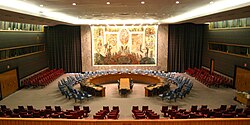
How the Veto Works
The veto is not an absolute block on every single action the Council takes. Its application is governed by specific rules regarding the nature of the decision being made:
- Substantive Decisions: Any non-procedural resolution requires the concurring votes of the permanent members. A single "no" vote from a permanent member constitutes a veto, killing the resolution.
- Procedural Decisions: Matters such as changing the meeting agenda or inviting a non-member to a meeting are considered procedural and cannot be vetoed.
- Abstentions: If a permanent member is absent or chooses to abstain from a vote, it does not count as a veto, and the resolution can still pass.
Key Facts
- The P5: Only China, France, Russia, the UK, and the US hold veto power.
- Historical Peak: The Soviet Union cast 93% of all vetoes between 1946 and 1969.
- Recent Trends: Russia has been the most frequent user of the veto since 1992.
- Accountability: As of April 26, 2022, the General Assembly mandates a debate whenever a veto is cast in the Security Council.
- Inactive Users: France and the United Kingdom have not used their veto power since 1989.
Historical Evolution and Usage
The concept of a veto was not new in 1945. The League of Nations, the UN's predecessor, allowed every member of its Council to veto non-procedural issues. However, by 1936, the League Council had expanded to 15 members with veto power, making it nearly impossible to reach agreements. The UN streamlined this power to only five permanent members to avoid such total paralysis.
The Cold War Era (1946–1990)
From 1946 to 1969, the Security Council was largely aligned with the United States, which won most votes and cast no vetoes during this time. In contrast, the Soviet Union used the veto extensively to block Western-backed resolutions. During this period, France and the UK occasionally used their power to protect colonial interests.
Post-Cold War and the 21st Century
The end of the Cold War brought a brief era of harmony. The period from May 31, 1990, to May 11, 1993, stands as the longest stretch in UN history without a single veto. While usage dropped significantly after the Cold War, it surged again in the early 21st century, particularly in response to the Syrian Civil War.
| Permanent Member | Total Vetoes Cast | Notable Usage Trend |
|---|---|---|
| Russia / USSR | 130 | Most frequent user overall |
| United States | 89 | 51 vetoes used to protect Israel |
| United Kingdom | 29 | No vetoes cast since 1989 |
| China | 20 | Frequent joint vetoes with Russia since 2011 |
| France | 16 | No vetoes cast since 1989 |
Country-Specific Case Studies
China: From ROC to PRC
Until 1971, the Republic of China (ROC) held the Chinese seat. The ROC used its only veto in 1955 to block Mongolia's admission. After the People's Republic of China (PRC) took the seat in 1971, it initially used the veto sparingly, often preferring to abstain. However, since 2011, China has frequently joined Russia in joint vetoes.
The Soviet Union and Russia
The Soviet Union once adopted an "empty chair" policy in 1950 to protest the ROC's seat, which inadvertently allowed resolutions authorizing assistance to South Korea in the Korean War to pass without a Soviet veto.
The United Kingdom and France
The UK and France often acted in concert, notably vetoing a resolution regarding the Suez Canal crisis in 1956. The UK also used its veto seven times between 1963 and 1973 regarding Rhodesia, five of which were unilateral.
The Great Debate: Support vs. Criticism
The veto remains one of the most controversial aspects of the UN Charter, splitting opinion between those who see it as a necessity and those who see it as an obstacle.
Arguments in Support
Supporters argue that the veto is a critical safeguard. They contend that if the UN attempted to enforce binding actions against a permanent member, the organization would collapse. Russia and China specifically view the veto as a tool for international stability and a check against unilateral military interventions.
Arguments Against
Critics describe the veto as the most undemocratic element of the UN. They argue it is the primary cause of inaction regarding war crimes and crimes against humanity, as it allows permanent members to shield themselves and their allies from accountability.
Beyond actual votes, the "pocket veto"—the mere threat of a veto—can stifle action. Examples include threatened vetoes by the US and France during the Rwandan genocide (1994), and by Russia and China during the ethnic cleansing in Kosovo (1998–99) and the Darfur genocide (2004).
Frequently Asked Questions
Can a procedural vote be vetoed?
No. Procedural decisions, such as setting the meeting agenda or inviting non-members to a session, cannot be blocked by a permanent member's veto.
What happens if a permanent member abstains from a vote?
An abstention or absence does not count as a veto. If the required number of other votes is met, the resolution can still be adopted.
Which country has used the veto the most?
Russia (including the former Soviet Union) has used the veto more than any other member, with 130 instances as of April 2026.
How has the General Assembly responded to the veto power?
On April 26, 2022, the General Assembly adopted a resolution that requires a debate to be held whenever a veto is cast in the Security Council, increasing transparency and accountability.
Why was the veto created in the first place?
It was designed to ensure that the most powerful nations remained part of the UN and to prevent the organization from taking binding actions that could lead to direct conflict between major nuclear powers.