Universal Declaration of Human Rights: The Foundation of Global Liberty
In the aftermath of global conflict, the world sought a common standard to protect the inherent dignity of every individual. This quest led to the creation of the Universal Declaration of Human Rights (UDHR), a landmark document that codifies the fundamental rights and freedoms belonging to all human beings. Adopted by the United Nations General Assembly, the UDHR serves as a cornerstone of modern international law and a moral compass for nations worldwide.
![Freedom from Fear (Saturday, March 13, 1943)–from the Four Freedoms series by Norman Rockwell. The freedom from fear is mentioned in the preamble of the Declaration.[18]](/images/44/92/44929f7d9c1e727fb3714e9617708d3e9196b093c4e18d7937d43e9d8cbebf63.jpg)
Key Facts
- Adopted: 10 December 1948
- Location: Palais de Chaillot, Paris, France
- Chairperson: Eleanor Roosevelt
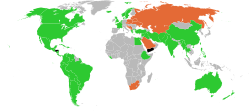
- Adoption Vote: 48 in favour, 0 against, 8 abstentions, 2 did not vote
- Annual Commemoration: World Human Rights Day (10 December)
The History and Drafting of the UDHR
The journey toward a universal standard began in June 1946, when the Economic and Social Council (ECOSOC)—a principal organ of the United Nations responsible for promoting human rights—established the Commission on Human Rights (CHR). This standing body was tasked with preparing what was originally envisioned as an International Bill of Rights.
To ensure the document was representative of humanity, the Commission included 18 members from diverse national, religious, and political backgrounds. In February 1947, a special Universal Declaration of Human Rights Drafting Committee was formed, led by Eleanor Roosevelt of the United States. Roosevelt played a pivotal role in driving the U.S. effort to encourage the General Assembly to adopt the declaration.
Refining the Text: The Geneva Process
The drafting process was a rigorous two-year endeavor. Following the conclusion of the committee's sessions in May 1948, a redrafted text was submitted to the Commission on Human Rights. During the third session in Geneva, the document—often referred to as the "Geneva text"—was circulated among member states for scrutiny and amendment.
One significant contribution to the text came from Hansa Mehta of India, who suggested changing the phrase "all men are created equal" to "all human beings are created equal." This amendment was crucial in ensuring the Declaration better reflected the principle of gender equality.
The Adoption in Paris
The final stages of approval moved through several UN bodies. After the Commission on Human Rights approved the text on 18 June 1948, it was forwarded to the Economic and Social Council. Following the Council's review, the draft was transmitted to the General Assembly.
On 10 December 1948, at the Palais de Chaillot in Paris, the General Assembly officially adopted the UDHR as Resolution 217. The vote reflected broad international consensus: of the 58 UN member states at the time, 48 voted in favor, none voted against, eight abstained, and two countries—Honduras and Yemen—did not vote or abstain.

Summary of UDHR Adoption Details
| Category | Details |
|---|---|
| Date of Adoption | 10 December 1948 |
| Total UN Members (1948) | 58 |
| Votes in Favour | 48 |
| Votes Against | 0 |
| Abstentions | 8 |
| Did Not Vote | 2 (Honduras and Yemen) |
Legacy and Commemoration
To honor the anniversary of its adoption, 10 December is celebrated annually as World Human Rights Day (or International Human Rights Day). This day is observed by governments, religious groups, human rights organizations, and individuals globally to promote awareness of the Declaration's principles.
Major milestones have marked the UDHR's history, such as the 60th anniversary in 2008, which focused on the theme "Dignity and justice for all of us," and the 70th anniversary in 2018, which featured the global #StandUpForHumanRights campaign aimed at engaging youth.
Frequently Asked Questions
Who was the primary leader during the drafting of the UDHR?
Eleanor Roosevelt, representing the United States, chaired the Universal Declaration of Human Rights Drafting Committee and was instrumental in its successful adoption.
Where was the UDHR officially adopted?
The document was adopted at the Palais de Chaillot in Paris, France, during the third session of the United Nations General Assembly.
What is the significance of December 10th?
December 10th marks the anniversary of the UDHR's adoption and is observed annually as World Human Rights Day to promote awareness of human rights globally.
Was the UDHR adopted unanimously?
While there were no votes against the Declaration, it was not unanimous; 48 countries voted in favor, 8 abstained, and 2 countries did not vote.
How did the drafting process address gender equality?
Hansa Mehta of India proposed an amendment to change the wording from "all men are created equal" to "all human beings are created equal" to ensure the document reflected equality for all genders.