Typhoid Mary: The Story of an Asymptomatic Carrier
The case of Mary Mallon, famously known as Typhoid Mary, remains one of the most significant episodes in the history of public health. A cook by trade, Mallon became the first person in the United States identified as an asymptomatic carrier of typhoid fever—someone who harbors a pathogen without showing any signs of illness, yet can spread the disease to others.
Her story is a complex intersection of early 20th-century medical discovery, legal battles over individual liberty, and the evolving understanding of how infectious diseases move through a population.
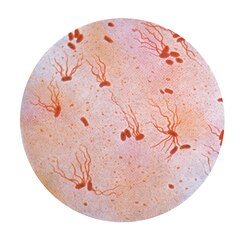
Key Facts
- Identity: Mary Mallon, an Irish immigrant who worked as a private cook in New York City.
- Pathogen: Salmonella enterica serotype Typhi, the bacteria responsible for typhoid fever.
- Medical Status: An asymptomatic carrier, meaning she felt healthy while shedding bacteria.
- Impact: Linked to dozens of typhoid cases across multiple households and a maternity hospital.
- Containment: Spent a total of 23 years in quarantine on North Brother Island.
Early Life and Career
Mary Mallon was born on September 23, 1869, in Cookstown, County Tyrone, Ireland. At approximately fifteen years of age, she emigrated to the United States in 1883. Settling in New York City, Mallon found employment as a private cook for wealthy families, a role that provided her with good wages and a favorable professional reputation.
Between 1897 and 1906, a disturbing pattern emerged. In several households where Mallon worked, residents and staff began contracting typhoid fever. In 1902, while working for J. Coleman Drayton in Maine, nine people fell ill, though Mallon herself remained healthy. In 1906, while employed by banker Charles Henry Warren in Oyster Bay, six family members contracted the disease.
The Investigation of George Soper
Concerned about the recurring outbreaks at his rental property, George Thompson hired George Soper, a sanitation engineer and epidemiologist, to find the source of the infection. Soper, known as an "epidemic fighter," systematically ruled out contaminated water and food supplies.
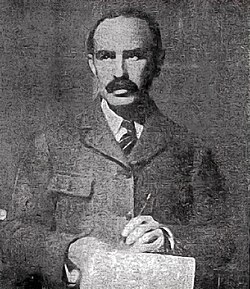
Soper's investigation led him to Mallon. He discovered that she had worked for eight families, seven of whom had suffered typhoid outbreaks. He specifically noted that Mallon prepared dishes like peach ice cream, which provided an ideal medium for the bacteria to survive and infect others. By mapping her employment history, Soper identified 26 cases of typhoid connected to her.
When Soper attempted to explain the situation to Mallon in March 1907 and requested samples for testing, she reacted violently, attacking him with a carving fork. After further failed attempts at persuasion by Dr. Sara Josephine Baker, Mallon was forcibly taken to Willard Parker Hospital by police.
Quarantine and the "Typhoid Mary" Persona
Medical tests confirmed the presence of Bacillus typhosus in Mallon's system. Because she refused the surgical removal of her gallbladder—where the bacteria were primarily housed—the Health Department transferred her to Riverside Hospital on North Brother Island.
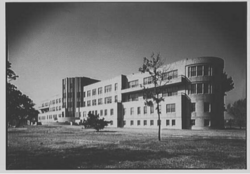
In 1909, Mallon challenged her captivity in court. The case gained massive public attention through the New York American, which coined the nickname "Typhoid Mary." Despite the media's portrayal of her as a "lone woman," the courts ruled that her confinement was legal under the precedent of Jacobson v. Massachusetts, which upheld the state's authority to enforce health laws for the public good.
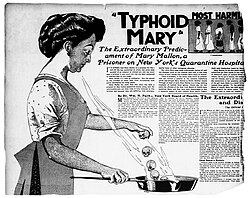
Release and Recurrence
In 1910, Health Commissioner Ernst J. Lederle released Mallon under the condition that she would never work as a cook again. However, Mallon eventually returned to the profession. In 1914, she was hired under the alias "Mary Brown" at the Sloane Maternity Hospital. This resulted in an outbreak of 25 cases and two deaths.
Soper was called back to investigate and identified Mallon through handwriting analysis. She was apprehended in March 1915 and returned to North Brother Island for the remainder of her life.
Later Years and Death
During her second period of confinement, Mallon became a productive member of the hospital community. She sold cakes and jewelry and eventually worked as a laboratory assistant for physicians Alexandra Plavska and Emma Rose Goldberg, who described her as a dependable worker.
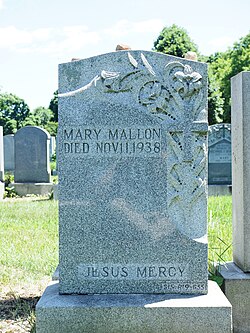
Mallon suffered a major stroke in 1932, leaving her paralyzed. She died on November 11, 1938. While some reports suggest an autopsy found bacteria in her gallstones, other historians argue this is an urban legend.
| Period | Key Event | Outcome |
|---|---|---|
| 1883 | Emigration to USA | Settled in New York City as a cook. |
| 1897–1906 | Employment Period | Multiple typhoid outbreaks in employer households. |
| 1907–1910 | First Quarantine | Confined to North Brother Island. |
| 1910–1915 | Conditional Release | Returned to cooking; caused outbreak at Sloane Hospital. |
| 1915–1938 | Final Quarantine | Worked in hospital lab until her death. |
Frequently Asked Questions
What does it mean to be an asymptomatic carrier?
An asymptomatic carrier is an individual who is infected with a pathogen but shows no symptoms of the disease. Despite feeling healthy, they can still transmit the infection to others.
Why was Mary Mallon unable to be cured?
The typhoid bacteria were held in her gallbladder. At the time, the most effective way to stop the shedding of the bacteria was the surgical removal of the gallbladder, a procedure Mallon refused.
How did George Soper identify Mallon as the source?
Soper used a combination of epidemiological mapping and employment history. He found that typhoid outbreaks followed Mallon from one household to another, even when water and food supplies were clean.
Was the quarantine of Mary Mallon legal?
Yes. The courts based their decision on the 1905 Supreme Court case Jacobson v. Massachusetts, which established that the state has the authority to prioritize public safety over individual liberty in the face of a public health threat.
What happened to Mary Mallon in her final years?
She lived on North Brother Island, where she worked as a laboratory assistant and became friends with the medical staff before suffering a stroke and passing away in 1938.