Infection: Pathogens, Transmission, and Prevention
An infection occurs when harmful microorganisms, known as pathogens, enter a host organism and begin to multiply. These biological invaders can disrupt normal bodily functions, leading to a wide range of clinical symptoms. From the common cold to global pandemics, infectious diseases have shaped human history and continue to be a primary focus of modern medicine.
The process of infection is not uniform; it depends on a complex interaction between the invading agent and the host's biological defenses. Understanding how these pathogens operate is essential for effective diagnosis and treatment.
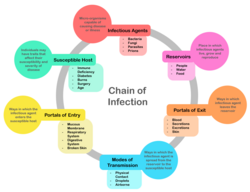
Key Facts

- Pathogens include bacteria, viruses, fungi, parasites, and prions.
- Antibiotics are specifically used to treat bacterial infections, not viral ones.
- Susceptibility to infection is influenced by age, general health, immune status, and genetic factors.
- Prevention strategies include hygiene (such as hand washing) and the use of antiseptics on living tissue.
- Epidemiology shows that infectious diseases caused an estimated 1,680 million deaths during the 20th century.
Types of Infectious Agents
![Disability-adjusted life year for infectious and parasitic diseases per 100,000 inhabitants in 2004:[83] no data ≤250 250–500 500–1000 1000–2000 2000–3000 3000–4000 4000–5000 5000–6250 6250–12,500 12,500–25,000 25,000–50,000 ≥50,000](/images/60/68/6068f5966626f92295d451fc18802c8440de2a21a331979faa537cf503524739.webp)
Infections are categorized by the type of pathogen responsible for the disease. Each type requires a different medical approach for treatment.
Bacterial and Viral Infections
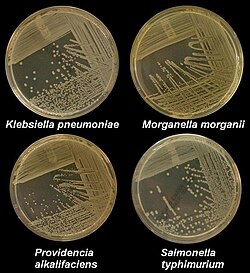
Bacterial infections are caused by pathogenic bacteria and are typically treated with antibiotics. Viral infections are caused by pathogenic viruses and generally require different interventions, as antibiotics are ineffective against them.
Fungi and Parasites
Fungal infections can vary in severity and type. Parasites are generally divided into unicellular organisms—such as those causing malaria, Toxoplasma, and Babesia—and multicellular organisms.
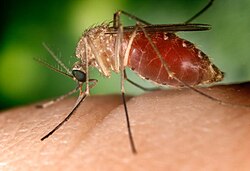
Pathophysiology and Transmission

The transition from exposure to active disease involves several critical stages. Colonization occurs when a pathogen enters the host. The ultimate outcome depends on several variables:
- The route of entry and the specific host regions accessed.
- The intrinsic virulence (the severity or harmfulness) of the organism.
- The initial quantity or load of the inoculant.
- The immune status of the host.
![This image depicts the steps of pathogenic infection.[16]](/images/22/71/227161b30f060362fea53c1d4560e33a9956d4d69a45fc5bd11a484b935bd409.png)
Infections can be primary, where the pathogen causes disease in a healthy host, or opportunistic, where the pathogen takes advantage of a weakened immune system. Some individuals may also be asymptomatic carriers—people who harbor the pathogen without showing symptoms but can still transmit the disease to others.

Diagnosis and Classification
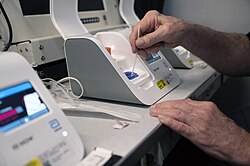
Medical professionals use various diagnostic tools to identify the causative agent of an infection. These include symptomatic diagnostics, microbial cultures, microscopy, biochemical tests, and advanced molecular methods like PCR-based diagnostics (Polymerase Chain Reaction) and metagenomic sequencing.
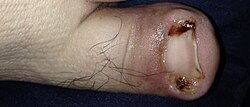
Infections are often classified by their anatomic location, such as:
- Respiratory tract infections (lungs and airways).
- Urinary tract infections (bladder and kidneys).
- Skin infections (dermal layers).
- Odontogenic infections (originating within a tooth or surrounding tissues).
- Vaginal and intra-amniotic infections.
Susceptibility and Immunity
Not everyone reacts to a pathogen in the same way. Susceptibility is driven by a combination of general health, age, and genetics. For example, in the case of SARS-CoV-2, up to 40% of infections may be asymptomatic. Research has identified genetic variants, such as those affecting type I interferon (IFN), that are associated with life-threatening disease in some patients.
Immunity can be achieved through previous infection or vaccination, which helps the body neutralize viruses before they can enter cells.
![Washing one's hands, a form of hygiene, is an effective way to prevent the spread of infectious disease.[65]](/images/a3/d4/a3d466f4e5900ae82b7b930cfa80f7a2943d745fa8cc346cb8c7c83576163117.jpg)
Epidemiology and Global Impact
Infectious diseases have historically been among the leading causes of death worldwide. While medical advancements have reduced mortality, they remain a significant global health challenge.
| Rank | Cause of Death | Deaths (Millions) | Percentage of All Deaths |
|---|---|---|---|
| 1 | Lower respiratory infections | 3.9 | 6.9% |
| 2 | HIV / AIDS | 2.8 | 4.9% |
| 3 | Diarrheal diseases | 1.8 | 3.2% |
| 4 | Tuberculosis (TB) | 1.6 | 2.7% |
| 5 | Malaria | 1.3 | 2.2% |
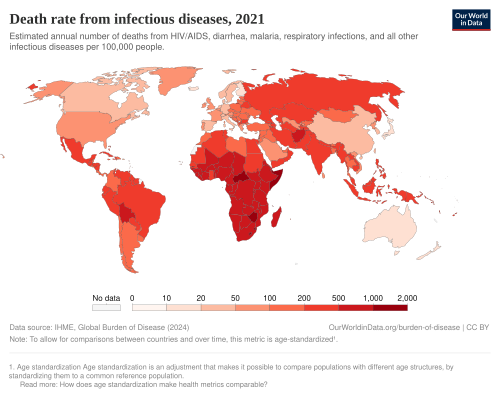
Historic pandemics illustrate the devastating potential of these diseases. For instance, the Great Plague of Marseille in 1720 killed 100,000 people, and smallpox killed an estimated 60 million Europeans during the 18th century.

Frequently Asked Questions
What is the difference between a primary and an opportunistic pathogen?
A primary pathogen can cause disease in a healthy person with a functional immune system, whereas an opportunistic pathogen typically only causes disease in individuals who are immunocompromised or have other underlying health issues.
Can antibiotics treat a viral infection?
No, antibiotics are designed specifically to target bacteria. They have no effect on viruses, which is why they are not used to treat illnesses like the common cold or flu.
What is an asymptomatic carrier?
An asymptomatic carrier is an individual who is infected with a pathogen but does not exhibit any clinical signs or symptoms of the disease, yet can still spread the infection to others.
How does genetics affect susceptibility to infection?
Genetic factors can determine how the immune system responds to a pathogen. For example, variants in the type I interferon (IFN) gene have been linked to the severity of COVID-19 infections in some patients.
What are the most common ways to prevent the spread of infection?
Effective prevention methods include practicing good hygiene, such as frequent hand washing, and using antiseptics on the skin to eliminate pathogens before they can enter the body.