Tuttlingen: Germany's Global Hub for Surgical Technology
Nestled in the valley of the Upper Danube within the state of Baden-Württemberg, Tuttlingen is a town of remarkable industrial significance. Located east of the Black Forest in the Swabian Jura region, this administrative capital of the Tuttlingen district blends a rich medieval history with a modern identity as a world leader in medical engineering.
The town's geography is defined by its proximity to the source of the Danube, located just 30 km away in Donaueschingen. Historically, the town grew around the Honberg mountain, where the ruins of a medieval fortress still stand as a testament to its strategic past.
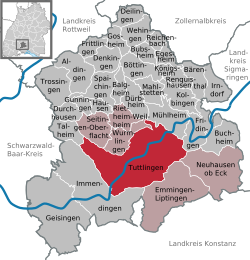
Key Facts
- Global Impact: Approximately 50% of the world's surgical equipment is manufactured in Tuttlingen.
- Industrial Density: Home to over 600 surgical equipment companies and 1,900 total businesses.
- Population: 37,109 inhabitants (as of December 31, 2024).
- Geography: Situated in the Upper Danube valley, Baden-Württemberg, Germany.
- Key Employer: Aesculap (part of B. Braun Melsungen) is the town's largest employer.
A Journey Through History
Tuttlingen's origins likely date back to a Celtic settlement, later reinforced by a Roman border castellum (a small military fort) at the limes. First mentioned in historical records in 797, the town later became part of the monastery of Reichenau and eventually joined Württemberg in the late 14th century.
The town's resilience was tested multiple times. During the Thirty Years' War, it served as a southern outpost for the Duchy of Württemberg, notably hosting the Battle of Tuttlingen on November 24, 1643, where Imperial-Bavarian forces defeated the French army. In 1803, a devastating fire destroyed nearly everything within the town walls, leading to a complete reconstruction starting in 1804. This redesign, led by architect Carl Leonard von Uber, gave the town its classicist layout of right-angle streets.
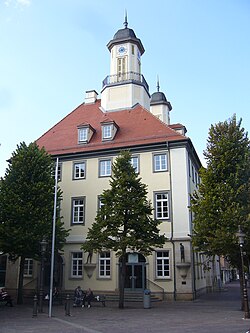
The 20th century brought both industrial growth and hardship. During the National Socialist regime, the town hosted prison and forced labor camps. A somber reminder of this era is the cemetery where 3,645 victims of the "Euthanasia-campaign T4" were cremated. Following World War II, the town was part of the French Zone of Occupation until 1952, when it became part of the newly formed state of Baden-Württemberg.
Economic Powerhouse: The World Capital of Surgery
Tuttlingen is globally recognized for its concentration of medical technology. The town hosts more than 600 companies specializing in surgical instruments, making it an indispensable node in global healthcare supply chains.
The industrial landscape is dominated by Aesculap, the oldest and most prestigious surgical manufacturer in the area. Other significant players include Karl Storz GmbH, specializing in endoscopy and ENT equipment, and KLS Martin. While medical tech is the primary driver, the town also has a history of shoe manufacturing, supported by the tanneries that once lined the Danube.
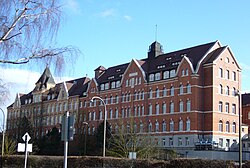
Major Companies in Tuttlingen
- Aesculap: Largest employer and global leader in surgical tools.
- Karl Storz GmbH: Specialists in endoscopy and ENT equipment.
- KLS Martin: Medical technology distribution.
- Storz & Bickel GmbH: Medically certified vaporizers.
- Rieker: Notable shoe manufacturer.
- BINDER GmbH: Environmental simulation chambers and incubators.
Culture, Sport, and Tourism
Beyond industry, Tuttlingen offers a vibrant cultural scene. The Honberg Sommer music festival in July brings international bands and cabaret to the region, while the Southside Festival in June attracts fans of alternative rock. The town's pedestrian precinct is a hub of local life, featuring bi-weekly markets and art displays.
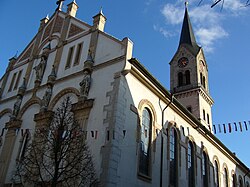
The town's beauty was once noted by the famous poet Goethe, who described the surrounding hilly landscape of fields and forests as "strange and beautiful." For those visiting, the Protestant Church of Saints Peter and Paul remains a significant landmark.
Town Overview Summary
| Category | Details |
|---|---|
| State | Baden-Württemberg |
| Total Area | 90.45 km² |
| Elevation | 645 m |
| Population (2024) | 37,109 |
| Main Industry | Surgical Equipment |
| Postal Codes | 78501–78532 |
Climate Data
Tuttlingen experiences a temperate climate with distinct seasonal variations. The warmest month is typically July, with a daily mean of 17.2°C, while January is the coldest at -0.5°C. The town receives an average annual precipitation of 878.2 mm, with the heaviest rainfall occurring in the summer months.
Frequently Asked Questions
Why is Tuttlingen famous globally?
Tuttlingen is world-renowned as a center for medical technology, specifically surgical instruments. It is estimated that 50% of the world's surgical equipment is manufactured within the town.
What is the significance of the Honberg mountain?
The Honberg mountain is home to the ruins of a medieval fortress and is the site of the "Honberg Sommer" music festival held every July.
How did the town recover from the fire of 1803?
After a fire destroyed most of the town within the walls, it was rebuilt starting in 1804 by architect Carl Leonard von Uber using classicist plans featuring rectangular housing and right-angle streets.
Which airports are closest to Tuttlingen?
The nearest airports are Friedrichshafen (77 km), Zurich (103 km), Stuttgart (124.5 km), and EuroAirport Basel-Mulhouse-Freiburg (163 km).
Who is Aesculap?
Aesculap is the oldest and most renowned surgical equipment manufacturer in Tuttlingen and serves as the town's largest employer. It has been part of B. Braun Melsungen since 1998.