Tsardom of Bulgaria: A History of Ambition, Conflict, and Transition (1908–1946)
The Tsardom of Bulgaria represented a pivotal era in the Balkans, marking the nation's transition from a principality under Ottoman suzerainty to a fully independent sovereign state. Established in 1908, the Tsardom was characterized by a relentless pursuit of territorial unification, a series of devastating wars, and a complex political evolution that shifted between constitutional monarchy and authoritarian rule.
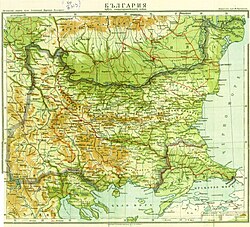
Driven by the motto "Unity makes strength" (Съединението прави силата), Bulgaria sought to consolidate ethnic Bulgarian populations scattered across Macedonia and Thrace. This ambition set the stage for decades of geopolitical tension with neighboring Serbia, Greece, and Romania.
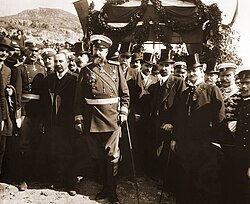
Key Facts
- Duration: 1908 to 1946.
- Government: Transitioned from a constitutional monarchy to an authoritarian absolute monarchy (1935–1943) before returning to a constitutional system.
- State Religion: Eastern Orthodoxy.
- Key Rulers: Tsar Ferdinand I, Tsar Boris III, and Tsar Simeon II.
- Capital: Sofia.
- Major Conflicts: The Balkan Wars, World War I, and World War II.
The Path to Independence and the Balkan Wars
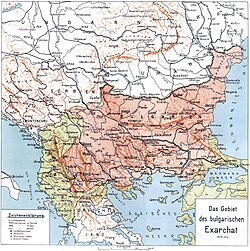
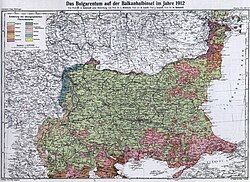
While the Principality of Bulgaria was established in 1878, many Bulgarians remained under Ottoman rule in Macedonia and Adrianople. This created a volatile environment where Bulgaria, Serbia, and Greece competed for influence. In 1903, the Ilinden–Preobrazhenie Uprising signaled the growing instability of Ottoman control.
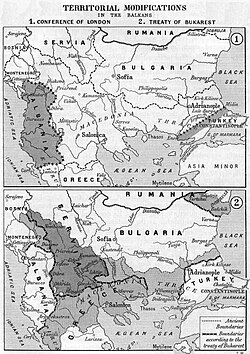
In 1912, Bulgaria formed secret alliances with Serbia, Greece, and Montenegro to partition Macedonia and Thrace. This led to the First Balkan War in October 1912. However, vague agreements regarding the division of conquered lands quickly led to the Second Balkan War, as the allies turned on one another.
World War I and the "Second National Catastrophe"
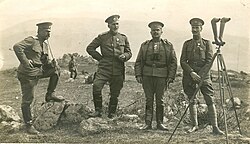
Bulgaria entered World War I in 1915, aligning with the Central Powers. However, a breakthrough by Allied forces on the Macedonian front in September 1918 forced Tsar Ferdinand I to seek peace. To avoid a revolution, Ferdinand abdicated in favor of his son, Boris III.
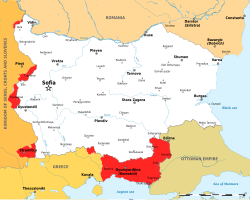
The subsequent Treaty of Neuilly-sur-Seine (1919) was a devastating blow to the nation, often referred to as the "Second National Catastrophe." Bulgaria lost its Aegean coastline (Western Thrace) to Greece, Southern Dobruja to Romania, and parts of Macedonia to the new Kingdom of Yugoslavia. Additionally, the army was capped at 20,000 men, and the state was burdened with reparations exceeding $100 million.
The Interwar Period and Political Turmoil
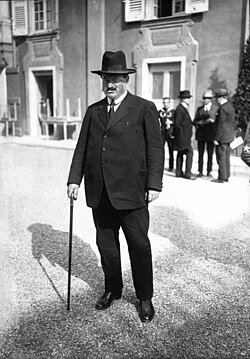
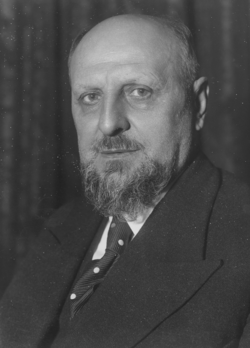
The 1920s were marked by political instability. In March 1920, the Agrarians, led by Aleksandar Stamboliyski, formed the country's first genuinely democratic government. However, this era was short-lived; a coup d'état in June 1923 ousted Stamboliyski, leading to the cabinets of Aleksandar Tsankov and later Lyapchev.
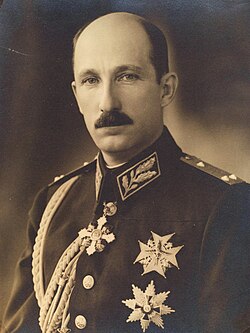
By 1934, another coup occurred, but by 1935, Tsar Boris III executed a counter-coup, establishing a de facto authoritarian absolute monarchy that lasted until 1943.
World War II and the Fall of the Monarchy
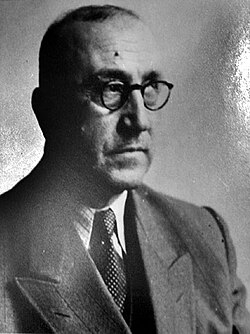
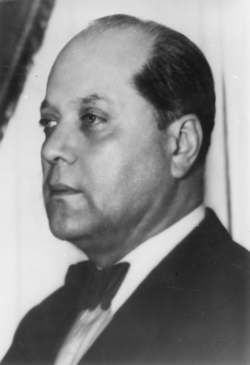
At the start of World War II, Bulgaria declared neutrality under Prime Minister Georgi Kyoseivanov. However, the pressure of its central geopolitical position eventually pushed the nation toward the Axis powers. Under Prime Minister Bogdan Filov, Bulgaria recovered Southern Dobruja via the Treaty of Craiova in 1940.
Bulgaria's involvement in the war included the occupation of territories in Yugoslavia and Greece. During this period, the government participated in the Holocaust; while the fate of Jews within Bulgaria's pre-war borders varied, 11,343 Jews from occupied Northern Greece, Yugoslav Macedonia, and Pirot were deported to extermination camps in Poland between 1941 and 1944.
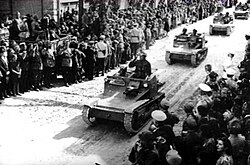
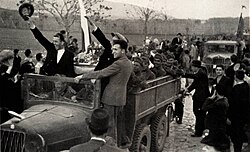
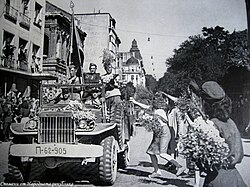
As the Red Army advanced in 1944, Bulgaria attempted to switch sides, declaring war on Germany. Despite this, the Soviet Union declared war on Bulgaria on September 8, 1944, and occupied the country. On September 16, Soviet troops entered Sofia, leading to a communist coup and the eventual abolition of the monarchy on September 15, 1946.
Economy and Society
At the turn of the 20th century, Bulgaria was a predominantly rural, agrarian society. Over 82% of the workforce was engaged in agriculture as late as 1924. The economy suffered heavily from the loss of Southern Dobruja, which had provided 20% of the nation's grain production.
Despite these hardships, Bulgarian peasants were resilient, switching from grains to tobacco and garden crops to compete with Western imports. By the late 1930s, agricultural productivity per hectare was twice that of some more developed European nations. However, industrialization lagged, with the majority of manufacturing remaining small-scale or handicraft-based.
| Category | Details |
|---|---|
| Government Type | Constitutional Monarchy / Absolute Monarchy (1935-43) |
| Key Treaties | Neuilly-sur-Seine (1919), Craiova (1940) |
| Economic Base | Agrarian (over 80% workforce in agriculture) |
| Major Territorial Losses | Western Thrace, Southern Dobruja, Western Outlands |
| End of Era | Abolished by referendum on September 15, 1946 |
Frequently Asked Questions
What was the "Second National Catastrophe"?
The Second National Catastrophe refers to the outcomes of the Treaty of Neuilly-sur-Seine in 1919, where Bulgaria lost significant territories, including its access to the Aegean Sea, and was forced to pay heavy reparations after World War I.
Who were the Tsars of the Tsardom of Bulgaria?
The Tsardom was ruled by three monarchs: Ferdinand I (1908–1918), Boris III (1918–1943), and Simeon II (1943–1946).
How did Bulgaria's economy function during this period?
The economy was overwhelmingly agrarian, with a high percentage of the population working as peasants. While industrialization was slow and often uncompetitive, the agricultural sector was highly intensive and productive per hectare.
What happened to the Bulgarian monarchy in 1946?
Following the Soviet occupation in 1944 and a subsequent communist coup, the monarchy was officially abolished on September 15, 1946, leading to the establishment of the People's Republic of Bulgaria.
What was Bulgaria's role in the Holocaust?
The government of Tsar Boris III and Prime Minister Bogdan Filov implemented anti-Jewish legislation and deported 11,343 Jews from Bulgarian-occupied regions of Greece and Yugoslavia to Nazi extermination camps in Poland.