Bulgaria: A Journey Through the Heart of the Balkans
Located in the southeastern corner of Europe, the Republic of Bulgaria is a land of profound historical depth and diverse natural beauty. From the rugged peaks of the Balkan Mountains to the golden shores of the Black Sea, Bulgaria serves as a cultural bridge between Europe and Asia. With a motto that declares "Unity makes strength," the nation has evolved from a series of powerful medieval empires into a modern unitary parliamentary republic and a member of the European Union.
Today, Bulgaria is characterized by its unique blend of ancient traditions and contemporary aspirations, anchored by its capital, Sofia, and a rich linguistic heritage centered on the Cyrillic script.
Key Facts
- Capital: Sofia, the largest city and political hub.
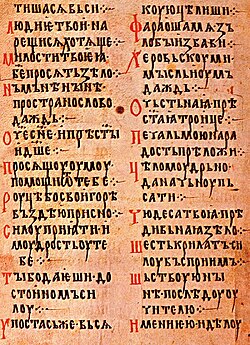
- Official Language: Bulgarian, written in the Cyrillic script.
- Government: Unitary parliamentary republic.
- Currency: Euro (€).
- Population: Approximately 6.42 million (2025 estimate).
- Religion: Predominantly Christianity, with Bulgarian Orthodoxy being the most prominent.
- Geography: Total area of 110,993.6 km², featuring the Rila mountains, the highest in Southeast Europe.
A Legacy of Empires and Resilience
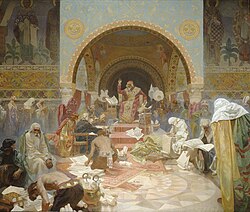
Bulgaria's history is marked by the rise and fall of significant states. The First Bulgarian Empire (681–1018) established the nation as a major power in the Balkans, while the Second Bulgarian Empire (1185–1396) saw a resurgence of territorial expansion and cultural flourishing.
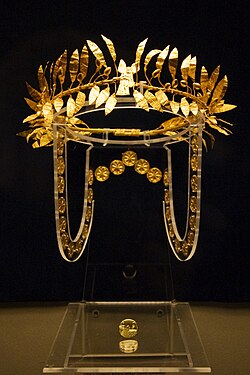
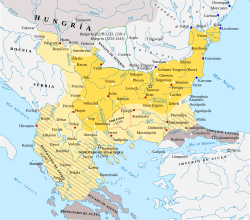
The medieval era reached a peak under leaders like Ivan Asen II, whose reign saw the empire reach its greatest territorial extent.
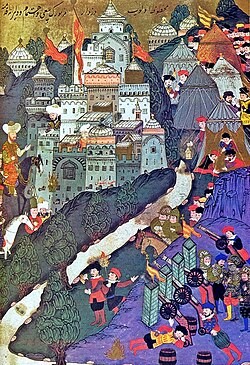
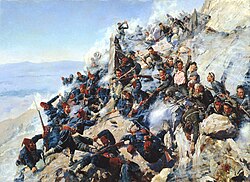
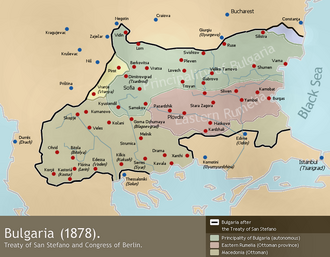
Following the Battle of Nicopolis in 1396, Bulgaria entered a long period of Ottoman rule. This era ended with the struggle for liberation in the 19th century, highlighted by the defense of the Shipka Pass in 1877 and the subsequent Treaty of San Stefano.
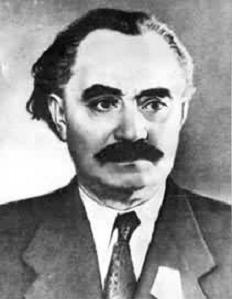
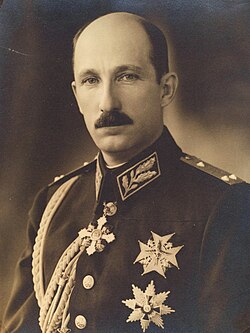
The 20th century brought further transformations, including independence from the Ottoman Empire in 1908, the abolition of the monarchy in 1946, and a period of communist rule under leaders such as Georgi Dimitrov. The current state form was established on November 15, 1990, transitioning the country toward its current democratic structure.
Geography, Climate, and Nature
Bulgaria's landscape is highly varied, ranging from the Danube River in the north to the Black Sea in the east. The topography is dominated by mountains and plains, providing a diverse environment for flora and fauna.
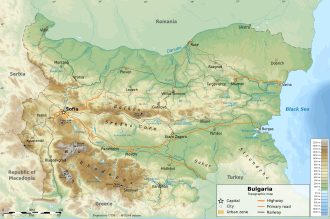
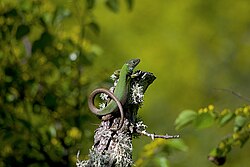
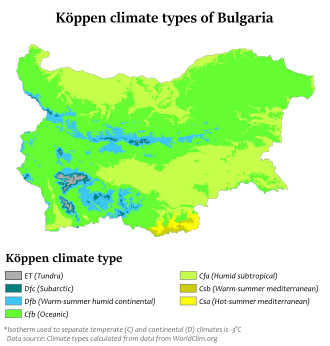
The climate is categorized by various Köppen types, blending continental and Mediterranean influences. This environmental diversity supports ten biosphere reserves, where species like the European green lizard thrive.
Governance and Modern Society
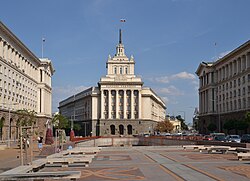
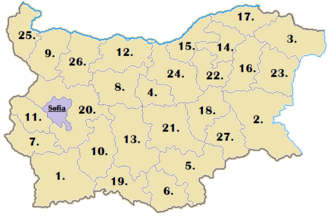
As a unitary parliamentary republic, Bulgaria's political power is centered in Sofia. The city houses the headquarters of the Presidency, the National Assembly, and the Council of Ministers.
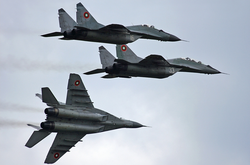
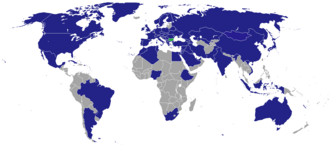
The nation maintains a strong international presence through its diplomatic missions and a modern military force, which includes advanced equipment such as Mikoyan MiG-29 jet fighters.
Economy and Innovation
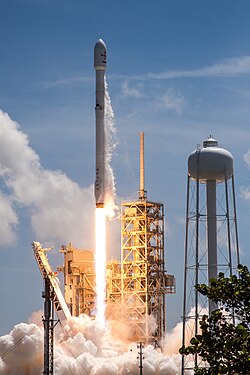
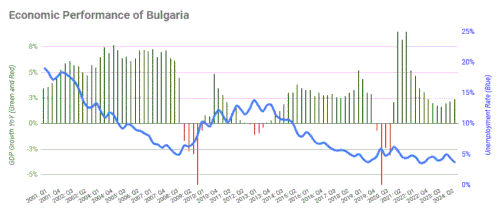
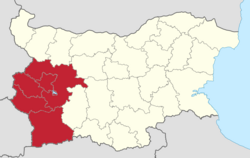
Bulgaria's economy has shown resilience, with a focus on manufacturing, agriculture, and a growing tourism sector. The Yugozapaden planning area stands as the most developed region in the country. In recent years, Bulgaria has expanded its technological horizons, notably with the launch of BulgariaSat-1 via SpaceX.
Education and Culture
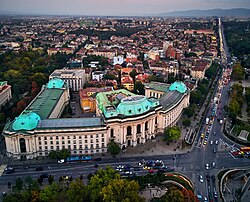
Education is a cornerstone of Bulgarian society, with Sofia University serving as a primary center for higher learning. The nation's cultural identity is deeply tied to the Cyrillic alphabet, which was developed in the region and spread throughout the Slavic world.
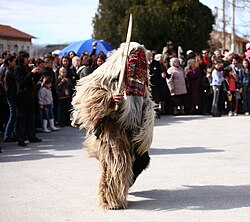
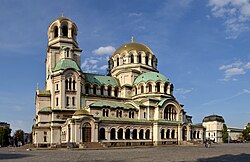
Cultural traditions remain vibrant, seen in the colorful costumes of the Kuker festivals and the architectural splendor of the St. Alexander Nevsky Cathedral.
National Overview Summary
| Category | Details |
|---|---|
| Official Name | Republic of Bulgaria (Република България) |
| Capital City | Sofia |
| GDP (Nominal 2025 Est.) | $117.007 billion |
| HDI (2023) | 0.845 (Very High) |
| Main Ethnic Group | Bulgarians (85.7%) |
| Primary Religion | Bulgarian Orthodoxy (62.7%) |
Frequently Asked Questions
What is the official language and script of Bulgaria?
The official language is Bulgarian, and it is written using the Cyrillic script, which has a significant historical legacy in the Slavic world.
Which is the highest mountain in Southeast Europe located in Bulgaria?
The Rila mountains are the highest in Southeast Europe and are located within Bulgaria.
What are the primary ethnic groups in Bulgaria?
According to the 2021 census, the population consists of 85.7% Bulgarians, 8.5% Turks, 4.5% Roma, and 1.3% other groups.
When did Bulgaria transition to its current state form?
Bulgaria established its current state form on November 15, 1990, following the end of the communist era.
What is the current currency used in Bulgaria?
The official currency of Bulgaria is the Euro (€).