Silistra: A Historic Gateway on the Danube
Located on the southern bank of the lower Danube river in Northeastern Bulgaria, Silistra serves as a vital cultural, industrial, and educational hub. As the administrative center of the Silistra Province and a key city within the historical region of Dobruja, it marks a strategic point where the Bulgarian border follows the river's course. The city is renowned for its deep historical layers, ranging from ancient Thracian settlements to Roman fortifications and Ottoman architecture.
The name Silistra is believed to be derived from "Istrum," the old Thracian name for the lower Danube. Today, the city blends its rich heritage with modern urban life, offering visitors a glimpse into the military and religious history of the Balkans.
Key Facts
- Location: Southern bank of the Danube River, Northeastern Bulgaria.
- Historical Names: Durostorum (Roman), Drastar/Dristra (Medieval), Silistre (Ottoman).
- Population: 29,498 (Town, 2021 census).
- Geography: Part of the Dobruja region, 431 km from Sofia.
- Climate: Temperate (Cfa) with cold, snowy winters and hot summers.
- Key Landmarks: Late Roman tomb, medieval fortress, and Ottoman fort.
Geography and Climate
Silistra is situated in the Bulgarian portion of Dobruja. The city proper covers an area of 27.159 square kilometers, while the broader Silistra municipality encompasses 516 square kilometers, including 18 surrounding villages. It is strategically positioned 119 km from Ruse and 141 km from Varna.
The region experiences a temperate climate. Winters are typically cold and snowy, while summers are hot. Annual precipitation averages around 513.4 mm, with the highest rainfall typically occurring in June.
A Journey Through History
The Roman Era: Durostorum
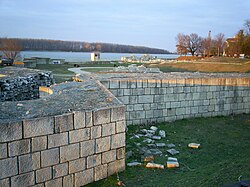
The city's recorded history begins with a Thracian settlement, upon which the Romans built a fort in 29 AD, naming it Durostorum. It became a critical point along the Limes Moesiae (the fortified border of the Roman province of Moesia). Following Trajan's Dacian Wars, the site was expanded into a legionary fortress for the Legio XI Claudia, who remained until approximately 400 AD.
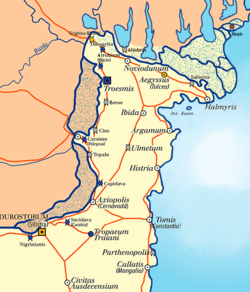
During the Roman period, the city grew into a significant military center and later became a seat of a Christian bishopric. It is noted as the birthplace of the Roman general Flavius Aëtius in 396 AD.
Medieval Transitions and the Bulgarian Empire
In the 7th century, the town was incorporated into the First Bulgarian Empire and became known as Drastar. It served as a site of significant conflict, including a siege by Hungarians in 895 AD under Simeon I the Great. The city shifted between Bulgarian and Byzantine control multiple times, known as Dristra during Byzantine rule.
By the 13th century, under the Second Bulgarian Empire, Drastar remained one of Bulgaria's most important cities, even surviving a three-month Mongol siege in 1279.
Ottoman Rule and Modern Era
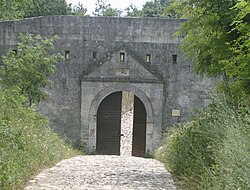
Following the Ottoman conquest around 1400, the city became the center of the Silistra district (sanjak) and later a province. It was a diverse community of Muslims, Christians, and Jews. Notably, between 1819 and 1826, the renowned Jewish scholar Eliezer Papo served as the community's rabbi, and his grave remains a site of international pilgrimage.
The 19th and 20th centuries saw Silistra change hands frequently during the Russo-Turkish Wars and the Balkan Wars. It was transferred between Bulgaria and Romania several times, finally returning to Bulgaria permanently via the Treaty of Craiova in 1940 and the Paris Peace Treaties of 1947.
Demographics and Culture
The population of Silistra peaked between 1986 and 1991, exceeding 70,000 residents. However, following the collapse of the People's Republic of Bulgaria in 1989, the population declined due to migration. As of 2021, the town's population stands at 29,498.
The ethnic composition is predominantly Bulgarian (88.3%), with a significant Turkish minority (10.3%) and smaller Romani and other ethnic groups.
City Overview Summary
| Attribute | Detail |
|---|---|
| Administrative Status | Center of Silistra Province |
| Coordinates | 44°07′02″N 27°15′38″E |
| Elevation | 6 meters (20 ft) |
| Area (Town) | 27.159 km² |
| Population (2021) | 29,498 |
| Time Zone | UTC+2 (EET) / UTC+3 (EEST) |
Frequently Asked Questions
What is the historical significance of Durostorum?
Durostorum was a vital Roman legionary fortress and military center in the province of Moesia, serving as a key defensive point along the Danube frontier (Limes).
Who was Eliezer Papo and why is he important to Silistra?
Eliezer Papo was a renowned Jewish scholar and rabbi who led the Silistra community from 1819 to 1826. His grave in the city continues to attract pilgrims from around the world, including Israel and Latin America.
How has the population of Silistra changed over time?
The population grew steadily during the industrial and agricultural expansion of the People's Republic of Bulgaria, peaking at over 70,000 in 1985, before declining to 29,498 by 2021.
Which notable figures are associated with Silistra?
Notable figures include the Roman general Flavius Aetius, who defeated Attila the Hun, the cleric Parteniy Pavlovich, and the jazz singer Yıldız İbrahimova.
What is the climate like in Silistra?
Silistra has a temperate climate characterized by hot summers and cold, snowy winters, with an average annual precipitation of approximately 513.4 mm.