Bulgaria in World War I: From Neutrality to the Central Powers
The Kingdom of Bulgaria's involvement in World War I was defined by a quest for territorial restoration and a complex diplomatic dance between the great powers of Europe. Entering the conflict on October 14, 1915, Bulgaria aligned itself with the Central Powers (Germany, Austria-Hungary, and the Ottoman Empire), remaining in the war until the Armistice of Salonica on September 30, 1918.
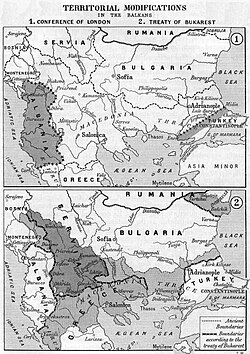
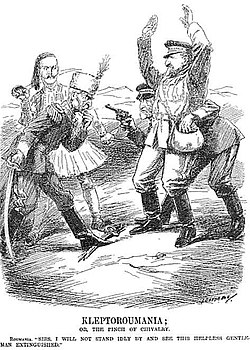
Bulgaria's path to war was paved by the trauma of the Balkan Wars (1912–1913). Following its defeat in the Second Balkan War, the nation felt diplomatically isolated and surrounded by hostile neighbors. This fostered a spirit of revanchism—a political desire to recover lost territories—which became the cornerstone of Bulgarian foreign policy under Prime Minister Vasil Radoslavov.
Key Facts
- Entry Date: October 14, 1915 (Declaration of war on Serbia).
- Exit Date: September 30, 1918 (Armistice of Salonica).
- Primary Goal: Acquisition of Vardar Macedonia and other lost territories.
- Alignment: Member of the Central Powers.
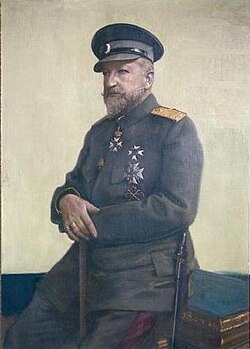
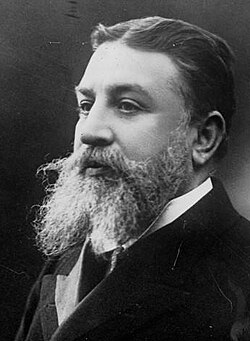
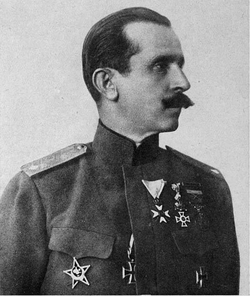
- Key Figures: Tsar Ferdinand I and Prime Minister Vasil Radoslavov.
- Military Strength: Deployed nearly 300,000 men during the initial Serbian campaign.
The Road to Intervention
Economic Strain and Diplomatic Isolation
Following the Treaty of Bucharest, Bulgaria faced a staggering government debt of over 700 million golden leva. The Radoslavov government desperately sought international loans to stabilize the economy and develop new territories. However, France—traditionally a source of Bulgarian credit—refused further loans due to pressure from Russia.
The Strategy of Neutrality
When World War I erupted in July 1914, Bulgaria initially declared neutrality. Its strategic location made it a prize for both the Entente and the Central Powers. While Prime Minister Radoslavov was generally pro-German, he played both sides to secure the best possible territorial guarantees. In August 1914, Bulgaria signed a secret mutual defense pact with the Ottoman Empire, pledging benevolent neutrality unless attacked by another Balkan power.
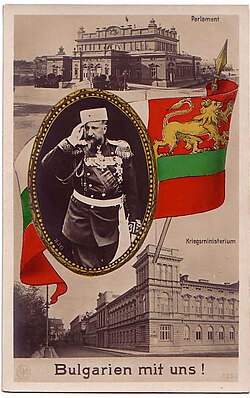
Joining the Central Powers
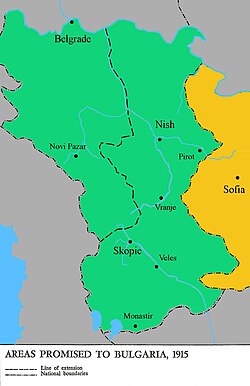
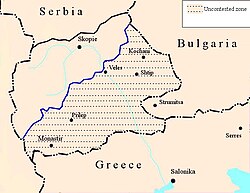
By 1915, the Central Powers offered the most concrete rewards for Bulgarian intervention. Through a secret annex to the Treaty of Alliance, Germany guaranteed Bulgaria the entirety of Vardar Macedonia (including both contested and uncontested zones) and parts of Old Serbia east of the Morava river. Additionally, the Central Powers provided a war loan of 200 million francs.
The Bulgarian Army's Readiness
Despite the economic hardships, Bulgaria maintained a formidable military establishment. By October 1915, the army possessed 1,211 artillery pieces, including 428 quick-firing 75mm field guns. However, the army suffered from a shortage of artillery ammunition, with only about 500 shells per gun available.
![A horse drawn Schneider 75mm cannon. In 1915, the Bulgarian Army had 428 quick-firing 75 mm field guns.[77]](/images/1e/43/1e437700694f9bfda66c37a3fc698d495f060da53d5c18597b9914d92cd8e2dd.jpg)
| Weapon System | Quantity | Ammunition per Weapon |
|---|---|---|
| Mannlicher Rifles | 251,713 | 600 |
| Mosin–Nagant Rifles | 46,056 | 928 |
| Berdan Rifles | 54,912 | 500 |
| Maxim Machine Guns | 248 | 43,000 |
| Sabres | 19,000 | N/A |
The Serbian Campaign
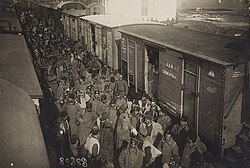
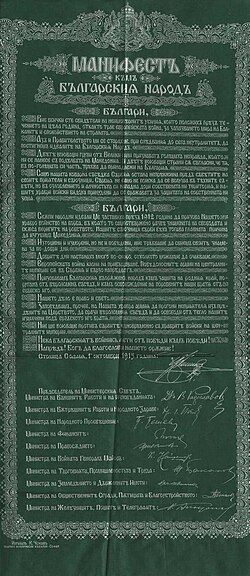
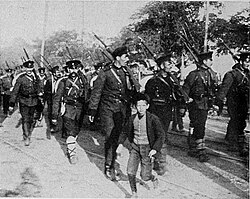
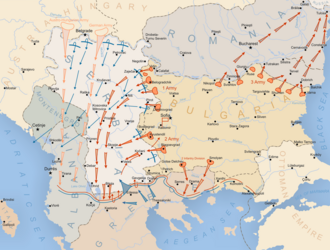
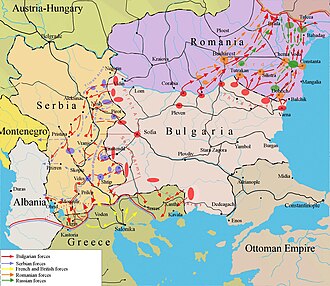
Bulgaria issued a general mobilization decree on September 22, 1915. On October 14, the nation officially declared war on Serbia. The Bulgarian military deployed two field armies totaling nearly 300,000 men to operate across a 300-kilometer front.
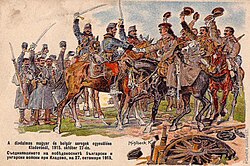
The Bulgarian 1st Army focused on the Morava valley, capturing the wartime capital of Niš on November 5. This operation was critical as it closed the gap between Bulgarian and German forces, permanently opening a land route between Austria-Hungary and Bulgaria.
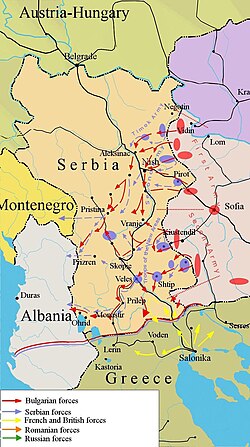
By mid-December 1915, the Kingdom of Serbia was fully occupied. Bulgaria achieved its primary objective—the conquest of Vardar Macedonia—within two months of entering the war. During this campaign, Bulgaria committed approximately 424,375 men and suffered roughly 37,000 casualties.
Frequently Asked Questions
Why did Bulgaria join the Central Powers instead of the Entente?
Bulgaria joined the Central Powers because Germany and Austria-Hungary were more willing and able to guarantee the territorial acquisitions Bulgaria desired, specifically Vardar Macedonia, and provided necessary financial loans that France and Russia refused.
What was the primary military goal of Bulgaria in 1915?
The primary goal was the conquest of Vardar Macedonia and the removal of Serbian influence from the region, which Bulgaria viewed as its rightful territory following the Balkan Wars.
How did the Bulgarian Army perform during the Serbian Campaign?
The Bulgarian Army was highly effective, utilizing two field armies to quickly drive Serbian forces out of the border areas and capture Niš, leading to the total occupation of Serbia by December 1915.
What were the main challenges facing the Bulgarian military?
The most significant challenges included a severe shortage of artillery ammunition and a lack of domestic manufacturing capabilities, leaving the army with only enough shells for about two months of active combat.
When did Bulgaria's participation in World War I end?
Bulgaria's participation ended on September 30, 1918, with the signing of the Armistice of Salonica.