Tree Line Dynamics: The Biological Edge of Forest Habitats
In the vast landscapes of our planet, there exists a definitive boundary where the forest ends and the open wilderness begins. This boundary is known as the tree line—the ecological limit of a habitat beyond which trees can no longer survive. Found at extreme elevations in mountains and high latitudes in polar regions, the tree line represents a delicate balance between biological potential and harsh environmental realities.
While the tree line marks the absolute limit of tree growth, it is often distinguished from the timberline. The timberline refers to the lower elevation below the tree line where trees form a continuous forest with a closed canopy. As one approaches the true tree line, the landscape undergoes a visible transformation: trees become shorter, more widely spaced, and increasingly deformed by the elements.
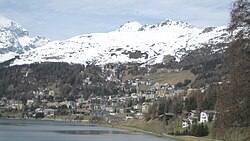
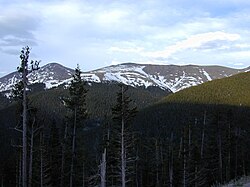
One of the most striking features of this transition is a growth form known as krummholz (German for "crooked wood"). Due to the relentless pressure of freezing temperatures and constant, biting winds, trees at the edge of their range often appear stunted, twisted, and one-sided, hugging the ground to survive.
Key Facts
- Definition: The tree line is the edge of a habitat beyond which trees cannot grow due to environmental constraints.
- Primary Drivers: Growth is primarily limited by mean temperature, extreme snowpack, and moisture availability.
- Temperature Threshold: The tree line generally follows the line where the seasonal mean temperature is approximately 6 °C (43 °F).
- Krummholz: A term describing the stunted, deformed growth of trees near the tree line caused by wind and cold.
- Elevation Patterns: At a given latitude, the tree line typically sits 300 to 1,000 meters below the permanent snow line.
The Drivers of Tree Line Elevation
The specific elevation of a tree line is not random; it is governed by complex climatic and topographical factors. The most significant driver is the mean temperature. For trees to successfully grow, a growing season of at least 94 days with temperatures above 0.9 °C (33.6 °F) is required.
While climate sets the potential limit, the realized tree line—the actual line seen in nature—can be influenced by human activities such as grazing or logging. However, most human interventions cannot shift the actual biological tree line unless they fundamentally alter the regional climate.
Alpine Tree Lines
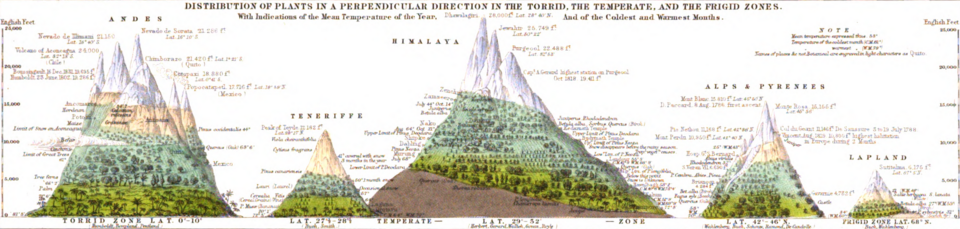
In mountainous regions, the tree line is shaped by the alpine climate, where air temperature decreases as elevation increases. This rate of cooling varies by geography; for instance, mountains in the western United States may see a temperature drop of 1.9 °C per 300 meters, while moister mountains in the eastern United States see a drop of only 0.78 °C per 300 meters.
Topography also plays a critical role through the creation of microclimates. On certain slopes, such as equator-facing or leeward sides, increased solar radiation and low rainfall can dry out the soil, creating arid environments that prevent tree growth even if temperatures are otherwise suitable. In Hawaii, for example, a temperature inversion can block moisture from reaching high-altitude slopes, setting the tree line at approximately 2,400–2,900 meters.
Arctic Tree Lines
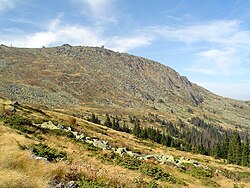
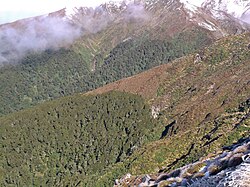
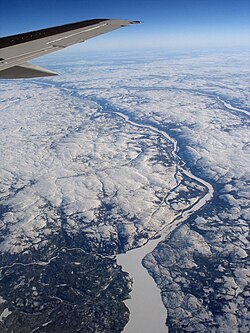
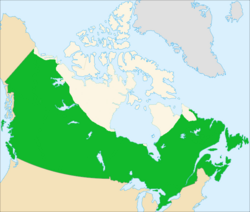
At high latitudes, the tree line is determined by the transition from the boreal forest to the tundra. In some regions, such as the West Siberian Plain, the extreme continental climate allows for relatively warm summers, which enables trees to grow at much higher latitudes than in other polar regions.
Global Distribution and Species
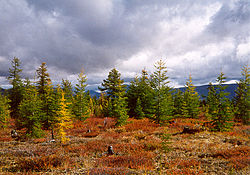
The species that inhabit these edges are often specialized conifers or hardy deciduous trees capable of enduring extreme stress. In the Arctic and alpine zones, you will find a wide variety of resilient species across the globe.
| Region/Location | Approx. Latitude | Approx. Elevation (m) | Key Notes |
|---|---|---|---|
| Finnmarksvidda, Norway | 69°N | 500 | High latitude Arctic zone |
| Canadian Rockies | 51°N | 2,400 | High elevation mountain range |
| Swiss Alps | 47°N | 2,200 | Classic alpine environment |
| Andes, Bolivia | 18°S | 5,200 | Highest tree line in the world (Polylepis) |
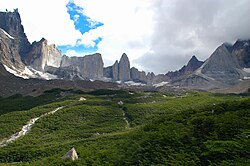
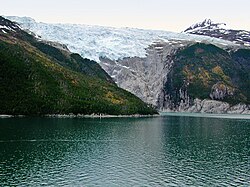
| Torres del Paine, Chile | 51°S | 950 | Influenced by Patagonian Ice Field |
| Navarino Island, Chile | 55°S | 600 | Strong maritime influence |
Common Tree Line Species
Different continents host unique specialists at their forest edges:
- Eurasia: Dahurian larch, Macedonian pine, Swiss pine, and Mountain pine.
- North America: Subalpine fir, Engelmann spruce, Whitebark pine, and Black spruce.
- South America: Antarctic beech, Lenga beech, and Polylepis.
- Australia: Snow gum (Eucalyptus pauciflora).
![Tree line elevation by latitude[34]](/images/ff/ae/ffae1559abd4287225d87c450c731f8cf4b48274a380b0892b21dc7fd3eecfb4.gif)
Frequently Asked Questions
What is the difference between a tree line and a timberline?
The tree line is the absolute edge of the habitat beyond which trees cannot grow. The timberline is the lower boundary where trees transition from a continuous, closed-canopy forest into more scattered growth.
Why do trees look stunted near the tree line?
This phenomenon is called krummholz. It is caused by extreme environmental stressors, specifically high winds and freezing temperatures, which prevent trees from growing tall and straight.
What is the most important factor determining tree line elevation?
The mean temperature is the primary factor. Specifically, trees require a certain number of days (at least 94) where the mean temperature stays above 0.9 °C (33.6 °F) to support growth.
Can humans change the location of the tree line?
Direct human activities like logging or grazing can change the "realized" tree line (the actual visible edge), but they generally cannot change the biological potential of the tree line unless they impact the overall climate.
Where is the highest tree line in the world located?
The highest tree line is found on the slopes of the Sajama Volcano in the Bolivian Andes, where the species Polylepis tarapacana grows at elevations reaching 5,200 meters.