Montane Ecosystems: Life Zones, Biodiversity, and Climate Dynamics
Montane ecosystems are specialized biological communities found on the slopes of mountains. These regions are defined by a process called stratification, where the ecosystem changes in distinct layers as elevation increases. This occurs because temperatures drop as one moves higher, fundamentally shaping the plant communities, biodiversity, and metabolic processes of the region.
At moderate elevations, where rainfall is high and temperatures are mild, dense montane forests typically thrive. However, as the terrain rises, the climate becomes harsher, characterized by lower temperatures and stronger winds. This transition eventually prevents tree growth, giving way to montane grasslands, shrublands, and finally the alpine tundra. Because of these unique and isolated conditions, montane ecosystems often harbor a high number of endemic species—plants and animals found nowhere else on Earth.
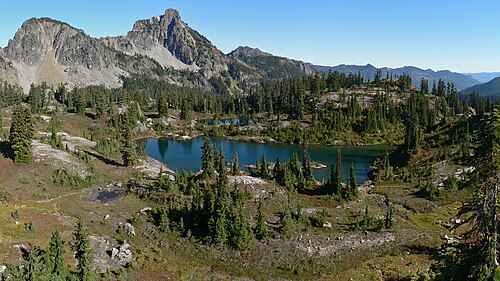
Key Facts
- Stratification: Ecosystems are organized into bands called life zones based on elevation and climate.
- The Tree Line: The specific elevation beyond which environmental conditions prevent trees from growing.
- Biotemperature: A measurement of mean temperature where any value below 0°C is treated as 0°C.
- Climate Equivalence: In middle latitudes, ascending 100 meters is roughly equivalent to traveling 80 kilometers toward a pole.
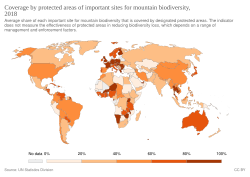
- Biodiversity Hotspots: Some regions, such as the Hengduan Mountains, host thousands of plant species that have co-existed for 30 million years.
The Structure of Mountain Life Zones
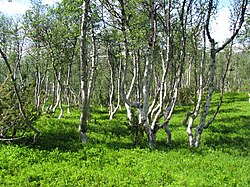
The formation of life zones is driven by adiabatic cooling—the process where air temperature decreases as atmospheric pressure drops with increasing altitude. This creates distinct bands of flora and fauna that depend heavily on their specific elevation.
Montane Forests
Located between the submontane and subalpine zones, these forests thrive in temperate climates. According to the Holdridge system, these forests typically have a biotemperature between 6°C and 12°C. In some regions, these forests act as "sky islands," where isolated mountain forests are surrounded by treeless, dry lowlands.
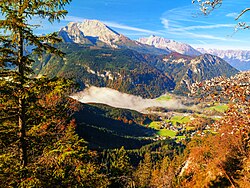
The Subalpine Zone
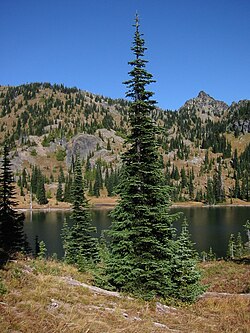
As elevation increases, the forest thins. In the subalpine zone (biotemperature 3°C to 6°C), trees often exhibit krummholz—a growth form where trunks become twisted and stunted due to high wind speeds. The upper limit of this zone is the tree line. The elevation of the tree line varies wildly by latitude; for example, it may exceed 4,000 meters in Southeast Asia but drop to 450 meters in Scotland.
The Alpine Zone
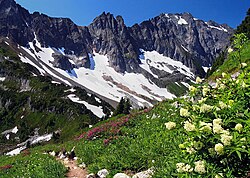
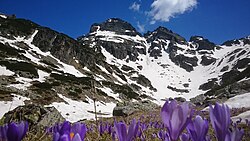
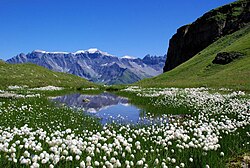
Above the tree line lies the alpine zone or alpine tundra, where biotemperatures range from 1.5°C to 3°C. This region is dominated by low-growing shrubs, perennial grasses, sedges, and lichens. Plants here have evolved specific adaptations to survive ultraviolet radiation, dryness, and short growing seasons, such as waxy surfaces, hairy leaves, and rosette structures.
Global Variations in Montane Forests
![Treeline elevation by latitude[6]](/images/ff/ae/ffae1559abd4287225d87c450c731f8cf4b48274a380b0892b21dc7fd3eecfb4.gif)
Montane forests vary significantly based on the global climate zone in which they are located.
Temperate and Mediterranean Climates
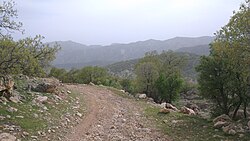
In temperate regions like the Rockies, Alps, and Himalayas, these forests are typically coniferous or mixed broadleaf. Mediterranean montane forests are found in the Mediterranean Basin, North Africa, and parts of the US and Iran. These ecosystems are currently threatened by climate change, which may reduce snowpacks and increase summer droughts.
Subtropical and Tropical Climates
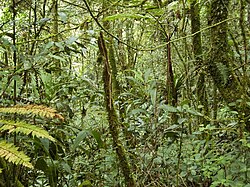
Tropical montane forests often include cloud forests, which derive moisture from fog and clouds. These are frequently "mossy forests," where thick layers of moss cover the ground and trees. These forests typically exist between 1,500 and 3,300 meters, depending on the latitude.
Adaptations in the Alpine Tundra
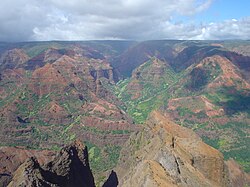
Survival in the alpine zone requires extreme specialization. Cushion plants grow in tight, ground-hugging clumps to avoid wind. Some flowering plants use red pigments to convert sunlight into heat or take several years to develop flower buds that survive winter underground.
Lichens are particularly hardy, with algal cells capable of photosynthesis at temperatures as low as −10°C. In drier mountain regions, such as the Tibetan Plateau or Ethiopian Highlands, the landscape shifts toward montane steppes and savannas.
| Zone | Biotemperature Range | Dominant Vegetation | Key Characteristics |
|---|---|---|---|
| Montane Forest | 6°C to 12°C | Dense forests | High rainfall, moderate temperatures |
| Subalpine Zone | 3°C to 6°C | Sparse trees, Krummholz | Twisted trunks, leads to tree line |
| Alpine Zone | 1.5°C to 3°C | Grasses, shrubs, lichens | Tundra, high UV, short growing season |
| Nival Zone | Below 1.5°C | None (Rock and Ice) | Permanent snow and ice |
Frequently Asked Questions
What is the difference between the subalpine and alpine zones?
The subalpine zone is the area immediately below the tree line where trees still grow, though they may be stunted or twisted. The alpine zone exists above the tree line, where it is too cold and windy for trees to survive, leaving only low-growing vegetation like grasses and shrubs.
What is a cloud forest?
A cloud forest is a type of tropical montane forest that captures moisture directly from clouds and fog. They are often characterized by an abundance of mosses covering the vegetation, earning them the name "mossy forests."
How does climate change affect these ecosystems?
Climate change can lead to reduced snowpacks and increased drought in temperate zones, while tropical cloud forests may suffer from reduced cloudiness, leading to biodiversity loss and shifts in species ranges.
What is krummholz?
Krummholz refers to the stunted, twisted growth form of trees found near the tree line. This shape is caused by the combination of freezing temperatures and strong, persistent winds that kill off buds on the windward side of the tree.
Why are there so many endemic species in montane ecosystems?
The unique climate conditions and the physical isolation of mountain peaks create "islands" of habitat. This isolation prevents species from mixing with lowland populations, encouraging the evolution of unique species found only in those specific locations.