Alpine Tundra: Life Above the Treeline in Earth's High-Altitude Biomes
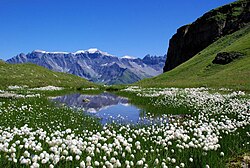
High above the dense forests of the world lies a rugged, treeless landscape known as the alpine tundra. This unique biome exists at high elevations where the climate is too harsh, cold, and windy to support the growth of trees. As one travels toward the Earth's poles, the elevation required to reach this zone decreases, eventually merging with the polar tundra at sea level.
The transition from forest to tundra is marked by the treeline. Just below this boundary, one often finds krummholz—stunted, wind-swept trees that struggle to grow in the demanding conditions. As elevation continues to rise, the alpine zone eventually meets the snow line, where ice and snow persist even through the summer months.
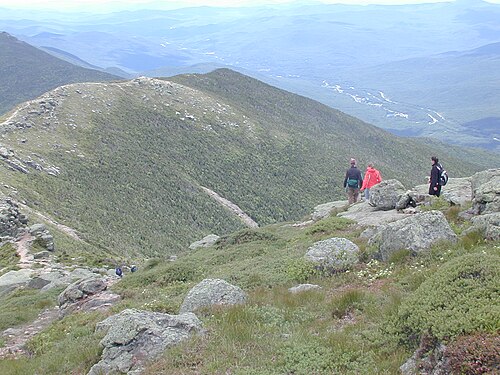
Key Facts
- Treeless Landscape: High elevations and harsh winds prevent tree growth.
- Global Presence: Found in mountain ranges worldwide, including the Andes, Himalayas, Alps, and Rockies.
- Climate Drivers: Driven by adiabatic cooling, where air temperature drops as it rises.
- Specialized Flora: Dominated by perennial grasses, sedges, cushion plants, and dwarf shrubs.
- Fragile Ecosystem: Vegetation is highly sensitive to human impact and can take centuries to recover.
Geography and Distribution
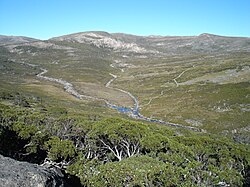
Alpine tundra is not confined to a single continent; it occupies high-mountain summits, slopes, and ridges across the globe. Major regions include the North American Cordillera, the Appalachian Mountains, the Alps and Pyrenees in Europe, the Himalayas and Karakoram in Asia, the Andes in South America, and the Snowy Mountains in Australia.
The landscape is often rugged and broken, characterized by rocky peaks, cliffs, and talus slopes (slopes formed by fallen rock debris). However, it can also feature gently rolling or even flat topography. The specific elevation of the treeline is influenced by aspect—the direction a slope faces. For example, warmer, equator-facing slopes often allow the treeline to exist at higher elevations.
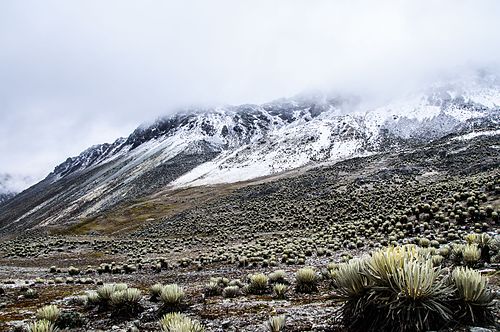
Global Treeline Variations
The elevation at which trees can no longer survive varies significantly by latitude. In the temperate zones between 30°N and 20°S, the treeline remains relatively constant, typically between 3,500 and 4,000 meters (11,500 to 13,100 feet). In higher latitudes, the treeline shifts as the climate changes.
| Factor | Characteristics |
|---|---|
| Primary Vegetation | Perennial grasses, sedges, cushion plants, and dwarf shrubs |
| Climate Driver | Adiabatic cooling (temperature drop due to rising air) |
| Growing Season | Typically 45 to 90 days |
| Common Fauna | Marmots, mountain goats, pikas, and snow leopards |
The Harsh Alpine Climate
The climate of the alpine tundra is defined by extreme conditions. A key principle is the dry adiabatic lapse rate, which states that air temperature drops by approximately 10°C per kilometer of elevation gain. This means that climbing 100 meters up a mountain is climatically similar to traveling 80 kilometers toward a pole.
Plants in this zone must endure short growing seasons, often lasting only 45 to 90 days, with average summer temperatures hovering around 10°C (50°F). Frost can occur even during the summer. Precipitation is largely delivered as winter snow, but wind plays a massive role in moisture distribution. While some areas become heavy snowfields, wind can strip ridgelines bare, leaving them up to 70% snow-free in winter.
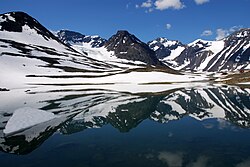
Quantifying the Cold
Scientists have used various methods to define the boundaries of the alpine climate:
- Wladimir Köppen: Suggested that forests cannot survive where the warmest month averages below 10°C.
- Otto Nordenskjöld: Proposed a formula accounting for winter severity, balancing the warmest and coldest months.
- Holdridge: Introduced biotemperature, treating all temperatures below 0°C as zero to reflect plant dormancy, defining alpine climates as having a mean biotemperature between 1.5 and 3°C.
Resilient Flora and Fauna
To survive intense radiation, high winds, and freezing temperatures, alpine plants have developed remarkable adaptations. Many are perennials, meaning they live for many years, storing energy in extensive root and rhizome systems to survive the winter. Annual plants are rare because they lack the robust root systems needed for this environment.
Common plant forms include:
- Cushion plants: Low-growing, moss-like clumps that escape wind by staying close to the ground.
- Prostrate shrubs: Woody plants that grow horizontally rather than vertically.
- Cryptogams: Non-flowering organisms like lichens and bryophytes (mosses).
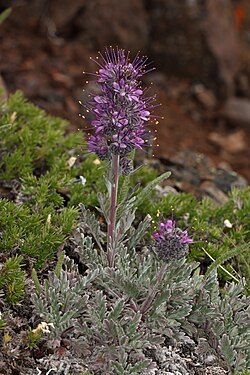
Some plants use physical traits for protection, such as dense hairs on leaves to block wind or red pigments to convert sunlight into heat. Others may take years to produce a single flower bud. This diversity is often high due to endemism—where species evolve in isolation within specific mountain ranges.
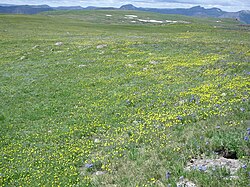
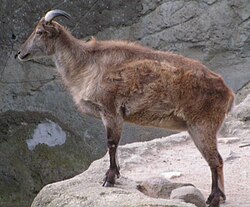
The fauna of the alpine tundra is equally diverse, though no single species is found in every alpine region. Depending on the continent, you might encounter a Himalayan tahr, a mountain goat, a pika, a snow leopard, or a marmot.
Frequently Asked Questions
What is the difference between alpine tundra and polar tundra?
The primary difference is location and elevation. Alpine tundra occurs on mountains at high altitudes regardless of latitude, while polar tundra occurs at high latitudes near the poles at much lower elevations.
Why don't trees grow in the alpine tundra?
Trees are unable to tolerate the combination of extreme cold, high winds, heavy snowpack, and the short growing seasons characteristic of high-altitude environments.
How do alpine plants survive such extreme wind?
Many plants adapt by growing very close to the ground in "cushion" shapes or by developing dense hairs on their leaves to provide a protective buffer against the wind.
Is the alpine tundra a fragile ecosystem?
Yes. Because the plants grow slowly and the environment is so harsh, the vegetation is very fragile. For example, repeated footsteps can destroy plants and cause soil erosion that may take hundreds of years to recover.
What is krummholz?
Krummholz refers to the stunted, deformed trees found at the forest-tundra ecotone, where the harsh climate prevents trees from growing to their normal height and shape.