Total War: The Mobilization of Entire Societies in Armed Conflict
Total war is a devastating form of conflict in which a society's entire economy, population, and infrastructure are integrated into the war effort. Unlike limited warfare, total war mobilizes the totality of national resources to sustain military operations, effectively blurring the line between combatants and civilians. In this paradigm, the laws of war are often disregarded, and the conflict becomes unrestricted in terms of the weapons used, the territories involved, and the objectives pursued.
Under a total war approach, the enemy is viewed holistically. This means that a nation's people, its industrial infrastructure, and its economy are all considered legitimate military targets. By the mid-19th century, scholars began identifying this as a separate class of warfare, noting that when non-combatants are viewed as essential resources for the war effort, the traditional distinction between a soldier and a civilian diminishes.
Key Facts
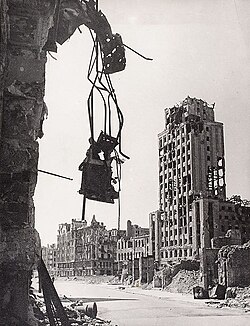
- Resource Mobilization: Every aspect of a nation's economy and population is directed toward the war effort.
- Target Expansion: Civilian infrastructure and populations are treated as legitimate military targets.
- Industrialization: Modern total war relies heavily on industrial warfare and mass production.
- Human Cost: These conflicts are characterized by unprecedented casualties, including millions of non-combatants.
- Legal Shifts: Total defeat (debellatio) can lead to the collapse of existing legal protections for prisoners of war.
The Evolution of Total War
Early Concepts in Europe
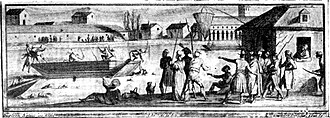
Historian David A. Bell argues that the French Revolutionary Wars introduced the first concepts of total war to mainland Europe. A primary example was the Levée en masse, or mass conscription. Facing a powerful coalition of European nations, the French Republic mobilized its entire population, resulting in a force of 1.5 million personnel by August 1793—the first time an army of such size had been mobilized in Western history.
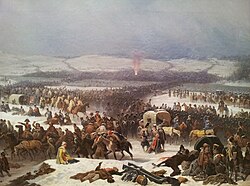
This trend continued through the Napoleonic era. During the 1812 Russian campaign, Russian forces utilized a scorched-earth policy, destroying their own infrastructure and agriculture to strip Napoleon's Grande Armée of supplies.
Total Warfare in North America
The concept of total destruction appeared in the Americas as well. The Sullivan Expedition of 1779 saw General John Sullivan lead 4,000 troops to devastate 14 Native American and Loyalist settlements in upstate New York, targeting crops and buildings to ensure total devastation.
Later, during the American Civil War, General William Tecumseh Sherman employed what he called "hard war." His March to the Sea (1864) involved widespread destruction of infrastructure in Georgia to break the will of the hostile population. While some historians debate if this fits the strict definition of total war—as Sherman ordered his men to spare civilian homes—it remains a pivotal example of targeting a society's capacity to sustain conflict.
Characteristics of Modern Total War
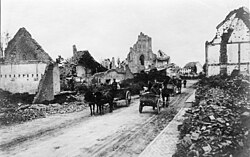
Total war in the post-19th century era is defined by several distinct dimensions, including the shift toward industrial warfare, where the home front becomes as critical as the front line. Other characteristics include the practice of "giving no quarter" (taking no prisoners), as seen in Hitler's Commando Order during World War II.
| Conflict/Era | Total War Characteristic | Impact/Example |
|---|---|---|
| French Revolutionary Wars | Mass Conscription | Levée en masse (1.5 million mobilized) |
| American Civil War | Infrastructure Destruction | Sherman's March to the Sea |
| World War I & II | Industrial Warfare | Total mobilization of home front economies |
| Eastern Front (WWII) | War of Annihilation | Up to 27 million Soviet citizens dead |
The 20th Century: The Peak of Total Mobilization
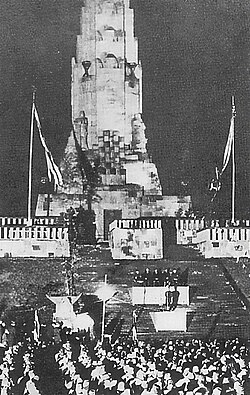
World War I and II
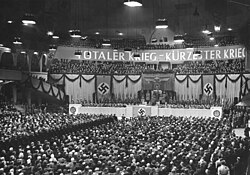
The two World Wars represent the most complete realizations of total war. These conflicts integrated air warfare, mass propaganda, and strict rationing to sustain prolonged fighting. In Nazi Germany, the 1943 "Total War" speech at the Berlin Sportpalast signaled a shift toward an unrestricted war effort.
In Canada, the debate over total war centered on the level of resource commitment, specifically whether national conscription and increased taxation were necessary to support the effort.
The Eastern Front and Human Cost
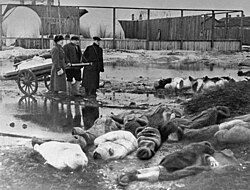
The Eastern Front of World War II was the deadliest theater in history. Millions of German, Hungarian, Romanian, and Soviet troops fought across a front hundreds of kilometers long. The result was catastrophic: at least 8.7 million Soviet soldiers fell, and millions of civilians died from massacres, exposure, and starvation.
Post-War Legal and Contemporary Implications
The total defeat of the Axis powers created a legal state known as debellatio. This allowed the Allies to argue that the major war criminals captured after the war were not prisoners of war under the 1929 Geneva Convention, facilitating the Nuremberg Trials.
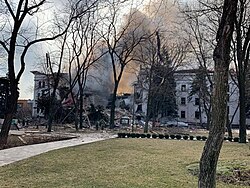
In the modern era, several conflicts have been characterized as total wars due to their scale and the targeting of civilian infrastructure. These include the 1948 Arab-Israeli War, the Iran-Iraq War (which featured chemical weapons and ballistic missile attacks on cities), and more recently, the Russo-Ukrainian war and the Gaza war.
Frequently Asked Questions
What is the main difference between total war and limited war?
Total war mobilizes a society's entire economy, population, and infrastructure, treating civilians and industrial sites as legitimate targets. Limited war is restricted in its objectives, the resources committed, and the targets engaged.
What was the Levée en masse?
The Levée en masse was a policy of mass conscription introduced during the French Revolutionary Wars, allowing France to mobilize an unprecedented force of 1.5 million people to defend the republic.
How did the concept of "hard war" relate to total war?
General William Tecumseh Sherman used the term "hard war" to describe his strategy of destroying infrastructure and resources to break the enemy's will, a precursor to the broader concept of total war.
What is debellatio in a legal context?
Debellatio refers to the total defeat and collapse of a state's government. In the aftermath of World War II, this legal condition was used to justify the Nuremberg Trials by arguing that the Hague Convention on military occupation no longer applied.
Which 20th-century conflict was the deadliest example of total war?
The Eastern Front of World War II was the deadliest, with an estimated 27 million Soviet citizens dying and over 5 million Axis soldiers lost in one of the most ferocious theaters of war in history.