Austria-HungaryDual MonarchyHabsburg EmpireFranz Joseph ICisleithania

Austria-Hungary: The Rise and Fall of the Dual Monarchy

Austria-Hungary: The Rise and Fall of the Dual Monarchy The Austro-Hungarian Monarchy, often referred to as the Dual Monarchy or the k.u.k. monarchy (Imperial and Royal), was a complex po...

Austria-Hungary: The Rise and Fall of the Dual Monarchy

The Austro-Hungarian Monarchy, often referred to as the Dual Monarchy or the k.u.k. monarchy (Imperial and Royal), was a complex political entity that existed from 1867 to 1918. Born from the Compromise of 1867, it united the Austrian Empire and the Kingdom of Hungary into a single sovereign state under a shared monarch, creating a unique "real union" that attempted to balance the interests of diverse ethnic groups across Central Europe.

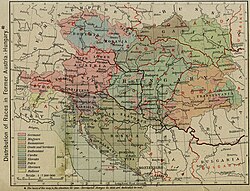
At its height, the empire was a mosaic of cultures, languages, and religions, stretching from the Alps to the Carpathian Mountains and down to the Adriatic coast. Its motto, Indivisibiliter ac inseparabiliter ("Indivisibly and inseparably"), reflected the fragile hope of maintaining unity among its many constituent nations.

Silver coin: 5 corona, 1908 – the bust of Franz Joseph I facing right surrounded by the abbreviated legend "FRANC[iscus] IOS[ephus] I, D[ei] G[ratia], IMP[erator] AUSTR[iae], REX BOH[emiae], GAL[iciae], ILL[yriae], ETC, ET AP[ostolicus] REX HUNG[ariae]"

Key Facts

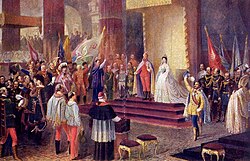
Coronation of Franz Joseph I and Elisabeth Amalie at Matthias Church, Buda, 8 June 1867
  • Duration: 1867–1918.
  • Structure: A dual monarchy consisting of Cisleithania (Austria) and Transleithania (Hungary).
  • Monarchs: Franz Joseph I (1867–1916) and Charles I and IV (1916–1918).
  • Capital: Vienna.
  • Population: Approximately 51.4 million (1910 estimate).
  • Total Area: 621,538 km² (1905).
  • Dissolution: Ended in October 1918 following defeat in World War I.

The Structure of the Dual Monarchy

Recruits from Bosnia-Herzegovina, including Muslim Bosniaks (31%), were drafted into special units of the Austro-Hungarian Army as early as 1879 and were commended for their bravery in service of the Austrian emperor, being awarded more medals than any other unit. The military march "Die Bosniaken kommen" was composed in their honor by Eduard Wagnes.[31]

The empire was divided into two primary administrative entities, each with its own constitutional government and legislature, while sharing a common monarch, foreign policy, and military.

Cisleithania (The Austrian Part)

Cisleithania comprised the Kingdoms and Lands represented in the Imperial Council. This region included diverse territories such as Bohemia, Galicia, Dalmatia, and the Archduchy of Austria. While German was the dominant court language, the region was home to a vast array of ethnicities.
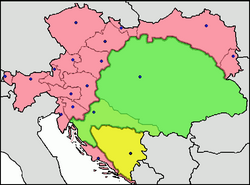
Austria-Hungary in 1878–1918: Cisleithania (Austrian part of the empire)

Transleithania (The Hungarian Part)

Transleithania consisted of the Lands of the Crown of Saint Stephen. The Kingdom of Hungary held significant autonomy, with Hungarian as the official language, though Croatian was recognized in Croatia-Slavonia and Italian in Fiume.
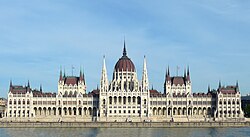
Hungarian Parliament building

The Condominium of Bosnia-Herzegovina

In 1908, Bosnia-Herzegovina became a condominium, meaning it was administered jointly by both the Austrian and Hungarian halves of the monarchy.
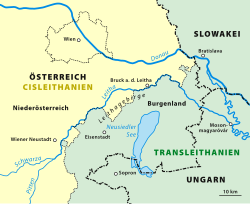
Map of the Leitha River showing the border between Cisleithania and Transleithania (coloured), as well as modern borders (black)

Demographics and Society

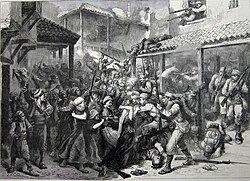
Bosnian Muslim resistance during the battle of Sarajevo in 1878 against the Austro-Hungarian occupation

The empire was one of the most ethnically diverse states in history. Religion played a central role in social identity, with Catholicism being the majority faith (76.6% in 1910), followed by Protestantism, Eastern Orthodoxy, Judaism, and Islam.
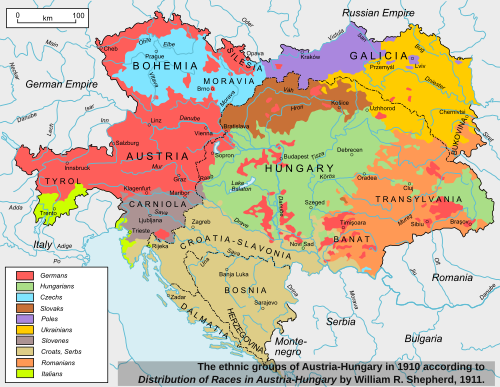
Ethno-linguistic map of Austria-Hungary, 1910

Literacy rates varied significantly by ethnicity and region. In 1910, Germans (70.7%) and Hungarians (67.1%) had the highest literacy rates, while Ruthenians (22.2%) and Romanians (28.2%) had the lowest.
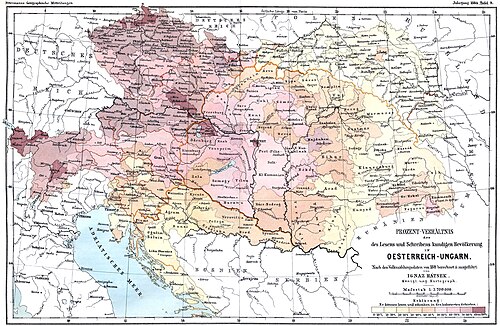
Literacy in Austria-Hungary (census 1880)

Economy and Infrastructure

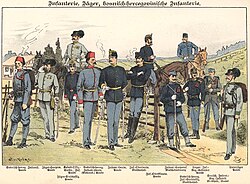
k.u.k. infantry in 1898

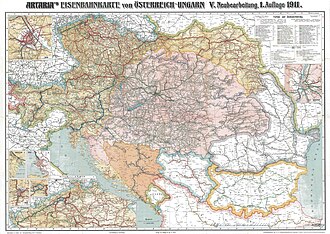
Austria-Hungary developed a sophisticated infrastructure to connect its far-reaching territories. The railway network was a cornerstone of imperial integration, facilitating trade and troop movements.
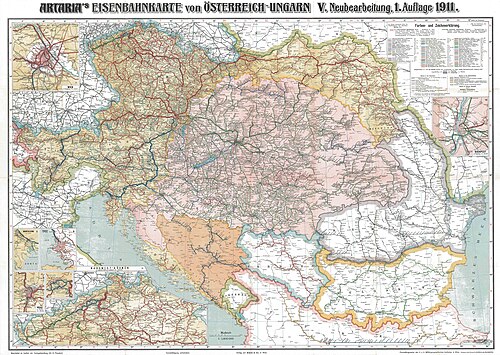
Railway map of Austria-Hungary in 1911

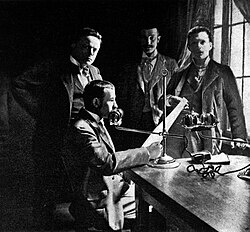
The empire also embraced technological modernization. Budapest saw the construction of one of the world's first underground railways between 1894 and 1896, and the Telefonhírmondó in Budapest provided an early form of electronic audio broadcasting.
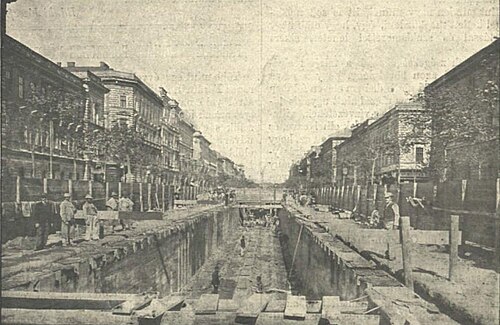
The start of construction of the underground in Budapest (1894–1896)

The Path to World War I and Collapse

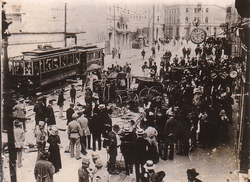
Crowds on the streets in the aftermath of the Anti-Serb riots in Sarajevo, 29 June 1914

The stability of the empire was constantly challenged by nationalist movements. The Bosnian Crisis of 1908 and the subsequent July Crisis of 1914 brought these tensions to a breaking point. The assassination of Archduke Franz Ferdinand in Sarajevo triggered the July Crisis, leading to the invasion of Serbia on July 28, 1914.

This picture of the arrest of a suspect in Sarajevo is usually associated with the capture of Gavrilo Princip, although some[43][44] believe it depicts Ferdinand Behr, a bystander detained by mistake.

During World War I, the empire fought on multiple fronts: the Serbian, Russian, Italian, and Romanian fronts. The military effort relied heavily on conscripts; although the Kingdom of Hungary made up only 42% of the population, it provided a majority of the soldiers (over 3.8 million). The cost was devastating, with roughly 600,000 soldiers killed and 700,000 wounded.
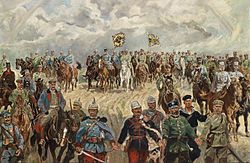
Franz Josef I and Wilhelm IIwith military commanders during World War I

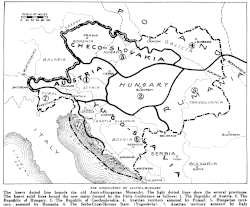
By 1918, internal collapse and military defeat led to the empire's dissolution on October 31. The subsequent Treaties of Saint-Germain and Trianon formally dismantled the monarchy, redistributing its lands to successor states.
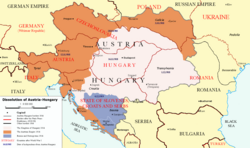
New borders of Austria–Hungary after the Treaty of Trianon and Saint Germain Border of Austria–Hungary in 1914 Borders in 1914 Borders in 1920

Summary of the Empire's Composition

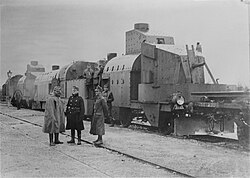
MÁVAG armoured train in 1914
Region Key Territories Primary Language(s) Administrative Center
Cisleithania Bohemia, Galicia, Tyrol, Dalmatia German (Court/Admin) Vienna
Transleithania Hungary, Croatia-Slavonia Hungarian, Croatian Budapest
Condominium Bosnia-Herzegovina Various Sarajevo

Frequently Asked Questions

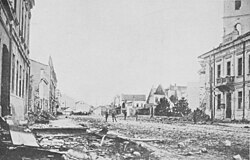
Šabac in Serbia, pictured in August 1914, was the first target of the Austro-Hungarian punitive expedition and the site of many atrocities committed against the local population.
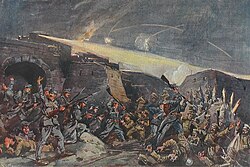
Siege of Przemyśl in 1915
Italian troops in Trento on 3 November 1918, after the Battle of Vittorio Veneto. Italy's victory marked the end of the war on the Italian Front and secured the dissolution of Austria–Hungary.[73]
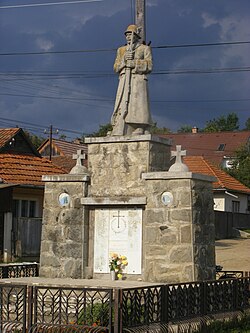
War memorial in Păuleni-Ciuc, Romania
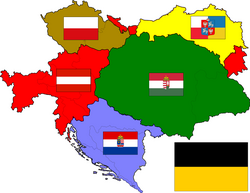
Karl I of Austria envisaged the Habsburg Empire as being made up of five Kingdoms, in a last desperate attempt to save the Monarchy.
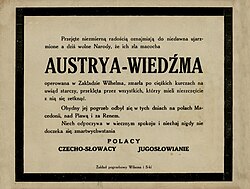
A humorous "obituary" of the Austrian Empire, published in Kraków in late 1918. Translation:"Overwhelmed with joy, until recently enslaved and now free Nations announce that their wicked step-mother AUSTRIA the WITCH, operated in William's Clinic, died from senility after severe spasms, cursed by all those who had the infelicity of having to do with her. Her dreadful funeral took place during these days in the fields of Macedonia, on the Piave River and across the Rhine. Let her rest in eternal peace and may she never raise from the dead. POLES, CZECHO-SLOVAKS, YUGOSLAVS Funeral home Wilson & Co."
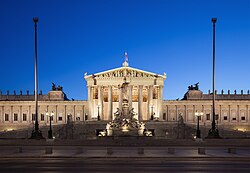
Austrian Parliament building
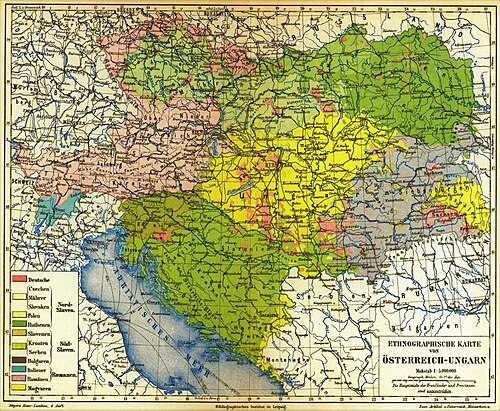
Meyers Konversations-Lexikon ethnographic map of Austria-Hungary, 1885
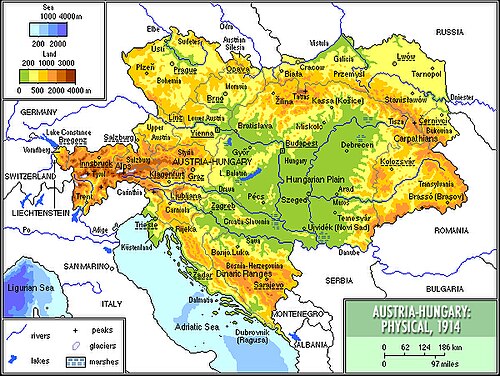
Topographic map of Austria-Hungary in 1914
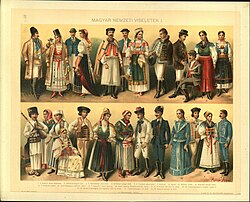
Traditional clothing of various ethnic groups in Hungary, late 19th century
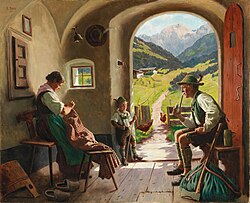
Traditional costumes of Tyrol
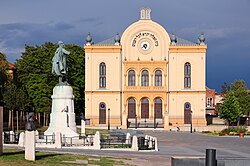
Romantic-style Great Synagogue in Pécs, built by the Neolog Jewish community in 1869
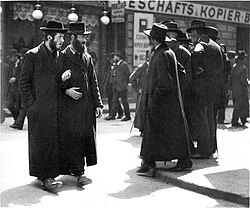
Orthodox Jews from Galicia in Leopoldstadt, Vienna, 1915
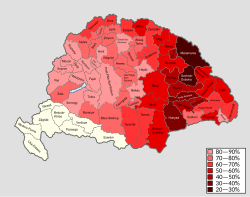
Literacy in Hungary by counties in 1910 (excluding Croatia)
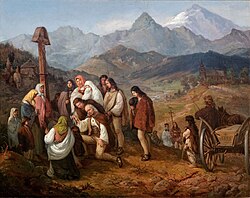
A Highlander's Funeral (1860) by Polish painter Aleksander Kotsis, depicting a Podhale Gorál funeral in the Tatra Mountains
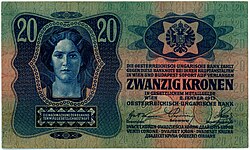
A 20-crown banknote of the Dual Monarchy, using all official and recognized languages (the reverse side was Hungarian)
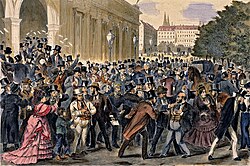
Black Friday, 9 May 1873, Vienna Stock Exchange. The Panic of 1873 and Long Depression followed.
A stentor reading the day's news in the Telefonhírmondó of Budapest
Detailed railway map of Austrian and Hungarian railways from 1911
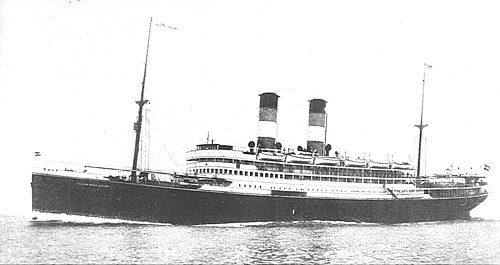
The SS Kaiser Franz Joseph I (12,567 GRT) of the Austro-Americana company was the largest passenger ship ever built in Austria. Because of its control over the coast of much of the Balkans, Austria–Hungary had access to several seaports.
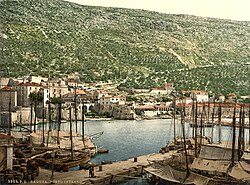
Dubrovnik, Kingdom of Dalmatia
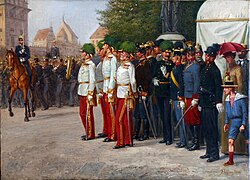
Military parade in Prague, Kingdom of Bohemia, 1900
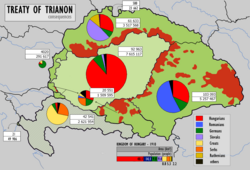
The Treaty of Trianon: Kingdom of Hungary lost 72% of its land and 3.3 million people of Hungarian ethnicity.
New hand-drawn borders of Austria–Hungary in the Treaty of Trianon and Saint Germain (1919–1920)
Post-WWI borders on an ethnic map

What was the "Dual Monarchy"?

The Dual Monarchy was the political arrangement established by the Compromise of 1867, which split the empire into two semi-autonomous parts—Austria (Cisleithania) and Hungary (Transleithania)—united under a single monarch.

Who were the rulers of Austria-Hungary?

The empire was ruled by the House of Habsburg. Franz Joseph I reigned for the majority of the empire's existence (1867–1916), followed by Charles I and IV (1916–1918).

What caused the dissolution of the empire?

The empire collapsed due to a combination of ethnic nationalism, the immense strain of World War I, and military defeat, leading to its formal breakup in October 1918.

Which countries were formed from the empire's remains?

The dissolution led to the creation or expansion of several states, including the Republic of Austria, the Kingdom of Hungary, Czechoslovakia, the Kingdom of Yugoslavia (State of Slovenes, Croats and Serbs), and Greater Romania, while Italy also gained territory.

What was the significance of the Treaty of Trianon?

The Treaty of Trianon (1920) specifically dealt with Hungary, resulting in the Kingdom of Hungary losing 72% of its land and 3.3 million people of Hungarian ethnicity.