Toots Thielemans: The Virtuoso of the Jazz Harmonica
Few musicians have redefined an instrument as profoundly as Toots Thielemans. While the harmonica was often relegated to folk or blues, Thielemans elevated it to a sophisticated voice in the world of jazz. Known for his technical mastery and emotive phrasing, he bridged the gap between the street-smart energy of his Brussels roots and the refined stages of the world's greatest jazz clubs.
Key Facts
- Signature Song: Composed the jazz standard "Bluesette," covered by over 100 artists.
- Multi-Instrumentalist: Achieved mastery in the chromatic harmonica, guitar, and whistling.
- Industry Influence: Inspired John Lennon to purchase a Rickenbacker guitar.
- Film & TV: Composed the closing theme for Sesame Street and performed on numerous film soundtracks.
- Collaborations: Worked with legends including Miles Davis, Ella Fitzgerald, and Bill Evans.
Early Career and the Influence of Bebop
Thielemans' musical journey was shaped by the arrival of bebop—a complex, fast-tempo style of jazz—in Belgium after World War II. He looked to pioneers like Charlie Parker and Dizzy Gillespie as his "prophets," while also drawing deep inspiration from the works of Benny Goodman and Lester Young.
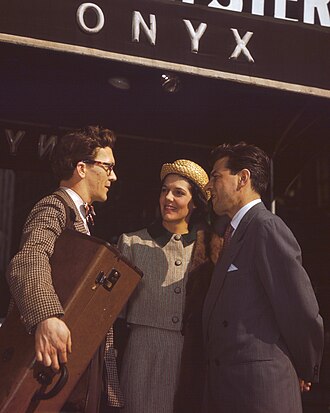
In 1949, Thielemans participated in a landmark Paris jam session alongside jazz giants such as Sidney Bechet, Charlie Parker, Miles Davis, and Max Roach. His talent soon caught the attention of Benny Goodman's agent during a 1948 visit to New York. This led to an invitation to join Goodman's band for European tours in 1949 and 1950. Interestingly, although hired as a guitarist, union restrictions forced him to play the harmonica during the group's debut at the London Palladium.
American Success and the George Shearing Years
By 1952, Thielemans moved to the United States, becoming a U.S. citizen in 1957. He collaborated with Charlie Parker's All-Stars and worked with renowned artists like Miles Davis and Dinah Washington. From 1953 to 1959, he was a key member of the George Shearing Quintet, where he expanded his musical palette to include whistling.
His influence extended beyond jazz circles. In 1960, while touring Hamburg with Shearing, a young John Lennon noticed Thielemans playing a Rickenbacker guitar. Lennon was so impressed that he acquired one himself, a move that helped propel Rickenbacker guitars to global fame via the Beatles.
Critical Acclaim
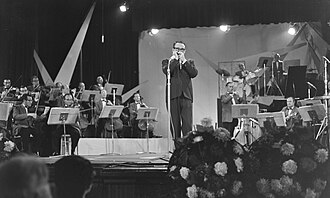
Throughout the 1950s, Thielemans dominated the "miscellaneous instrument" category in Down Beat magazine's polls. His peers were equally awestruck; Jerry Murad of Jerry Murad's Harmonicats noted that Thielemans played the harmonica with the same mastery that the greatest jazz artists applied to their respective instruments.
Composition, Film, and Global Reach
Thielemans is perhaps best remembered for "Bluesette," a jazz standard first recorded in 1962. The piece, which he often performed by whistling and playing guitar in unison, became a worldwide hit after Norman Gimbel added lyrics. He also composed the ballad "Ladyfingers," featured on Herb Alpert and the Tijuana Brass's album Whipped Cream & Other Delights.
His versatility made him a favorite for film and television. He contributed to soundtracks for movies such as The Pawnbroker (1964), Midnight Cowboy (1969), and The Wiz (1978). Beyond cinema, his whistling and harmonica were featured in 1960s Old Spice commercials, and he provided the closing theme for Sesame Street for four decades.
| Period/Year | Key Collaboration or Achievement | Role/Contribution |
|---|---|---|
| 1949–1950 | Benny Goodman Band | Guitarist / Harmonica |
| 1953–1959 | George Shearing Quintet | Guitar, Harmonica, Whistling |
| 1962 | "Bluesette" | Composer / Performer |
| 1975 | Paul Simon (Still Crazy After All These Years) | Harmonica on "Night Game" |
| 1979 | Bill Evans Trio (Affinity) | Collaborator |
Later Years and Musical Tributes
In the 1980s, Thielemans became a frequent guest on Late Night with David Letterman and contributed to albums by Billy Joel (An Innocent Man, 1983) and Julian Lennon (Valotte, 1984). In the 1990s, he explored world music, releasing the French-inspired album Chez Toots in 1998 featuring Johnny Mathis.
Throughout his later career, he used his music to honor his influences. He recorded "Dance For Victor" for Victor Feldman and "Waltz for Sonny" for Sonny Rollins. In 2002, at the Caspian Jazz and Blues Festival in Azerbaijan, he performed a tribute to John Lennon by playing "Imagine." Despite his international fame, Thielemans remained modest, often referring to himself as a Brussels "ket"—a local slang term for a "street kid."
Frequently Asked Questions
What instrument is Toots Thielemans most famous for?
While he was a skilled guitarist and whistler, he is most famous for his mastery of the chromatic harmonica in a jazz context.
What is Toots Thielemans' most famous composition?
His most famous composition is the jazz standard "Bluesette," which has been covered by more than one hundred different artists.
How did Toots Thielemans influence the Beatles?
John Lennon saw Thielemans playing a Rickenbacker guitar during a 1960 tour in Hamburg and was so impressed that he bought one himself, contributing to the brand's global popularity.
Which famous TV show featured music by Toots Thielemans?
Thielemans composed the closing theme for Sesame Street, which was used for 40 years.
Who were some of the major jazz artists Thielemans collaborated with?
He worked with a wide array of legends, including Miles Davis, Charlie Parker, Ella Fitzgerald, Bill Evans, and Oscar Peterson.