Togo: A Comprehensive Overview of the Togolese Republic
The Togolese Republic, known simply as Togo, is a West African nation characterized by its narrow stretch of land, diverse ethnic tapestry, and a complex political history. From its colonial origins under German and French rule to its current status as a unitary parliamentary republic, Togo serves as a vital link in the region's transport and trade networks.
With its capital, Lomé, serving as a major maritime hub, the country balances a rich cultural heritage with the challenges of modern governance and economic development.
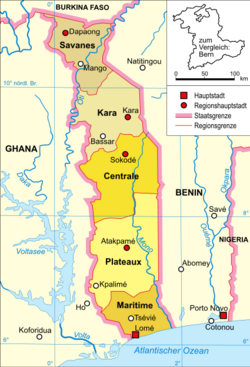
Key Facts
- Official Language: French
- Capital: Lomé (largest city)
- Government: Unitary parliamentary republic
- Currency: West African CFA franc (XOF)
- Population: Approximately 9.58 million (2024 estimate)
- Total Area: 56,785 km²
- Motto: "Travail, Liberté, Patrie" (Work, Liberty, Homeland)
History and Political Evolution
Togo's modern history is defined by shifts in colonial administration and a long period of centralized leadership. The territory was first established as German Togoland on July 5, 1884. Following World War I, it transitioned to French Togoland on August 27, 1914.
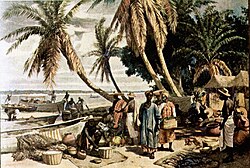
The nation achieved independence from France on April 27, 1960, and was admitted to the United Nations shortly after on September 20, 1960. Sylvanus Olympio served as the first president from 1960 to 1963.
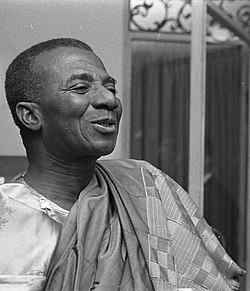
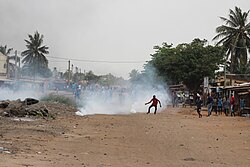
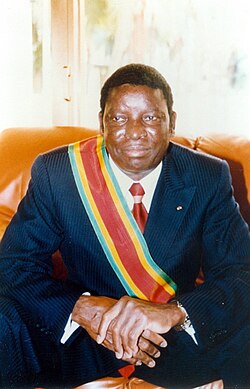
The political landscape was later dominated by Gnassingbé Eyadéma, the third and longest-serving president, who held power from 1967 until his death in 2005. This era established a political dynasty that continues today under Faure Gnassingbé. Recent years have seen significant unrest, including the 2017–18 protests against the family's long-term rule, and a major constitutional reform enacted on May 6, 2024.
Geography and Infrastructure
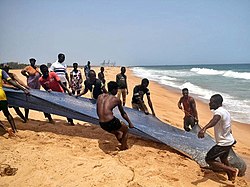
Togo is a compact nation with a total area of 56,785 km², of which 4.2% is water. Its geography supports a variety of activities, from coastal fishing to inland agriculture.
Transport and Connectivity
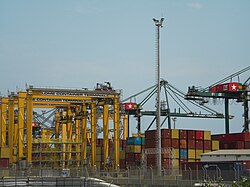
The country relies on a mix of road, rail, and air transport to facilitate trade and movement. The Port of Lomé is a critical economic engine for the nation.
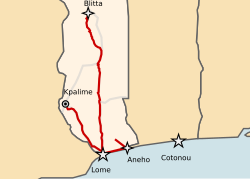
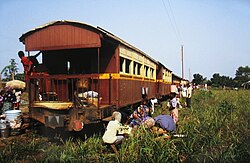
The railway network includes several key lines: the Lomé–Aného, Lomé–Blitta, and Lomé–Kpalimé railways, as well as the Hahotoé–Kpémé line operated by CTMB.
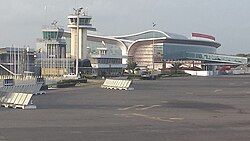
Air travel is centered around the Lomé–Tokoin International Airport, which connects the republic to the wider world.
Demographics and Culture
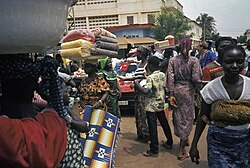
Togo is a multi-ethnic society. The population is predominantly African (94.4%), with the Aja, Ewe, and Mina groups making up 42.4%, followed by the Kabye and Tem at 25.9%. Other significant groups include the Akan, Gurma, Kposo, Akebu, and Ana-Ife.
Language and Religion
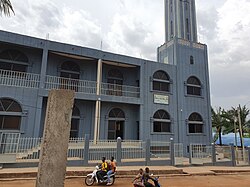
While French is the official language, a wide array of indigenous languages are spoken, including Ewe, Kabiye, Tem, and Yoruba. The religious landscape is diverse, as shown in the 2022 census:
- Christianity: 49.2%
- Islam: 18.6%
- Traditional Faiths: 17.0%
- None/Other: 15.2%
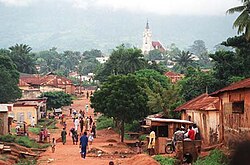
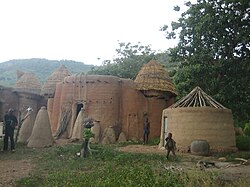
Architectural and cultural heritage is evident in sites like the Taberma houses, reflecting the unique traditions of the region's people.
Economy and Development
Togo's economy is characterized by a mix of agriculture and services. As of 2025 estimates, the nominal GDP stands at $10.020 billion, with a GDP (PPP) of $33.050 billion. The per capita nominal GDP is approximately $1,050.
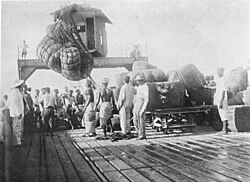
Historically, commodities like cotton have played a major role in the economy, serving as a primary export.
| Category | Detail |
|---|---|
| Capital City | Lomé |
| Population (2024 Est.) | 9,583,381 |
| HDI (2023) | 0.571 (Medium) |
| GDP Nominal (2025 Est.) | $10.020 Billion |
| Official Language | French |
| Currency | West African CFA franc |
Frequently Asked Questions
What is the official language of Togo?
The official language of Togo is French, although many indigenous languages such as Ewe and Kabiye are widely spoken across the country.
Who is the current Prime Minister of Togo?
The current Prime Minister of Togo is Faure Gnassingbé.
When did Togo gain independence?
Togo gained its independence from France on April 27, 1960.
What are the primary religions practiced in Togo?
According to the 2022 census, Christianity is the most practiced religion (49.2%), followed by Islam (18.6%) and traditional faiths (17.0%).
What is the significance of Lomé?
Lomé is the capital and largest city of Togo, serving as the nation's primary political and economic center, featuring a major international airport and a critical deep-water port.