Senegal: A Comprehensive Overview of West Africa's Vibrant Republic
Located at the westernmost point of the African continent, the Republic of Senegal is a nation defined by its strategic coastal position, rich cultural tapestry, and a long history of political evolution. From the bustling streets of its capital, Dakar, to the serene landscapes of the Casamance region, Senegal serves as a critical hub for trade, diplomacy, and culture in West Africa.
The country is characterized by a diverse population and a unique blend of indigenous traditions and colonial influences. As a unitary semi-presidential republic, Senegal has navigated its path from colonial rule to independence, establishing itself as a significant player in regional governance.
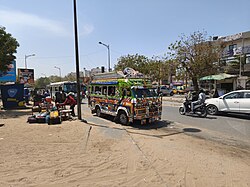
Key Facts
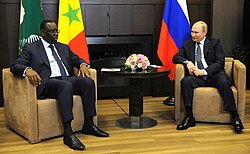
- Capital: Dakar, the largest city and a primary economic center.
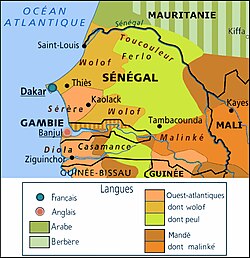
- Official Language: French, with Wolof, Serer, Diola, Pulaar, Soninke, and Mandinka as national languages.
- Religion: Predominantly Islam (89%), followed by Christianity (10%) and traditional faiths (1%).
- Government: Unitary semi-presidential republic led by President Bassirou Diomaye Faye.
- Currency: West African CFA franc (XOF).
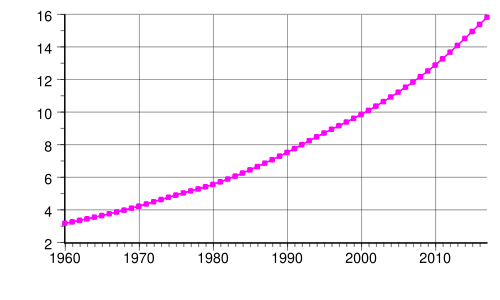
- Population: Approximately 18.8 million (2024 estimate).
History and Political Evolution
Colonial Eras and Independence
Senegal's colonial history began with the Portuguese Empire, the first European power to establish a presence. This period started in 1444 with Dinis Dias' arrival at Gorée Island and lasted until 1888, when the Portuguese ceded Ziguinchor to the French.
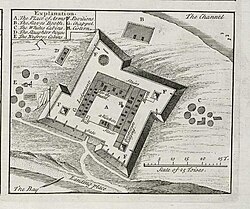
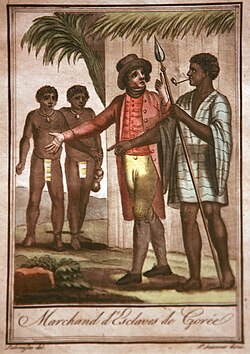
The French subsequently established a dominant presence, utilizing Gorée Island as a central point for the Atlantic slave trade during the 18th century.
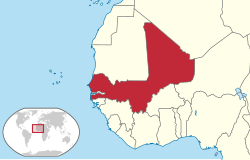
The journey toward sovereignty saw the establishment of the Republic on November 25, 1958, followed by full independence from France on June 20, 1960. Senegal briefly joined the Mali Federation but withdrew on August 20, 1960. Later, it was part of the Senegambia Confederation, which was dissolved on September 30, 1989.
Modern Governance
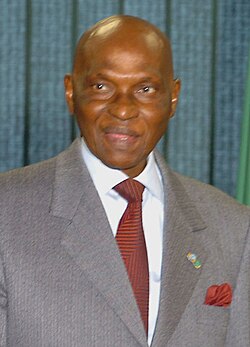
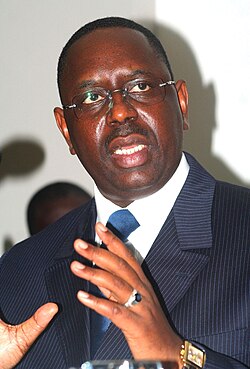
In recent decades, Senegal has seen various leadership transitions. Notable presidents include Abdoulaye Wade (2000–2012) and Macky Sall (2012–2024). The current administration is led by President Bassirou Diomaye Faye, with Ahmadou Al Aminou Lo serving as Prime Minister and Ousmane Sonko as President of the National Assembly.
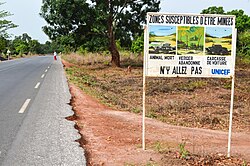
While generally stable, the country has faced internal challenges, such as the Casamance conflict involving separatist rebels and the central government, where land mines were widely utilized.
Geography and Climate
![The African Renaissance Monument was a $27 million project by Abdoulaye Wade that triggered popular protests.[75]](/images/a4/78/a47877f17a808ad73734cb7dca96afebe290c91ed08a3bb96464da7f7ad9f629.jpg)
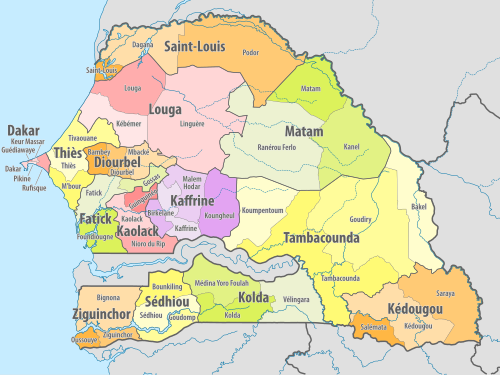
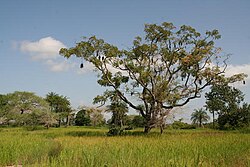
Senegal covers a total area of 196,722 square kilometers. Its geography is varied, ranging from the arid regions of the north to the lush, tropical landscapes of the south in Casamance.
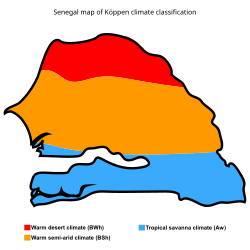
The climate is classified under the Köppen system, reflecting a transition from Sahelian dryness to more humid coastal and southern zones.
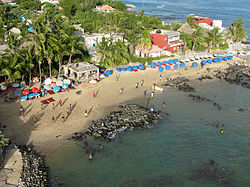
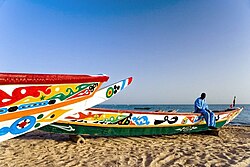
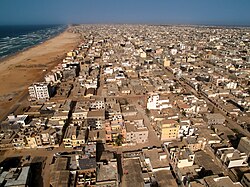
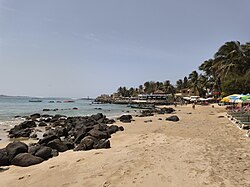
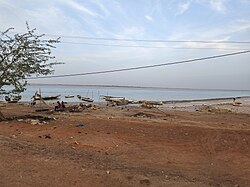
The coastline is a vital asset, featuring famous spots like N'Gor beach and the strategic port of Dakar, which supports a robust fishing industry.
Economy and Infrastructure
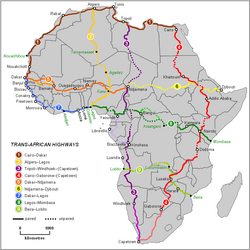
Senegal's economy is diversifying, with a nominal GDP estimated at $34.728 billion (2025). The nation is a key transit point for trans-African automobile routes, including the Cairo-Dakar, Dakar-Ndjamena, and Dakar-Lagos highways.
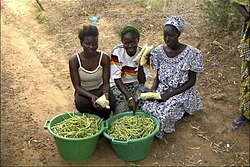
Agriculture remains a cornerstone of the economy, with cowpea production and fishing being primary drivers of local commerce.
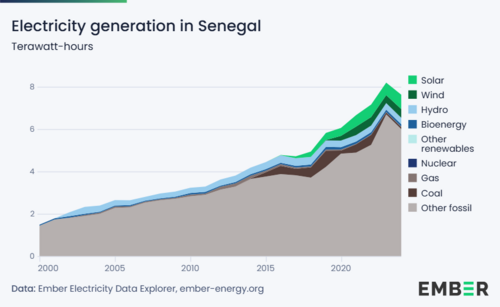
Energy production is an evolving sector, with electricity generation measured in terawatt-hours as the country seeks to modernize its grid.
Summary of National Indicators
| Indicator | Value |
|---|---|
| Total Area | 196,722 km² |
| Population (2024) | 18,847,519 |
| GDP (Nominal) | $34.728 Billion |
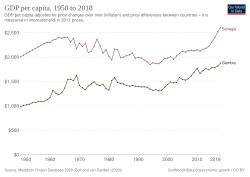
| GDP per capita (Nominal) | $1,811 |
| HDI (2023) | 0.530 (Low) |
| Gini Index (2011) | 40.3 (Medium Inequality) |
Society and Culture
Demographics and Language
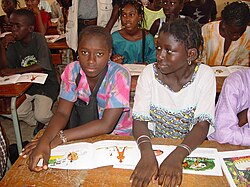
The Senegalese people are ethnically diverse. The Wolof make up the largest group at 39.7%, followed by the Fula (27.5%) and Serer (16.0%). This diversity is reflected in the national languages, though French remains the official language for administration.
Religion and Beliefs
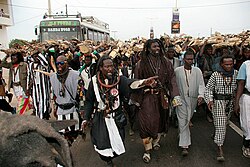
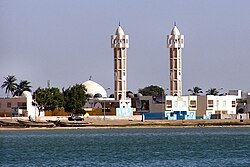
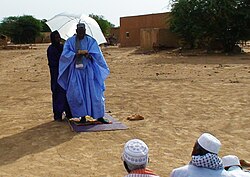
Islam is the predominant faith, practiced by 89% of the population. The Mouride brotherhood is a particularly influential Sufi order within the country.
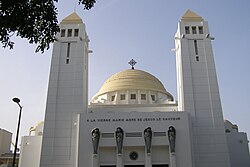
Christianity accounts for 10% of the population, with landmarks like the Our Lady of Victories Cathedral in Dakar serving as important spiritual centers.
Arts and Recreation
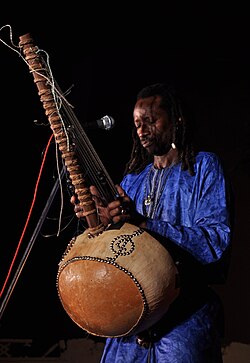
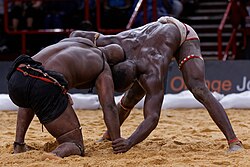
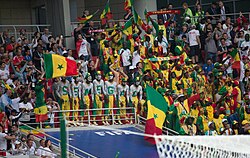
Senegal is renowned for its vibrant arts scene, including traditional Kora music and the high-energy sport of Senegalese Wrestling. The nation also has a strong passion for football, evidenced by its enthusiastic fans on the global stage.
Frequently Asked Questions
What is the official language of Senegal?
The official language of Senegal is French, although several national languages are widely spoken, with Wolof being the most prominent.
Who is the current President of Senegal?
The current President of Senegal is Bassirou Diomaye Faye.
What are the primary ethnic groups in Senegal?
The largest ethnic groups are the Wolof (39.7%), Fula (27.5%), and Serer (16.0%), along with Mandinka, Jola, and Soninke.
What is the significance of Gorée Island?
Gorée Island is historically significant as a major center for the Atlantic slave trade during the colonial era and was the site of early Portuguese colonization in 1444.
Which city is the capital of Senegal?
Dakar is the capital and the largest city of Senegal.