Ghana: A Comprehensive Overview of West Africa's Vibrant Republic
Located along the Gulf of Guinea, Ghana is a sovereign state in West Africa known for its rich history, diverse ethnic tapestry, and significant economic contributions to the region. From its ancient roots and the era of the Gold Coast to its current status as a stable unitary presidential republic, Ghana represents a blend of traditional heritage and modern development.
The nation is characterized by its motto, "Freedom and Justice," and is recognized globally for its diplomatic contributions and natural resource wealth.
Key Facts
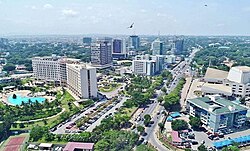
- Capital: Accra (the largest city).
- Official Language: English, with several government-sponsored languages including Twi, Fante, and Ewe.
- Independence: Gained from the United Kingdom on March 6, 1957.
- Major Exports: Gold, cocoa, and petroleum.
- Population: Estimated at 35,039,451 for 2025.
- Currency: Cedi (GHS).
Geography and Climate
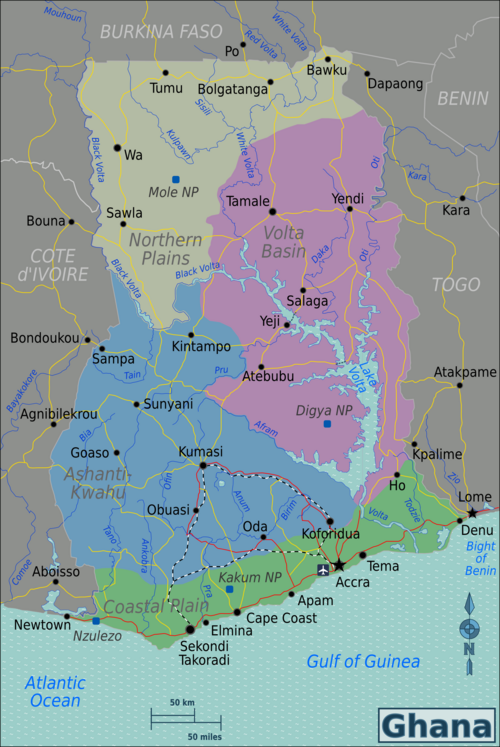
Ghana's landscape is varied, ranging from coastal plains to savanna highlands. The country is divided into several distinct geographical zones:
- Coastal Plain: Home to the capital Accra, Cape Coast, and Elmina. This region features rainforests and historic forts.
- Ashanti-Kwahu: Characterized by forested hills and the historic heartland of the Kingdom of Ashanti.
- Volta Basin: Dominated by the river system and Lake Volta, which serves as a critical eastern border crossing.
- Northern Plains: A region of savanna plains and vital trade routes connecting Ghana to its northern neighbors.
History and Political Evolution
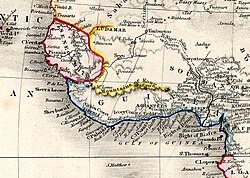
Ghana's history is marked by the rise of powerful medieval kingdoms and a complex colonial era. The Akan Kingdom of Ashanti was a dominant force in the region's precolonial history.
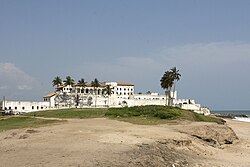
European contact began significantly with the Portuguese, who constructed Elmina Castle in 1482. This structure remains the oldest European building in West Africa and marked the beginning of the "Gold Coast" era.
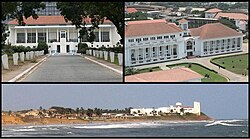
The transition to sovereignty occurred in two stages: Ghana became a dominion on March 6, 1957, and later a republic on July 1, 1960. In the modern era, the country has evolved into a stable democracy with a government structure comprising a President, a Parliament, and a Supreme Court.
Economy and Infrastructure
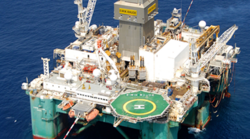
Ghana possesses a diverse economy driven largely by the extraction of natural resources. The Jubilee Oil Field, managed by the Ghana National Petroleum Corporation, has significantly boosted the nation's energy sector.
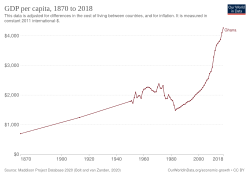
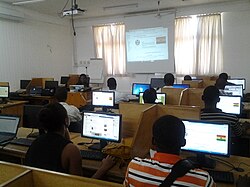
The economy relies heavily on three primary exports: petroleum, gold, and cocoa. While the nation has seen fluctuations in per capita GDP since 1870, it continues to develop its infrastructure and technological capabilities, particularly within its higher education systems.
| Category | Detail |
|---|---|
| Total Area | 240,000 km² |
| GDP (PPP 2025 Est.) | $314,592 billion |
| HDI (2023) | 0.628 (Medium) |
| Main Ethnic Group | Akan (45.7%) |
| Primary Religion | Christianity (71.3%) |
Demographics and Culture
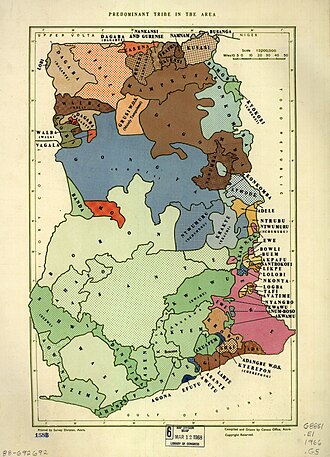
Ghana is a multi-ethnic society. The Akan are the largest group, followed by the Mole-Dagbon and Ewe. This diversity is reflected in the country's linguistic landscape, where English serves as the official language alongside various indigenous tongues.
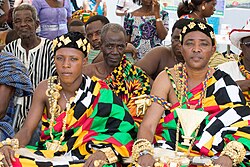
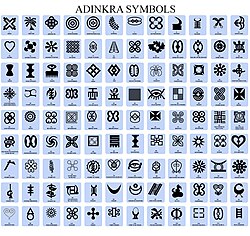
Culturally, Ghana is renowned for its vibrant arts and traditions. Kente cloth, a hand-woven silk and cotton fabric, is a global symbol of Ghanaian identity. The use of Adinkra symbols further illustrates the deep philosophical and social meanings embedded in Ghanaian art.
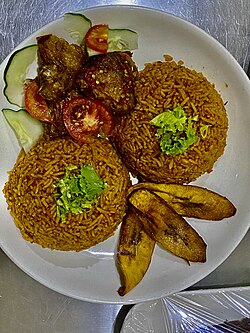
The culinary landscape is equally rich, with dishes like Jollof rice being a staple of the Ghanaian diet. The nation also maintains a strong tradition of chieftaincy, where traditional chiefs continue to hold significant cultural influence.
Frequently Asked Questions
![Ghana's petroleum, gold, and cocoa; exports in percentage[clarification needed]](/images/15/df/15dfa9c050056104c42cc4774a1fa927f2ab0d8d3dc1efc92b47ae9e13cc2000.jpg)
![Surfers at Busua Beach in the Western Region[173]](/images/90/67/906776ad8121cfd4ef2e9a72b11b4dc0bd89f42aef646c34c02845c94fe608b5.jpg)
When did Ghana gain its independence?
Ghana gained independence from the United Kingdom as a dominion on March 6, 1957, and later became a republic on July 1, 1960.
What are the primary drivers of Ghana's economy?
The Ghanaian economy is primarily driven by the export of gold, cocoa, and petroleum, with the Jubilee Oil Field being a major contributor to its energy sector.
What is the most spoken ethnic language group in Ghana?
The Akan people are the largest ethnic group, making up approximately 45.7% of the population.
What is the significance of Elmina Castle?
Built by the Portuguese in 1482, Elmina Castle is the oldest European building in West Africa and served as a key point for early European trade and contact.
Which city is the capital of Ghana?
Accra is the capital and the largest city of Ghana, serving as the seat of government.