Dakar: The Vibrant Capital of Senegal
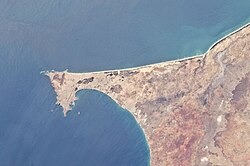
Perched on the westernmost point of mainland Africa, Dakar is the capital and largest city of Senegal. Situated on the Cap-Vert peninsula, this bustling metropolis serves as a critical economic, cultural, and political hub for West Africa. From its colonial roots and its role in the Atlantic slave trade to its current status as a modern global city, Dakar blends a complex history with a forward-looking vision.
Today, the city is a center of diplomacy and art, known for its diverse architecture and its role as a gateway between Africa and the rest of the world. With a metropolitan population exceeding 4 million people, it is the most populous city in Senegal and ranks 19th in Africa.
Key Facts
- Location: Cap-Vert peninsula, the westernmost point of mainland Africa.
- Population: 1,278,469 (City); 4,004,427 (Metro area) as of 2023.
- Status: Capital of Senegal and former capital of French West Africa.
- Climate: Classified as BSh (Hot semi-arid climate).
- Major Landmark: The African Renaissance Monument.
- Upcoming Event: Host of the 2026 Summer Youth Olympics.
History and Evolution
Foundation and European Trade
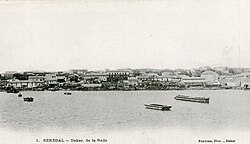
The Cap-Vert peninsula was first colonized by the Portuguese in the early 15th century. They established a presence on Gorée Island, which became a notorious base for the Atlantic slave trade. France took control of the island in 1677. While France abolished the slave trade in 1794, it was reinstated by Napoleon Bonaparte in 1802 and only fully abolished across all French territories in 1848.
Following the end of the slave trade, the French shifted their economic focus to peanut cultivation. As the peanut trade expanded, the small population of Gorée Island could no longer support the necessary port activities. This led to the establishment of warehouses in Rufisque in 1840 and a military post at Ndakaaru (Dakar) in 1857, coinciding with the annexation of the Lebou Republic.
Colonial Growth and Independence
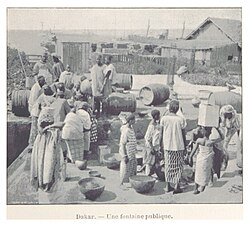
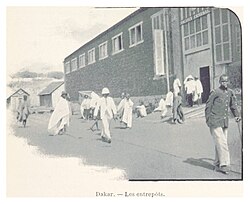
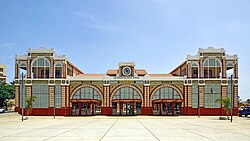
Dakar was recognized as a French commune in 1872 and became a separate commune from Gorée in 1887. Its strategic importance grew rapidly, leading it to replace Saint-Louis as the capital of French West Africa in 1902. The construction of the Dakar-Niger railroad between 1906 and 1923 further solidified its role as the center of the French West African empire by linking the city to Bamako.
In the mid-20th century, Dakar served as the capital of the short-lived Mali Federation from 1959 to 1960. Upon the federation's dissolution in 1960, Dakar became the capital of the newly independent Republic of Senegal.
Geography and Climate
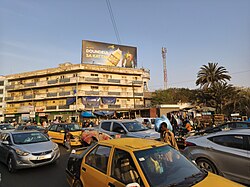
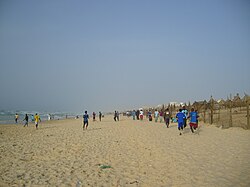
Dakar's geography is defined by its position on the Cap-Vert peninsula, providing it with extensive coastlines and a strategic maritime position. The city sits at an average elevation of 22 meters (72 feet).
The climate is characterized as BSh, a hot semi-arid climate. The city experiences significant temperature variations throughout the year, with record highs reaching 40.4°C (104.7°F). Precipitation is highly seasonal, with the heaviest rainfall occurring between June and September, while the winter months remain largely dry.
City Administration
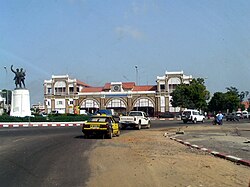
Administratively, Dakar is a commune within the 125 communes of Senegal. To manage its growing population, the city underwent a massive reform in 1996, dividing the central municipality into 19 communes d'arrondissement. These sub-communes operate similarly to London boroughs, possessing extensive local powers while being coordinated by the overarching city government.
The Plateau district serves as the historical heart of the city and houses most government ministries. In contrast, the Médina is the most populous commune, while the Île de Gorée is the smallest.
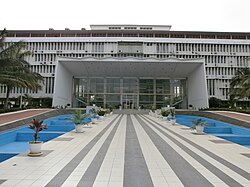
Culture and Notable Sites
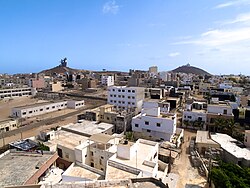
Religious and Cultural Heritage
Dakar is a significant center for Islamic culture, having been named the Capital of Islamic Culture for the African Region in 2007. It is the birthplace of the Layene Brotherhood, a Sufi order founded in 1883 by Seydina Mouhammadou Limamou Laye in Yoff.
Museums and Landmarks
The city is home to several world-class institutions and monuments, including:
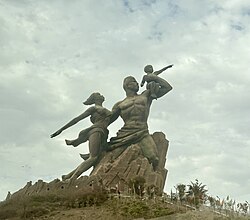
- African Renaissance Monument: A massive statue symbolizing Africa's liberation and future.
- Museum of Black Civilisations: A premier institution dedicated to African heritage.
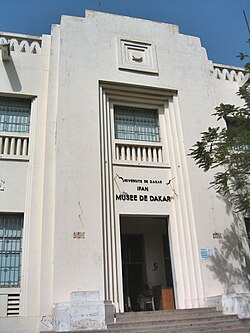
- IFAN Museum of African Arts: A key site for the study of African art and ethnography.
- House of Slaves: Located on Gorée Island, serving as a memorial to the slave trade.
Transport and Infrastructure
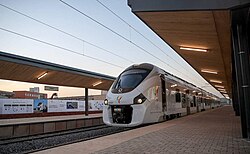
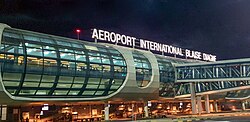
Dakar has invested heavily in modernizing its transit systems to combat urban congestion. Key developments include the Train Express Regional (TER), which connects the city center to the Blaise Diagne International Airport, and the implementation of an electric Bus Rapid Transit (BRT) system.
| Category | Detail |
|---|---|
| Country | Senegal |
| Metro Population (2023) | 4,004,427 |
| Area (Capital City) | 79.83 km² |
| HDI (2023) | 0.625 (Medium) |
| Time Zone | UTC±00:00 (GMT) |
Frequently Asked Questions
What is the significance of Gorée Island?
Gorée Island was a major center for the Atlantic slave trade during the colonial era. Today, it serves as a poignant memorial and a UNESCO World Heritage site, featuring the House of Slaves.
How is Dakar administratively organized?
Dakar is divided into 19 communes d'arrondissement, which are grouped into four larger arrondissements. This structure allows for more localized management of the city's large population.
What is the African Renaissance Monument?
It is one of Dakar's most prominent landmarks, a towering statue that commemorates the liberation of Africa from colonialism and celebrates the continent's future.
What is the climate like in Dakar?
Dakar has a hot semi-arid climate (BSh). It is generally warm to hot year-round, with a distinct rainy season from June to September and very dry winters.
Which major transport projects have been recently implemented?
The city has introduced the Train Express Regional (TER) for faster commuting and an electric Bus Rapid Transit (BRT) system to improve sustainable urban mobility.