Thomas Mann: The Life and Legacy of a Nobel Laureate
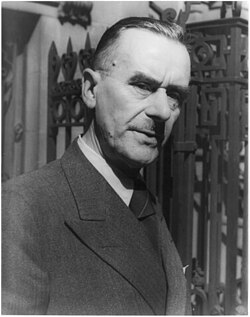
Paul Thomas Mann was a towering figure of 20th-century literature, a German novelist, social critic, and essayist whose work profoundly captured the psychological complexities of the intellectual and the artist. Awarded the Nobel Prize in Literature in 1929, Mann is celebrated for his symbolic and ironic epic novels that dissected the European and German soul.
His writing was deeply influenced by the philosophies of Arthur Schopenhauer, Friedrich Nietzsche, and Johann Wolfgang von Goethe, often blending modern interpretations of Biblical and German stories to explore the tension between bourgeois stability and artistic passion.
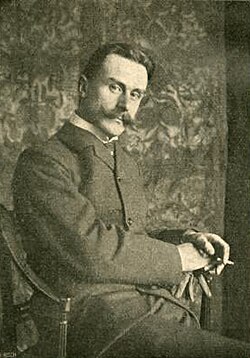
Key Facts
- Born: June 6, 1875, in Lübeck, German Empire.
- Died: August 12, 1955, in Zürich, Switzerland.
- Major Achievement: Nobel Prize in Literature (1929).
- Key Works: Buddenbrooks, The Magic Mountain, and Death in Venice.
- Literary Movement: Modernism.
- Exile: Fled Nazi Germany in 1933, living in Switzerland and the United States.
Early Life and Literary Beginnings
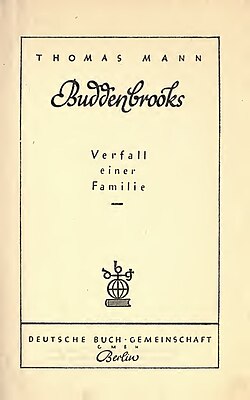
Born into a prominent Hanseatic family—the merchant class of Northern German port cities—Mann grew up in Lübeck. This background served as the primary inspiration for his first major novel, Buddenbrooks (1901), which chronicles the decline of a wealthy merchant family.
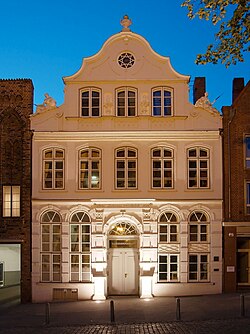
Mann's professional journey began in Munich, where he worked briefly for the South German Fire Insurance Company before transitioning to journalism and literary criticism. He first gained recognition writing for the magazine Simplicissimus, and his first short story, "Little Herr Friedemann," was published in 1898.
Family and Personal Life
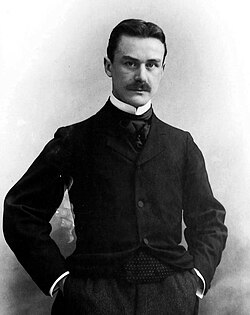
In 1905, Mann married Katia Pringsheim, a member of a wealthy, secular Jewish industrialist family. Together they had six children: Erika, Klaus, Golo, Monika, Elisabeth, and Michael. The family maintained residences in Munich and a country house in Bad Tölz, reflecting the affluent lifestyle that Mann often critiqued and analyzed in his fiction.
Masterworks and Literary Style
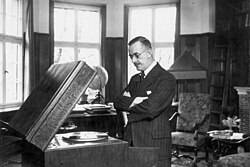
Mann's bibliography spans a vast array of genres, including novels, novellas, plays, and essays. He is best known for his ability to weave intricate irony and psychological depth into his narratives.
Defining Novels and Novellas
- Buddenbrooks (1901): A semi-autobiographical look at the decay of the Hanseatic upper class.
- Death in Venice (1912): A poignant novella exploring obsession and the nature of beauty.
- The Magic Mountain (1924): A complex study of time, illness, and European intellectualism set in a Swiss sanatorium.
- Joseph and His Brothers (1933–1943): A massive tetralogy reimagining the Biblical story of Joseph.
- Doctor Faustus (1947): A late masterpiece dealing with the tragedy of the German spirit.
Exile and Political Resistance
The rise of Adolf Hitler in 1933 forced a dramatic shift in Mann's life. As a staunch opponent of the Nazi regime, he fled Germany for Switzerland and later moved to the United States in 1939. During this period, he became a leading figure of Exilliteratur—literature written by German authors in exile to oppose the Third Reich.
While in the U.S., Mann resided in Pacific Palisades, Los Angeles, and used his platform to deliver anti-Nazi broadcasts and lectures, championing democracy and freedom.
The Hidden Side of the Artist
For decades, Mann maintained a public image of bourgeois propriety, denying that his works were autobiographical. However, the posthumous publication of his diaries revealed a life consumed by sublimated passions and unrequited love, particularly regarding men. These revelations have led modern scholars to reappraise his works, such as Tonio Kröger, through the lens of his private struggles with sexuality.
![Ludwig von Hofmann: The Spring (1913). The picture, purchased in 1914, hung in Mann's study until his death.[53]](/images/6a/fb/6afb8244c5daea5b6ca2a475e596e5ed5c36dcf10317a5643f047f5fda6a7920.jpg)
Final Years and Legacy
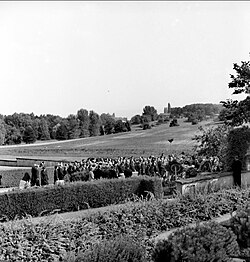
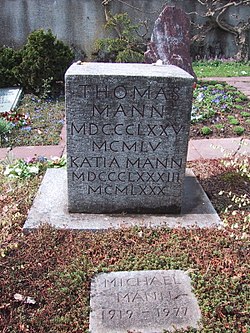
Mann returned to Switzerland in 1952, spending his final years in Kilchberg. He passed away on August 12, 1955, at the age of 80. His influence persists not only through his novels but also through his role as a moral voice for Germany during its darkest era.
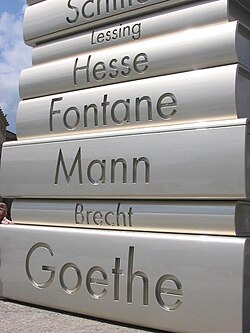
Summary of Thomas Mann's Profile
| Category | Details |
|---|---|
| Citizenships | Germany (until 1936), Czechoslovakia (1936–1944), United States (from 1944) |
| Education | Ludwig-Maximilians-Universität München, Technische Hochschule München |
| Key Awards | Nobel Prize in Literature (1929), Goethe Prize (1949) |
| Primary Genres | Novel, Novella, Essay, Short Story |
| Notable Employers | Princeton University, Library of Congress |
Frequently Asked Questions
What is Exilliteratur?
Exilliteratur refers to the body of German literature written by authors who were forced to flee Germany during the Nazi regime (1933–1945) due to political, racial, or religious persecution.
Which of Thomas Mann's works is considered his first major success?
Buddenbrooks, published in 1901, was his first major novel and established his reputation by portraying the decline of a Hanseatic merchant family.
Why did Thomas Mann move to the United States?
Mann moved to the United States in 1939 following the outbreak of World War II, having already fled Germany for Switzerland in 1933 to escape the Nazi regime.
How did the publication of his diaries change the perception of his work?
The diaries revealed that Mann's life was marked by sublimated passions and unrequited love, contradicting his public denials of autobiographical elements in his fiction and prompting a reappraisal of his themes regarding sexuality.
What were the main philosophical influences on his writing?
Mann was heavily influenced by the ideas of Johann Wolfgang von Goethe, Friedrich Nietzsche, and Arthur Schopenhauer, using their philosophies to explore the psychology of the intellectual.