Jewish Nobel Laureates: A Legacy of Scientific and Intellectual Achievement
The Nobel Prizes represent the pinnacle of human achievement across science, literature, and peace. Among the recipients, Jewish scholars and visionaries have made an extraordinary impact, contributing to some of the most fundamental breakthroughs in human history. From the laws of theoretical physics to the complexities of economic equilibrium, their work has reshaped our understanding of the natural and social worlds.
Jewish laureates have been recognized in all six categories awarded by the Nobel Foundation. Their contributions are not merely numerical but foundational, often introducing entirely new fields of study or solving mysteries that had perplexed scientists for generations.
Key Facts
- Broad Impact: Jewish individuals have won awards in all six Nobel categories.
- Highest Representation: The Economics category has the highest percentage of Jewish laureates at 40%.
- Medicine and Physics: These fields have the highest absolute number of Jewish winners, with 61 in Physiology or Medicine and 56 in Physics.
- Global Reach: While the United States has the highest number of Jewish laureates (137), significant contributions have come from Germany, the UK, Israel, Russia, and Austria.
Breakdown by Discipline
Physiology or Medicine
With 61 laureates (26% of the total), this field highlights a deep commitment to human health. Key milestones include the discovery of penicillin (1945), the discovery of human blood groups (1930), and the identification of the citric acid cycle (1953). More recent achievements include the discovery of RNA interference (2006) and the identification of the dendritic cell's role in adaptive immunity (2011).
Physics
Jewish physicists have defined the modern era, with 56 laureates (24% of the total). This includes Albert Einstein's 1921 prize for his services to theoretical physics and the discovery of the law of the photoelectric effect. Other critical contributions include the discovery of the Exclusion Principle (1945), the development of the holographic method (1971), and the discovery of the accelerating expansion of the Universe (2011).
Chemistry
In Chemistry, 37 laureates (19% of the total) have pushed the boundaries of molecular science. Notable achievements include the synthesis of ammonia (1918), the discovery of the catalytic properties of RNA (1989), and the discovery of fullerenes (1996). Recent honors include David Baker's 2024 prize for protein design.
Economics
The field of Economics shows the highest proportional representation, with 40 laureates accounting for 40% of all prizes. This includes pioneering work in general economic equilibrium theory by Paul Samuelson (1970) and the development of game-theory analysis by Robert Aumann (2005).
Literature and Peace
In Literature, 17 laureates (14% of the total) have been honored for their narrative art and poetic expression, including S.Y. Agnon (1966) and Bob Dylan (2016). In the realm of Peace, 9 laureates (8% of the total) have been recognized for their diplomatic efforts, most notably the 1978 award for the Camp David Agreement between Egypt and Israel.
Global Distribution of Laureates
The distribution of these awards reflects the migration patterns and academic hubs of the 20th and 21st centuries. The United States leads by a significant margin, followed by Germany and the United Kingdom.
| Country | Number of Laureates | Percentage of Country's Total |
|---|---|---|
| United States | 137 | 32.2% |
| Germany | 29 | 25% |
| United Kingdom | 20 | 13.9% |
| Israel | 14 | 100% |
| Russia / Soviet Union | 14 | 46.7% |
| Austria | 12 | 48% |
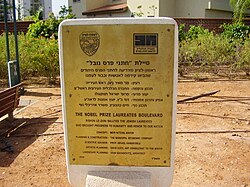
In Israel, the legacy of these achievements is physically commemorated on the Nobel Laureates Boulevard in Rishon LeZion, where signs and monuments honor the contributions of these intellectuals.
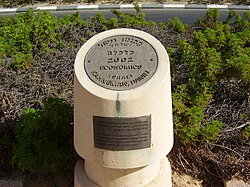
One such example is the monument dedicated to Daniel Kahneman, the 2002 Economics Laureate, whose work bridged the gap between psychology and economics.
Frequently Asked Questions
Which Nobel category has the highest percentage of Jewish laureates?
The Economics category has the highest proportional representation, with Jewish laureates making up 40% of the total awards given in that field.
Who is one of the most famous Jewish laureates in Physics?
Albert Einstein is among the most renowned, receiving the prize in 1921 for his work in theoretical physics and his discovery of the law of the photoelectric effect.
How many Jewish laureates are from the United States?
The United States has the highest number of Jewish Nobel laureates, with a total of 137 individuals.
What is the significance of the Nobel Laureates Boulevard?
Located in Rishon LeZion, Israel, the Nobel Laureates Boulevard serves as a public tribute to Jewish Nobel laureates through signs and monuments.
In which year did a Jewish laureate win for the Camp David Agreement?
The Nobel Peace Prize was awarded in 1978 in recognition of the Camp David Agreement, which established a negotiated peace between Egypt and Israel.