This Side of Paradise: The Debut That Defined a Generation
In March 1920, a 23-year-old author released a novel that would instantly transform him into a cultural icon. This Side of Paradise, the debut work of F. Scott Fitzgerald, did more than just launch a literary career; it captured the restless spirit of a post-war America. Marketed as "A Novel About Flappers Written For Philosophers," the book resonated deeply with young people who felt alienated from the values of their elders.
As a Bildungsroman—a literary genre that focuses on the psychological and moral growth of the protagonist from youth to adulthood—the novel mirrored Fitzgerald's own experiences, blending autobiography with social commentary.
Key Facts
- Published: March 26, 1920, by Charles Scribner's Sons.
- Initial Success: The first printing of 3,000 copies sold out in just three days.
- Total Sales: 49,075 copies across twelve printings in 1920 and 1921.
- Financial Impact: Fitzgerald earned $6,200 in 1920 (approximately $99,643 in 2025).
- Cultural Role: Established Fitzgerald as the standard-bearer for "youth in revolt."
The Path to Publication
Love, War, and Early Ambitions
Fitzgerald's journey toward his first novel began in November 1917. Driven by the fear that he might die in the trenches of World War I, he began writing a 120,000-word manuscript titled The Romantic Egotist. Lacking previous experience with long-form fiction, he used H. G. Wells' Tono-Bungay and Sir Compton Mackenzie's Sinister Street as structural templates.
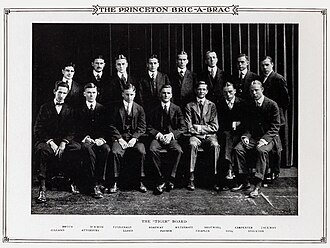
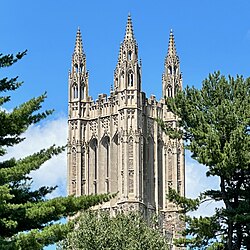
While on army leave in February 1918, Fitzgerald refined the work at the University Cottage Club's library in Princeton. Though the original manuscript was vast, eighty-one pages of this revised version eventually made their way into the final published novel.
The Role of Max Perkins
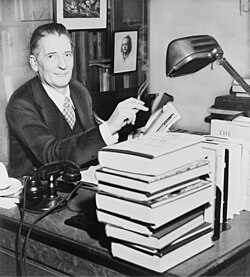
The novel's path to the press was not guaranteed. Max Perkins, the legendary editor at Scribner's, became Fitzgerald's fiercest advocate. Perkins was so convinced of the young writer's genius that he threatened to resign from the publishing house if the company refused to publish the manuscript, stating that he would lose all interest in publishing if they turned down "the likes of Fitzgerald."
Impact and Reception
A Meteoric Rise
Upon its release, This Side of Paradise became an overnight sensation. While it did not crack the top ten best-selling novels of the year, it made Fitzgerald a household name. This fame had immediate practical benefits: it allowed him to command significantly higher rates for his short stories, with his prices jumping from $30 to $1,000 per story.
This newfound financial stability was pivotal in his personal life, as it finally persuaded his fiancée, Zelda Sayre, to agree to marry him.
Critical Praise and Institutional Backlash
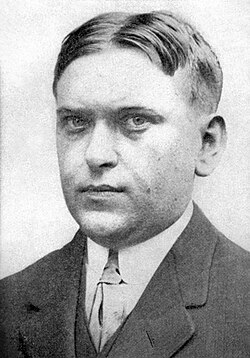
The literary establishment was largely impressed. Prominent critics, including H. L. Mencken, hailed the work as an outstanding debut. However, not everyone was pleased. The novel's portrayal of Princeton University sparked a backlash from the institution's leadership.
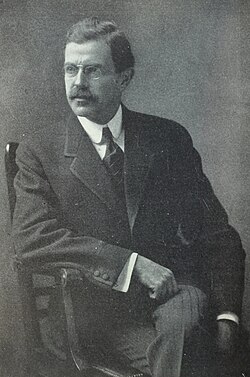
John Grier Hibben, the president of Princeton University, expressed his disappointment in a letter to Fitzgerald, stating that the characterization of the university had "grieved" him.
Novel Overview and Characters
The story weaves together the lives of several young men at Princeton, reflecting the volatility and tragedy of the era.
| Category | Details |
|---|---|
| Genre | Bildungsroman |
| Cover Artist | W. E. Hill |
| Key Themes | Youth in revolt, post-war disillusionment, social ambition |
| Primary Setting | Princeton University and surrounding areas |
Notable Characters
- Kerry Holiday: A Princeton classmate who volunteers for an aviation unit and is killed in the war.
- Burne Holiday: Kerry's younger brother and classmate who adopts pacifism.
- Fred Sloane: A relaxed and careless classmate known for playing pitcher.
- Dick Humbird: A classmate whose life ends in a car accident caused by his own recklessness.
Frequently Asked Questions
Did This Side of Paradise make F. Scott Fitzgerald rich?
No. While the book was a cultural sensation and sold nearly 50,000 copies, it provided only modest income. He earned $6,200 in 1920, which is roughly $99,643 in 2025 currency.
How did the novel affect Fitzgerald's personal life?
The fame and increased income from the novel's success improved his financial prospects, which persuaded Zelda Sayre to marry him.
What was the original title of the manuscript?
Before it became This Side of Paradise, Fitzgerald began the work as a 120,000-word manuscript titled The Romantic Egotist.
Why did Princeton University dislike the novel?
The university's president, John Grier Hibben, felt that Fitzgerald's characterization of Princeton was inaccurate or unflattering, leading him to write a letter of grievance to the author.
Who was the editor responsible for publishing the book?
Max Perkins of Charles Scribner's Sons was the editor who championed the novel, even threatening to resign if the company did not publish it.