Jimmy Walker: The Flamboyant Mayor of Jazz Age New York
James John Walker, known to the public as Jimmy Walker or "Beau James," was the embodiment of the Roaring Twenties in New York City. An attorney, lyricist, and Democratic politician, Walker served as the 98th mayor of New York City from 1926 to 1932. While his tenure was marked by significant urban development and a romanticized image of Jazz Age sophistication, it ultimately collapsed under the weight of a massive corruption scandal.
A liberal Democrat and a key figure in the Tammany Hall machine—the powerful political organization that dominated New York City politics for decades—Walker was as famous for his wit and wardrobe as he was for his policy decisions.
Key Facts
- Office: 98th Mayor of New York City (1926–1932).
- Political Affiliation: Democratic Party / Tammany Hall.
- Key Achievements: Created the Department of Sanitation and expanded the Independent Subway System (IND).
- Downfall: Forced to resign in 1932 following the Seabury Commission investigation into municipal corruption.
- Legacy: A symbol of Jazz Age romanticism, later ranked by historians as one of the worst big-city mayors in U.S. history.
Early Life and Political Ascent
Born on June 19, 1881, in New York City, Jimmy Walker was the son of William H. Walker, a carpenter and lumberyard owner active in local Democratic politics. Despite some accounts suggesting a childhood of poverty, Walker's father provided a stable foundation for his entry into public life. Walker graduated from New York Law School in 1904, though his early passions lay in the arts rather than the law.
Before fully committing to politics, Walker pursued a career as a lyricist, co-writing the 1906 hit "Will You Love Me in December as You Do in May?" with Ernest Ball. He eventually balanced these interests, passing the bar exam in 1912 while climbing the political ladder.
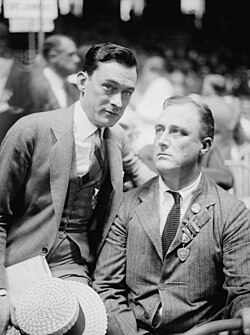
Walker's legislative career began in the New York State Assembly (1910–1914) and continued in the New York State Senate (1915–1925). During his time in the Senate, he served as Minority Leader and Temporary President. He became known for his sharp wit and a ruthless streak toward political opponents, most notably in his successful effort to ruin the career of reformist Democrat Ellwood Rabenold.
During his Senate years, Walker was closely advised by Robert Moses, the future urban planner. Moses provided the factual ammunition Walker needed to defeat Republican adversaries on complex issues that the mayor often lacked the patience to master.
The Path to City Hall
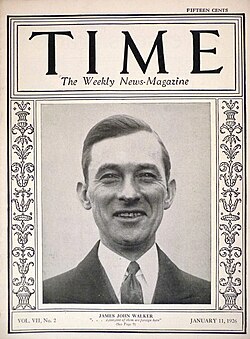
By 1925, Walker set his sights on the mayoralty. To win, he had to navigate a primary against incumbent Mayor John Francis Hylan. Walker's public persona—a flamboyant "man-about-town" who frequented both legitimate theaters and illegal speakeasies (establishments that illegally sold alcoholic beverages during Prohibition)—made him a hero to working-class voters.
His mentor, Governor Alfred E. Smith, guided his campaign. Together, they championed social welfare legislation, the legalization of boxing, and the repeal of "blue laws" that banned Sunday baseball. Their shared opposition to Prohibition was a cornerstone of their alliance.
To appease middle-class voters wary of his reputation, Walker shifted his more scandalous activities, including friendships with chorus girls, to a private penthouse funded by Tammany Hall. This strategy worked; Walker defeated Hylan in the primary and Frank D. Waterman in the general election.
Mayoralty and the Jazz Age (1926–1932)
Walker's early years as mayor were characterized by prosperity and infrastructure growth. His administration achieved several milestones:
- Established the Department of Sanitation.
- Unified the city's public hospitals.
- Expanded the subway system through the Independent Subway System (IND).
- Constructed new highways and a superliner dock.
However, Walker's tenure was most defined by his open defiance of the Eighteenth Amendment. He discouraged police from enforcing Prohibition laws, viewing drinking as a personal choice rather than a crime. This era of leniency coincided with his own highly publicized personal life, including his transition from his first wife, Janet, to showgirl Betty Compton.
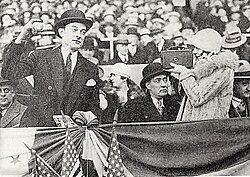
Walker was re-elected in 1929, defeating Fiorello H. La Guardia and Norman Thomas. However, the stock market crash of 1929 shifted the public mood. Cardinal Patrick Joseph Hayes denounced Walker's perceived immorality as a contributing factor to the economic downturn, and Tammany Hall began to withdraw its support.
Corruption, Scandal, and Resignation
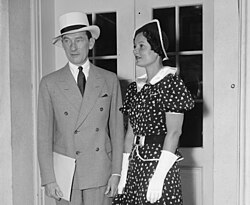
The decline of Walker's administration culminated in the Seabury Commission, an investigation led by Judge Samuel Seabury. The probe revealed that Walker had accepted large sums of money from businessmen in exchange for municipal contracts.
The scandal took a dark turn with the testimony of Vivian Gordon, who alleged that the NYPD falsely arrested women for prostitution to inflate police pay. Gordon was found strangled in a Bronx park shortly after her testimony, fueling public suspicion that the corruption within Walker's administration had lethal consequences.
Governor Franklin D. Roosevelt faced a political dilemma: removing Walker risked alienating Tammany Hall, but inaction would make him appear weak on corruption. After Walker attempted to dismiss bribes as "beneficences," Roosevelt pressured him to step down. Walker resigned on September 1, 1932.
Later Years and Legacy
Following his resignation, Walker fled to Europe to avoid potential criminal prosecution, marrying Betty Compton in Cannes, France. Upon returning to the U.S., he transitioned into the music industry as the head of Majestic Records and hosted a radio series, Jimmy Walker's Opportunity Hour, in 1940.
Despite his political disgrace, Walker remained a respected figure in the boxing community due to the "Walker Law," which legalized the sport in New York. He was eventually inducted into the International Boxing Hall of Fame.
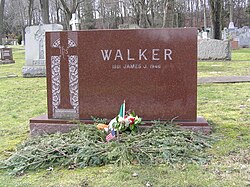
Walker died of a brain hemorrhage on November 18, 1946, at the age of 65. He is buried in the Gate of Heaven Cemetery.
| Role | Period | Key Focus/Outcome |
|---|---|---|
| NY State Assembly | 1910–1914 | Entry into legislative politics |
| NY State Senate | 1915–1925 | Opposed Prohibition; Minority Leader |
| Mayor of NYC | 1926–1932 | Urban expansion; Corruption scandal |
| Private Citizen | 1932–1946 | Music industry; Boxing advocacy |
Frequently Asked Questions
Why was Jimmy Walker forced to resign?
Walker resigned due to the findings of the Seabury Commission, which revealed he had accepted bribes from businessmen in exchange for awarding them city contracts.
What was Jimmy Walker's relationship with Prohibition?
Walker was a staunch opponent of Prohibition. As mayor, he discouraged the police from enforcing alcohol laws and frequently visited speakeasies himself.
Who was "Beau James"?
"Beau James" was the colloquial nickname for Jimmy Walker, referring to his flamboyant style, elegance, and reputation as a socialite.
How is Jimmy Walker viewed by historians today?
While romanticized in pop culture, historians generally view him poorly; surveys have ranked him as one of the worst big-city mayors in American history due to his corruption.
What was the "Walker Law"?
The Walker Law was legislation sponsored by Walker during his time in the State Senate that legalized boxing in the state of New York.