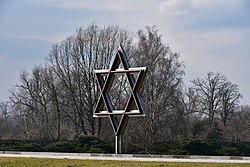
Theresienstadt Ghetto: The Nazi Propaganda Camp and its Victims
Established in the town of Terezín within the Protectorate of Bohemia and Moravia, the Theresienstadt Ghetto served as a complex and deceptive tool of the Nazi regime. Operating from November 24, 1941, to May 8, 1945, it functioned not only as a transit camp for Jews being sent to extermination sites but also as a carefully curated "model ghetto" used to deceive the international community about the reality of the Holocaust.
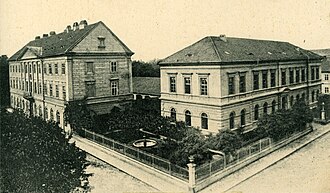
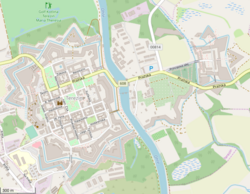
The ghetto was characterized by a stark divide: Jewish prisoners were confined to eleven barracks within the fortress, while civilians continued to live in the town's 218 houses. This segregation was strictly enforced, with severe punishments for any prisoner who ventured outside their designated area.
Key Facts
- Total Inmates: Approximately 144,000 to 154,000 people.
- Fatalities: 33,000 died within the ghetto; 90,000 were deported to extermination camps.
- Survivors: Roughly 23,000 people survived.
- Primary Purpose: A transit camp and a propaganda tool to hide the mass murder of Jews.
- Liberation: Liberated by the Red Army on May 8, 1945.
The Evolution of the Ghetto (1941–1945)
Establishment and Early Years (1941–1942)
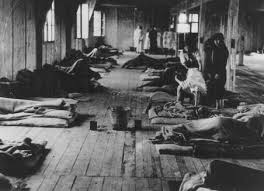
The ghetto began on November 24, 1941, with the arrival of 342 young Jewish men tasked with preparing the site. By the end of that year, over 7,000 people from Prague and Brno had been deported there. Upon arrival at the Bauschowitz railway station, prisoners were forced to walk 2.4 kilometers to the ghetto, carrying up to 50 kilograms of luggage. Many elderly and ill prisoners died during this journey. Once inside, they passed through the schleuse (sluice), where they were registered and stripped of all remaining possessions.
Escalation and Tragedy (1943)
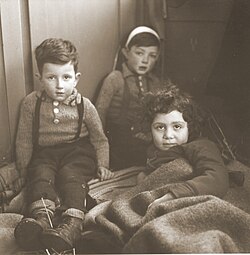
By 1943, the population grew to include Jews from Germany, Austria, the Netherlands, and Denmark. A particularly tragic event occurred on August 24, 1943, when 1,200 children from the Białystok Ghetto arrived. Fearing that the disinfection showers were actually gas chambers, the children refused the procedure. They were isolated for six weeks before being deported to Auschwitz, where none survived.
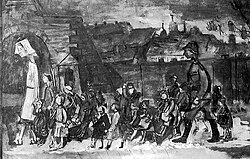
Internal discipline was brutal. In November 1943, following the escape of 55 prisoners, Commandant Anton Burger ordered a census. All 36,000 inmates were forced to stand outside in freezing weather from 7 am to 11 pm; 300 people died of exhaustion on the spot.
The "Potemkin Village" and Propaganda (1944)
In 1944, the Nazis transformed parts of the ghetto into a Potemkin village—a fake facade designed to deceive visitors. On June 23, 1944, the International Committee of the Red Cross (ICRC) visited and was misled into reporting that no one was being deported. The Nazis even filmed a propaganda movie titled Der Führer schenkt den Juden eine Stadt ("The Führer Gives a City to the Jews"), though it was never widely distributed.
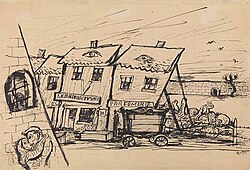
Behind this facade, mass deportations continued. Between September 28 and October 28, 1944, 18,401 people were sent to Auschwitz. During this phase, the SS took over the selection process, targeting former Czechoslovak Army officers, cultural figures, and members of the Jewish Council.
The Final Months and Liberation (1945)
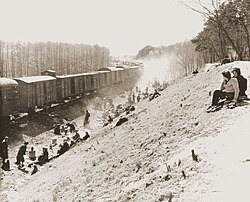
As other concentration camps were evacuated, Theresienstadt became a destination for death march survivors. Between April 20 and May 1945, up to 15,000 starving and diseased prisoners arrived, triggering a typhoid fever epidemic. The Red Cross took over administration on May 2, and the Red Army officially liberated the ghetto on May 8, 1945.
Life and Administration
Jewish Self-Administration
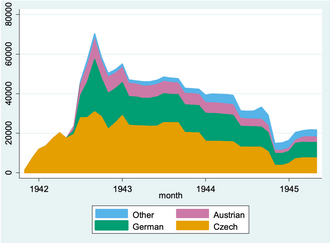
The ghetto was managed by a Judenrat (Jewish Council), a self-administration system characterized by excessive bureaucracy. The SS used this structure to sow disunity, often playing different national groups (German, Austrian, and Czech Jews) against one another. The Council's role in selecting prisoners for deportation remains a subject of significant historical controversy.
Cultural Resistance and Documentation
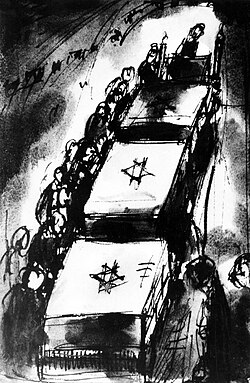
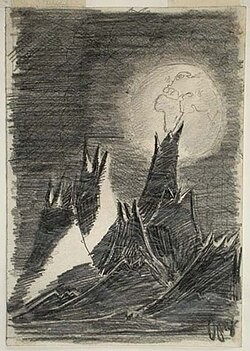
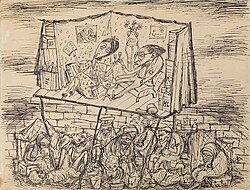
Despite the horror, a vibrant cultural life persisted. Prisoners created art, music, and literature to document their experiences. Artists like Bedřich Fritta and Petr Ginz captured the reality of the ghetto through drawings and caricatures, mocking the "beautification" campaigns and documenting the suffering of the inmates.
Summary of Ghetto Statistics
| Category | Approximate Number |
|---|---|
| Total Inmates (including death march survivors) | 154,000 |
| Deaths within Theresienstadt | 35,000+ |
| Deported to Extermination Camps | 88,196 |
| Total Survivors | 23,000 |
| Major Origin Cities | Prague, Vienna, Berlin, Brno, Frankfurt |
Frequently Asked Questions
![Photo taken by Maurice Rossel at Theresienstadt. Most of the children were murdered at Auschwitz in the fall of 1944.[50][c]](/images/79/f8/79f8752e34e7f7497941a59a5eb64489a3263e93678ab472f1bd09d20ca612ea.jpg)
What was the primary purpose of the Theresienstadt Ghetto?
Theresienstadt served a dual purpose: it was a transit camp for Jews being sent to killing centers like Auschwitz, and a propaganda tool used by the Nazis to deceive the world into believing that Jews were being treated humanely in a "settlement."
Who were the "prominent" prisoners?
Prominent prisoners were individuals of high social status, wealth, or cultural importance. The Nazis often gave them slightly better treatment to maintain order or to use them as faces for propaganda efforts during Red Cross visits.
What happened to the children from the Białystok Ghetto?
1,200 children arrived from Białystok in August 1943. After being held in strict isolation for six weeks, they were all deported to Auschwitz, where none of them survived.
How did the Red Cross visit affect the prisoners?
The visit was devastating for morale. Because the Nazis staged a fake version of ghetto life, the ICRC representative reported that conditions were acceptable and no deportations were occurring, leaving the prisoners feeling forgotten and forsaken by the world.
What is the legacy of Theresienstadt today?
The Small Fortress was converted into a memorial in 1947. While the Jewish legacy was suppressed for years under Soviet-era ideology in Czechoslovakia, the Jewish Museum in Prague and the site itself now preserve the documents and artworks rescued from the ghetto.