Theophrastus: The Father of Botany and Peripatetic Philosophy
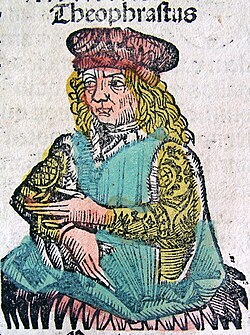
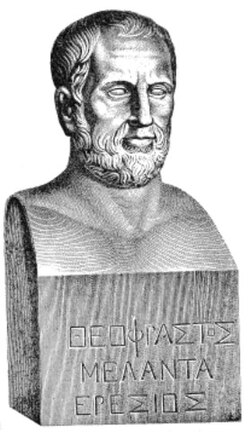
In the annals of ancient Greek thought, few figures bridge the gap between abstract logic and the tangible natural world as effectively as Theophrastus. A central figure of the Peripatetic school, he was not only a philosopher but a pioneering scientist whose observations laid the groundwork for modern botany and natural history.
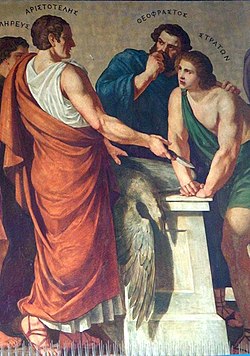
Born around 371 BC in Eresos, Theophrastus's intellectual journey began on the island of Lesbos under the instruction of Alcippus. His life became inextricably linked with Aristotle, whom he likely studied under in Athens. The two shared a profound intellectual bond, even moving to Mytilene on Lesbos together, where they began their seminal research into the natural sciences. While Aristotle focused his inquiries on the animal kingdom, Theophrastus turned his attention to the complex world of plants.
Key Facts
- Born: c. 371 BC in Eresos
- Died: c. 287 BC in Athens (aged approximately 83 or 84)
- School: Peripatetic school (the school founded by Aristotle)
- Major Contributions: Pioneering work in botany, logic, and systematic character writing
- Notable Works: Enquiry into Plants and Characters
The Peripatetic Legacy and Leadership
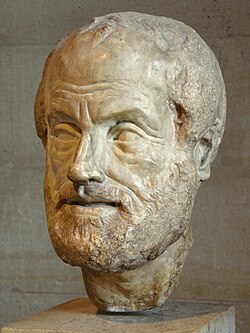
Theophrastus was more than just a student of Aristotle; he was his successor. After Aristotle's death in 322/1 BC, Theophrastus assumed the role of scholarch (head) of the Peripatetic school in Athens. He maintained the school's intellectual rigor and continuity during a period of significant political transition in the Greek world.
Scientific Contributions: Botany and Mineralogy
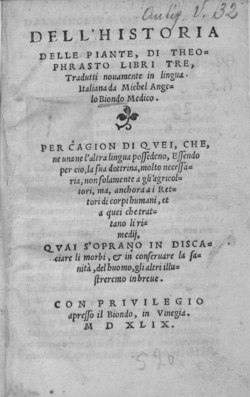
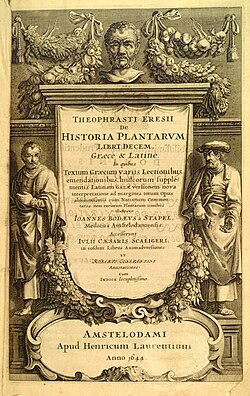
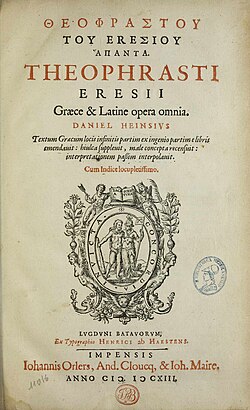
Theophrastus is perhaps most celebrated for his Enquiry into Plants. This monumental work represents one of the earliest systematic attempts to categorize and understand plant life. Although many original manuscripts have been lost, his findings were preserved through various translations and later editions, including a significant Latin translation by Theodore Gaza in 1483.
Natural History and Mining
Beyond botany, Theophrastus displayed a keen interest in the earth's resources. He wrote a now-lost work titled On Mining and provided detailed observations in On Stones. He documented the importance of various mineral deposits, including the famous silver mines of Laurium near Athens and the copper mines of Cyprus. His writings offer a window into the economic and geological realities of the ancient Mediterranean.
Philosophical and Literary Works
Theophrastus's intellectual reach extended into the realms of logic, metaphysics, and ethics. His work in logic contributed to the development of complex reasoning, including concepts related to syllogisms.
The Art of Character Writing
In the field of ethics, his book Characters (originally titled Traits) stands as a landmark. It consists of thirty brief outlines of different moral types, representing the first recorded attempt at systematic character writing. This method of creating "character sketches" influenced centuries of writers, from 17th-century poets like Samuel Butler to the modern novelist George Eliot.
Metaphysics and Physics
His treatise Metaphysics (also known as On First Principles) is now widely accepted by scholars as a complete work rather than a mere fragment. Additionally, his studies in physics and sensation provided early insights into the mechanics of the natural world and human perception.
Summary of Major Works and Eras
| Category | Key Work(s) | Primary Focus |
|---|---|---|
| Botany | Enquiry into Plants | Systematic study of plant life and classification |
| Ethics | Characters | Typology of moral traits and human behavior |
| Metaphysics | On First Principles | Foundational philosophical principles |
| Geology | On Stones | Observations on minerals and mining |
Frequently Asked Questions
What was the Peripatetic school?
The Peripatetic school was the philosophical institution founded by Aristotle in Athens. The name is derived from the practice of walking (peripatos) while discussing philosophy.
Why is Theophrastus called the father of botany?
He is credited with this title because his work, Enquiry into Plants, was one of the first to provide a systematic and scientific approach to the study of plant life.
What is the significance of his book 'Characters'?
Characters is significant for being the first systematic attempt to categorize human personality types through brief, descriptive sketches, a technique that influenced literature for centuries.
How much of his original writing survives today?
Much of his work survives through fragments, later translations, and citations by other ancient authors. While some specific treatises like On Mining are lost, his major works like Enquiry into Plants have been preserved through various manuscript traditions.
What was his relationship with Aristotle?
Theophrastus was a close friend and student of Aristotle. They conducted scientific research together on Lesbos and Theophrastus eventually succeeded him as the head of the Peripatetic school.