The Legacy of Aristotle: The Polymath Who Shaped Western Thought
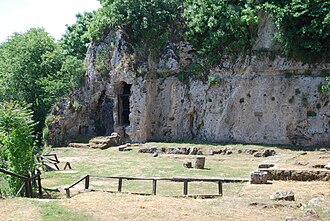
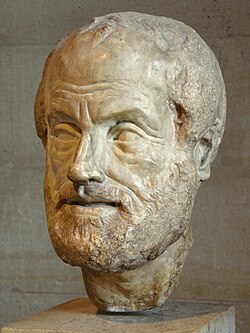
Aristotle (384–322 BC) was a towering figure of Ancient Greek philosophy whose influence spans nearly every field of human inquiry. From the logical structures of our arguments to our understanding of the natural world, his intellectual footprint is vast. Born in Stagira, Aristotle spent much of his life exploring the fundamental questions of existence, moving from the halls of Plato's Academy to founding his own school, the Peripatetic school.
Often referred to as the "father" of disciplines as diverse as logic, zoology, and psychology, Aristotle's work provided a systematic framework for understanding reality. His approach combined rigorous theoretical reasoning with keen empirical observation, a combination that laid the groundwork for much of Western science and philosophy.
Key Facts
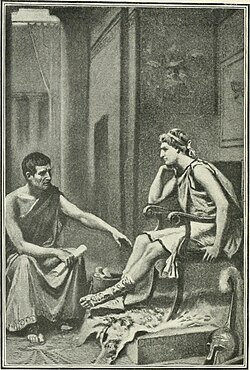
- Lifespan: 384 BC – 322 BC (died aged 61–62).
- Education: Student at Plato's Academy.
- Notable Students: Alexander the Great, Theophrastus, and Aristoxenus.
- Major Schools: Peripatetic school.
- Core Disciplines: Logic, Metaphysics, Ethics, Politics, Biology, and Physics.
- Philosophical Approach: Emphasized empirical observation and the concept of hylomorphism (the unity of matter and form).
Theoretical Philosophy and Logic
Aristotle's contributions to theoretical philosophy began with his development of formal logic. He is often called the "father of logic" for his work on the syllogism—a form of reasoning where a conclusion is drawn from two given or assumed premises. His collection of logical works, known as the Organon, includes essential texts such as Prior Analytics and Posterior Analytics.
Metaphysics and the Nature of Being
In his study of metaphysics, Aristotle explored the nature of substance and essence. He introduced the concept of potentiality and actuality: the idea that a thing has the capacity to become something else (potentiality) and the state of being that thing (actuality). For example, a seed has the potential to become a tree.
He also proposed the Four Causes to explain why things exist and change. Using the analogy of a wooden table, he identified:
- Material Cause: The substance the object is made of (e.g., wood).
- Formal Cause: The design or shape of the object.
- Efficient Cause: The agent or process that brings it into being (e.g., the carpenter).
- Final Cause: The purpose or end goal for which the object exists.
![Aristotle argued by analogy with woodwork that a thing takes its form from four causes: in the case of a table, the wood used (material cause), its design (formal cause), the tools and techniques used (efficient cause), and its decorative or practical purpose (final cause).[70]](/images/35/e5/35e59382d7468ec4bb722b46db6ca054f6fbcdde85330b3860e70316acfa6ed3.webp)
The Distinction from Plato
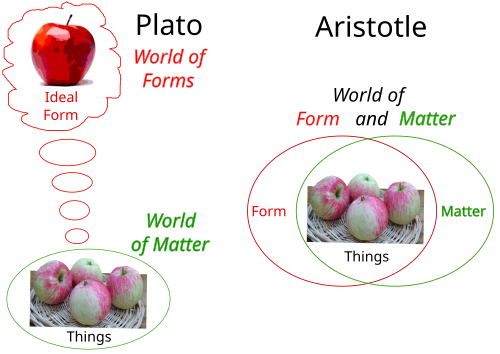
While Aristotle was a student of Plato, their views on reality differed significantly. Plato believed in the "Theory of Forms," where ideal versions of things exist in a separate realm. Aristotle, conversely, championed immanent realism, arguing that forms exist within the physical objects themselves.
![Plato (left) and Aristotle in Raphael's 1509 fresco, The School of Athens. Aristotle holds his Nicomachean Ethics and gestures to the earth, representing his view in immanent realism, whilst Plato gestures to the heavens, indicating his Theory of Forms, and holds his Timaeus.[47][48]](/images/9e/53/9e53137642cf7ee8c3190204bc3c0cd3cac78c7151e182e7114937f246e53722.jpg)
Natural Philosophy and Science
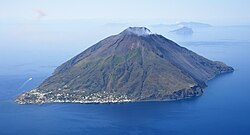
Aristotle's work in natural philosophy was remarkably broad, covering physics, biology, and geology. He viewed the universe through the lens of the four classical elements: earth, water, air, and fire, along with a fifth divine substance known as aether, which moved in perfect circles in the heavens.
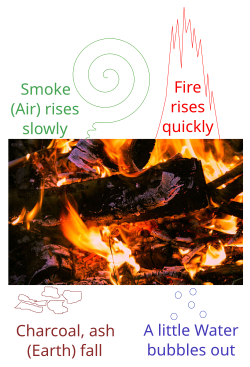
Physics and Motion
Aristotle's physics described how objects move based on their inherent nature. He believed objects fall at a speed proportional to their weight and inversely proportional to the density of the medium they are in—a concept that serves as a functional approximation for objects in Earth's gravity.
![Aristotle's laws of motion. In Physics he states that objects fall at a speed proportional to their weight and inversely proportional to the density of the fluid they are immersed in.[66] This is a correct approximation for objects in Earth's gravitational field moving in air or water.[68]](/images/a3/94/a394debf75fc7e8b8073f09f6f265c499737c026251aab97930eb6db8efcd7a4.webp)
Biology and Zoology
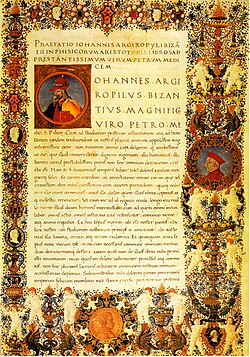
Often called the "father of zoology," Aristotle conducted extensive empirical research on living creatures. He was a pioneer in classification, grouping animals based on shared characteristics such as blood presence, number of legs, and the type of soul they possessed (vegetative, sensitive, or rational).
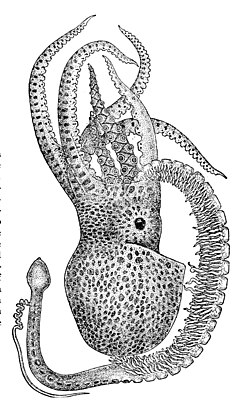
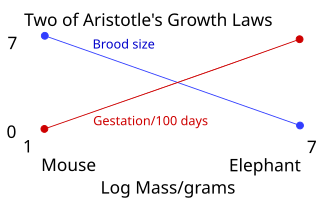
His observations included detailed studies of animal reproduction and growth. He noted that as an animal's body mass increases, its brood size tends to decrease, while its gestation period increases. He even observed complexities in marine life, such as the placenta-like yolk sac in certain dogfish embryos.
![Aristotle recorded that the embryo (fetus pictured) of a dogfish was attached by a cord to a kind of placenta (the yolk sac), like a higher animal; this formed an exception to the linear scale from highest to lowest.[107]](/images/a0/a9/a0a9e9556bb830706a8ab65cc463ffd42422996001c11336365753d1c4e626f0.jpg)
Ethics, Politics, and Psychology
![The Blind Oedipus Commending his Children to the Gods (1784) by Bénigne Gagneraux. In his Poetics, Aristotle uses the tragedy Oedipus Tyrannus by Sophocles as an example of how the perfect tragedy should be structured, with a generally good protagonist who starts the play prosperous, but loses everything through some hamartia (fault).[157]](/images/5c/2e/5c2ec02cbb3bfcf74550dfab461bf6d450dbee6cd6b1575ee9d3e46e3376dcf4.jpg)
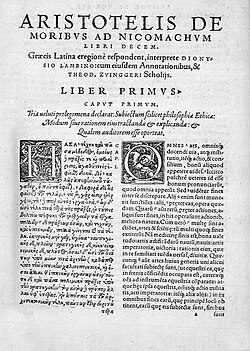
Aristotle's practical philosophy focused on how humans should live and how societies should be organized. In his Nicomachean Ethics, he introduced the Golden Mean—the idea that virtue lies in the balance between two extremes (excess and deficiency). For instance, courage is the mean between cowardice and rashness.
Politics and Society
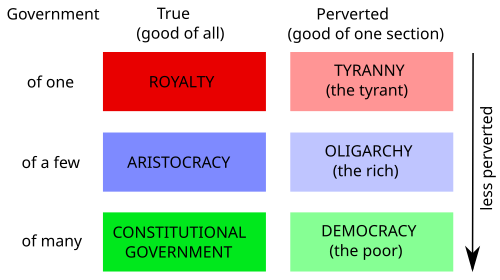
In his political writings, Aristotle examined various forms of constitutions. He viewed the family as a fundamental model for the state and explored the relationship between individual virtue and civic stability.
Psychology and the Soul
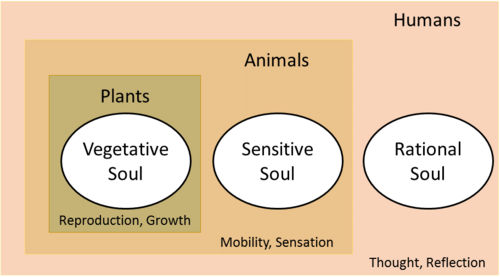
Aristotle's psychology explored the nature of the human soul, which he categorized into three levels: the vegetative soul (plants), the sensitive soul (animals), and the rational soul (humans). He believed humans were unique because they possessed all three. He also studied how senses, memory, and dreams function, suggesting that impressions are stored in the "sensorium" (the heart) and linked through association.
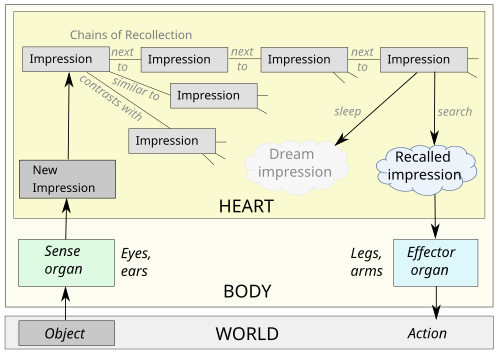
Summary of Aristotle's Scientific Framework
| Category | Key Characteristics / Examples |
|---|---|
| Elements | Earth (Cold/Dry), Water (Cold/Wet), Air (Hot/Wet), Fire (Hot/Dry), Aether (Divine) |
| Soul Types | Vegetative (Plants), Sensitive (Animals), Rational (Humans) |
| Biological Groups | Live-bearing tetrapods, Birds, Egg-laying fishes, Crustaceans, Insects |
| Ethical Goal | The Golden Mean (Virtue as a balance) |
Frequently Asked Questions
![Islamic portrayal of Aristotle (right) in the Kitāb naʿt al-ḥayawān, c. 1220.[191]](/images/84/ee/84ee6df0dd83986e4710bce01fbbe3d947f62f8a26ad58a86c5633003849cf1a.jpg)
What was Aristotle's main difference from Plato?
While Plato believed that true reality existed in a separate realm of perfect "Forms," Aristotle argued that forms exist within the physical objects themselves (immanent realism).
What is the "Golden Mean"?
The Golden Mean is Aristotle's ethical concept that virtue is the desirable middle ground between two extremes: deficiency and excess. For example, being courageous is the mean between being a coward and being reckless.
How did Aristotle classify the natural world?
Aristotle used empirical observation to classify living things based on shared traits such as the presence of blood, the number of legs, and the type of soul (vegetative, sensitive, or rational) they possessed.
What are the Four Causes?
The Four Causes are the material cause (what it's made of), the formal cause (its design), the efficient cause (how it was made), and the final cause (its purpose).
Who were Aristotle's most famous students?
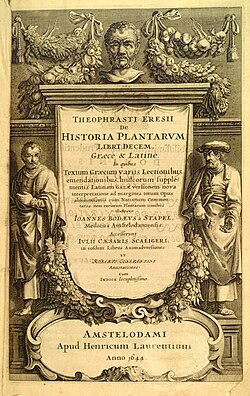
His most notable student was Alexander the Great, along with other scholars like Theophrastus and Aristoxenus.