Albertus Magnus: The Universal Doctor of Science and Theology
In the heart of the Middle Ages, a period often unfairly characterized as one of intellectual stagnation, lived a man who bridged the gap between divine faith and empirical observation. Albertus Magnus, also known as Saint Albert the Great, was a German Dominican friar, bishop, and polymath whose curiosity spanned nearly every field of human knowledge. Known in his time as Doctor universalis (the Universal Doctor), Albertus is remembered today as one of the most influential thinkers of the medieval era and the patron saint of natural scientists.
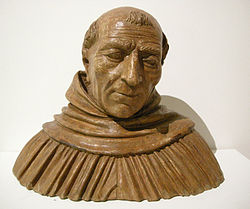
Key Facts
- Born: c. 1200 in Lauingen, Duchy of Bavaria.
- Died: November 15, 1280, in Cologne, Holy Roman Empire.
- Primary Role: Dominican friar, Bishop of Regensburg, and Doctor of the Church.
- Major Achievement: Pioneered the study of Aristotle in the West and discovered the element arsenic.
- Notable Student: Saint Thomas Aquinas.
- Patronage: Patron saint of scientists, philosophers, and medical technicians.
Early Life and Academic Journey
While his exact birth date is debated, evidence suggests Albertus was born around 1200 in Lauingen, Bavaria. He likely came from the ministerial class, though later claims of noble lineage remain unconfirmed. His intellectual journey began at the University of Padua, where he immersed himself in the writings of Aristotle, the Greek philosopher whose work would define much of Albert's later career.
Driven by a spiritual calling, Albertus joined the Dominican Order—a religious order focused on preaching and study—around 1223 or 1229. He pursued further theological studies in Bologna and other centers of learning. His reputation as a scholar grew rapidly, leading him to teach in several German cities, including Regensburg, Freiburg, Strasbourg, and Hildesheim.
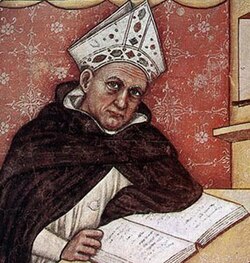
By 1245, Albertus became the first German Dominican to be named a master of theology under Guerric of Saint-Quentin. This achievement allowed him to secure a prestigious position as a full-time professor at the University of Paris, holding the Chair of Theology at the College of St. James. It was during this tenure that he began mentoring one of history's most famous theologians, Thomas Aquinas.
Ecclesiastical Leadership and Diplomacy
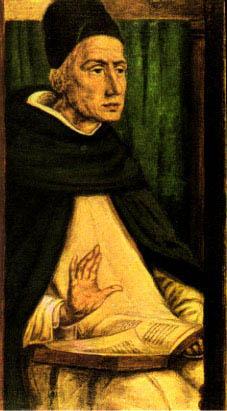
Beyond the classroom, Albertus was a capable administrator and diplomat. In 1254, he served as the provincial of the Dominican Order, where he defended the order against academic attacks and refined the ratio studiorum (program of studies). This innovation introduced the study of philosophy as a prerequisite for those not yet ready for advanced theology, laying the groundwork for the tradition of Dominican scholastic philosophy—a method of critical thought that sought to reconcile classical philosophy with Christian theology.
In 1260, Pope Alexander IV appointed him the Bishop of Regensburg. Albertus was noted for his humility during this time, famously refusing to ride a horse and instead traversing his vast diocese on foot. Though he resigned the bishopric after three years, he remained a vital figure in the Church, preaching the Eighth Crusade and acting as a mediator in political disputes. In Cologne, he is remembered for "the big verdict" (der Große Schied) of 1258, which resolved a major conflict between the city's citizens and the archbishop.
The Scientific Legacy of Albert the Great
Albertus Magnus was far more than a theologian; he was a pioneering natural philosopher. He believed that the study of nature was not an obstacle to faith but a way to understand the Creator. His approach was surprisingly modern, asserting that natural science should not simply accept hearsay but should actively inquire into the causes of natural phenomena.
His scientific contributions were vast and varied:
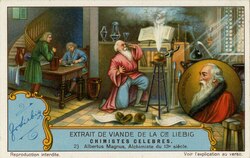
- Mineralogy and Chemistry: He conducted systematic studies of minerals and is credited with the discovery of the element arsenic.
- Biology: He wrote extensively on zoology and physiology, documenting the natural world with empirical detail.
- Astronomy and Astrology: Albertus viewed the cosmos as a macrocosm that mirrored the human microcosm. He argued that understanding celestial influences could help individuals live more in accordance with Christian precepts.
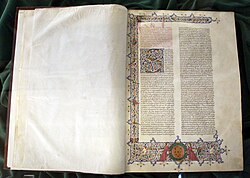
His work in alchemy—the medieval precursor to chemistry—further cemented his reputation as a master of the physical world, though many of his empirical findings were eventually superseded by later scientific advancements.
Philosophy, Music, and Ethics
Albertus is perhaps most famous for his role in preserving and interpreting the works of Aristotle. He digested and systematized Aristotle's writings, making them accessible and compatible with Church doctrine. This synthesis provided the intellectual framework for much of Western medieval philosophy.
His interests also extended to the arts. In his commentaries on Aristotle's Poetics, Albertus explored the physics of sound and the proportions of music. He rejected the "music of the spheres" (the idea that celestial bodies create a divine harmony) as illogical, arguing that the movement of astronomical bodies cannot generate sound. He also wrote on the role of silence as an essential component of music and the ability of plainchant to purify and illuminate the human soul.
Death, Canonization, and Global Influence
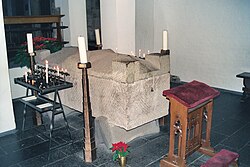
Albertus Magnus died on November 15, 1280, in the Dominican convent in Cologne. His remains were placed in a Roman sarcophagus in the crypt of St. Andrew's Church. While early reports claimed his body was incorrupt, a later exhumation in 1483 revealed only a skeleton remained.
He was beatified in 1622 and canonized as a saint and proclaimed a Doctor of the Church in 1931 by Pope Pius XI. In 1941, he was named the patron saint of natural scientists.
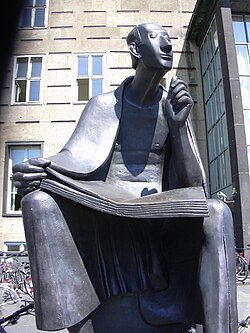
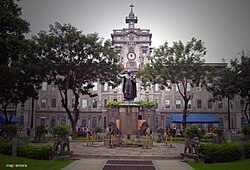
Today, his legacy persists through numerous institutions and scientific names. From the University of Cologne to the University of Santo Tomas in the Philippines, schools and buildings bear his name. His influence is even etched into the natural world, with various species—including the bacterium Agrobacterium albertimagni and the asteroid 20006 Albertus Magnus—named in his honor.
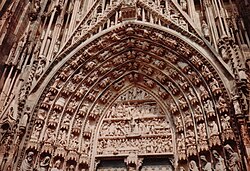
His intellectual reach extended into literature and art as well. He is mentioned by Dante in the Divine Comedy, and his works are cited by Victor Frankenstein in Mary Shelley's classic novel, Frankenstein. The iconography of the Strasbourg Cathedral's portal also draws inspiration from his writings.
Summary of Albertus Magnus's Contributions
| Category | Key Contributions / Details |
|---|---|
| Academic | Pioneered Aristotelianism in the West; taught at the University of Paris. |
| Scientific | Discovered arsenic; systematic study of mineralogy, botany, and zoology. |
| Theological | Doctor of the Church; mentor to Thomas Aquinas. |
| Ecclesiastical | Bishop of Regensburg; Provincial of the Dominican Order. |
| Philosophical | Developed concepts of Natural Law and Aevum (the state between time and eternity). |
Frequently Asked Questions
Who was Albertus Magnus?
Albertus Magnus, also known as Saint Albert the Great, was a 13th-century German Dominican friar, bishop, and polymath. He is celebrated as a Doctor of the Church and a pioneer in the fields of natural science and philosophy.
What was his relationship with Thomas Aquinas?
Albertus Magnus was the teacher and mentor of Thomas Aquinas. He provided the Aristotelian foundation that Aquinas would later build upon to create some of the most significant theological works in Christian history.
What scientific discovery is he most famous for?
In the realm of chemistry and mineralogy, Albertus Magnus is credited with the discovery of the element arsenic.
Why is he the patron saint of scientists?
He was named the patron saint of natural scientists because of his lifelong commitment to empirical observation and his belief that the study of the natural world is a legitimate and holy pursuit that complements religious faith.
What was his view on astrology?
Albertus viewed astrology as a way to understand the relationship between the macrocosm (the universe) and the microcosm (human life). He believed that understanding celestial influences could help people live more virtuous lives according to Christian precepts.