History of Animals: Aristotle's Pioneering Work in Zoology
Written between the mid-fourth century BC and 322 BC, History of Animals (Greek: Ton peri ta zoia historion) stands as one of the most influential texts in the history of biology. Authored by the Greek philosopher Aristotle, this work represents a monumental shift in how humans studied the natural world, moving away from symbolic interpretations toward a system based on rigorous observation.
Aristotle's approach was fundamentally philosophical yet empirical. He sought to identify universals—distinguishing features shared by all members of a group. For instance, he noted that all birds possess feathers, wings, and beaks; therefore, these traits define the universal category of "bird." By documenting the "what" (existing facts) before attempting to explain the "why" (the causes), Aristotle laid the groundwork for the scientific method.
Key Facts
- Author: Aristotle (384–322 BC), who conducted extensive research on the island of Lesbos.
- Core Method: Prioritizing the collection of empirical facts (hoti) before establishing causes (dioti).
- Scope: Covers anatomy, habits, social behavior, and the classification of red-blooded and bloodless animals.
- Legacy: Remained the primary authority on zoology for nearly two thousand years.
- Key Contribution: First surviving detailed work of natural history based on direct observation and dissection.
The Structure and Approach of the Text
Aristotle organized his inquiries into a logical progression, moving from physical anatomy to behavioral patterns. He investigated four primary types of differences among animals: specific body parts, ways of life, types of activity, and specific characters.
Breakdown of the Books
The work is divided into several thematic sections:
- Book I: Focuses on the human body, detailing organs such as the brain, heart, and viscera.
- Book II: Examines red-blooded animals, including the teeth of elephants and horses, as well as crocodiles and snakes.
- Book III: Explores internal systems, including veins, bone marrow, and the generative system.
- Book IV: Dedicated to invertebrates (animals without blood), such as crustaceans and cephalopods.
- Book VIII: Discusses animal habits, migration, diseases, and the impact of climate.
- Book IX: Analyzes social behavior and signs of intelligence in birds and sheep.
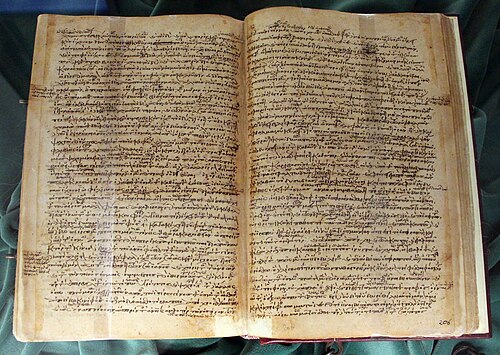
While some versions include a tenth book regarding female barrenness, modern scholars, including translator D'Arcy Wentworth Thompson, generally consider it spurious.
Remarkable Observations and Scientific Accuracy
Aristotle's work is celebrated for its precision, particularly regarding marine biology. Many of his eye-witness accounts were so advanced that they were dismissed as fanciful until they were independently rediscovered in the 19th century.
Case Studies in Accuracy
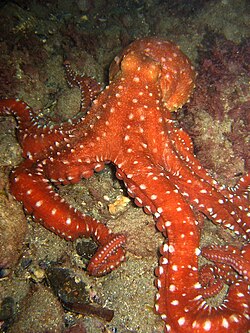
- The Octopus: Aristotle observed that octopuses could change color for camouflage and identified the hectocotylus, a specialized tentacle used by males to transfer sperm. This was confirmed by Georges Cuvier in 1817.
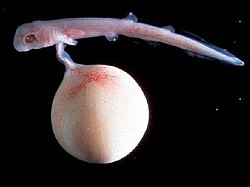
- The Dogfish: He recorded that dogfish embryos are attached to a yolk sac (similar to a placenta), a fact verified by Johannes Peter Müller in 1842.
- The River Catfish: He described the male glanis guarding eggs for 40 to 50 days, a behavior confirmed by Louis Agassiz in 1890.
![D'Arcy Thompson's illustration of the octopus's hectocotyl arm in a page of his 1910 translation[a]](/images/56/28/562842b34099c85432f2c1073e14bfbbb0d58d2f0482ec735221237993dd5850.jpg)
Addressing Apparent Errors
Despite his accuracy, Aristotle is often accused of making errors. Some of these are the result of misinterpreting his original Greek text. For example, critics claimed he wrongly stated that flies have four legs. However, historian John S. Wilkins clarified that Aristotle was specifically referring to the mayfly (ephemeron), which indeed walks on four legs.
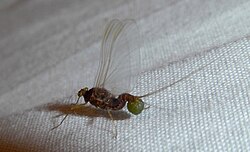
Other errors, such as his claim that human females have fewer teeth than males, may have been based on genuine but limited observations—perhaps reflecting the poorer diets of women in his era. While his models of metabolism and inheritance have been replaced by modern science, they were "scientific" in that they proposed testable mechanisms based on observed phenomena.
Historical Influence and Translations
The History of Animals served as the ultimate biological synthesis for centuries. Its influence extended through the medieval Arabic world via the Kitāb al-Hayawān, translated and commented upon by scholars like Al-Kindī and Avicenna.
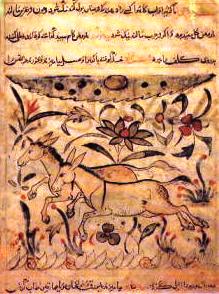
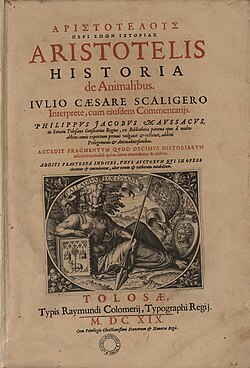
In the 16th century, the work influenced the founders of modern zoology, including Conrad Gessner and Guillaume Rondelet. Even later figures, such as William Harvey, utilized Aristotle's methods of comparative anatomy in their studies of embryology.
| Feature | Description |
|---|---|
| Primary Goal | To document biological facts before determining their causes. |
| Key Methodology | Empirical observation, dissection, and identification of universals. |
| Major Subjects | Human anatomy, red-blooded animals, invertebrates, and animal behavior. |
| Notable Accuracy | Cephalopod anatomy, dogfish gestation, and catfish parental care. |
| Historical Impact | Dominant zoological authority from the 4th century BC to the 16th century AD. |
Frequently Asked Questions
Did Aristotle invent taxonomy?
There is an ongoing debate among scholars. While some biologists believe he was attempting to produce a taxonomy (a system of classification), many philosophers argue his primary goal was describing attributes and identifying universals rather than creating a formal taxonomic hierarchy.
How accurate were Aristotle's observations of marine life?
Remarkably accurate. His descriptions of octopus camouflage, the hectocotylus arm, and the development of dogfish embryos were confirmed by scientists nearly 2,000 years later.
Why are some of Aristotle's biological theories considered wrong today?
Modern science has replaced his models of metabolism, temperature regulation, and inheritance with new evidence. However, his work is still valued because it attempted to explain phenomena through testable predictions and mechanisms.
What is the difference between 'hoti' and 'dioti' in Aristotle's method?
Hoti refers to the "what"—the collection of existing facts and observations. Dioti refers to the "why"—the investigation into the causes behind those facts. Aristotle believed the former must always precede the latter.