The Renaissance: The Rebirth of European Culture and Thought
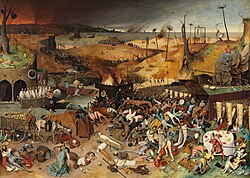
The Renaissance—a term borrowed from the French word for "rebirth"—was a pivotal cultural and intellectual movement that bridged the gap between the Late Middle Ages and the early modern era. Spanning roughly from the 14th to the 17th century, this period was defined by a passionate rediscovery and revival of the literary, philosophical, and artistic achievements of classical antiquity (the civilizations of ancient Greece and Rome).
While its influence eventually swept across the entire European continent, the movement first took root in the Republic of Florence. From this Italian epicenter, it radiated outward, fundamentally altering the trajectory of art, architecture, politics, science, and technology.
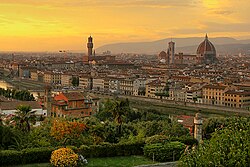
Key Facts
- Origin: Started in Florence, Italy, before spreading throughout Europe.
- Core Philosophy: Humanism, emphasizing the value and agency of human beings.
- Timeline: Generally dated from the 14th to the 17th century.
- Key Innovations: Linear perspective in art, metal movable type in printing, and modern banking/accounting.
- Defining Figures: Polymaths like Leonardo da Vinci and Michelangelo.
The Intellectual Foundation: Humanism
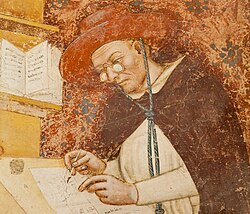
At the heart of the Renaissance was humanism, an intellectual movement derived from the Roman concept of humanitas. Humanists sought to revive the wisdom of classical Greek philosophy, embracing the Protagorean belief that "man is the measure of all things." This shift in focus moved society away from purely theological concerns toward a celebration of human reason, dignity, and potential.
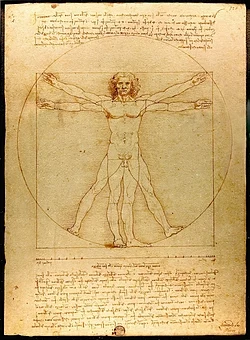
This era saw the rise of the "Renaissance man"—a polymath who excelled in multiple fields of study. Figures such as Leonardo da Vinci embodied this ideal, blending scientific inquiry with artistic mastery.
![Giovanni Pico della Mirandola, writer of the famous Oration on the Dignity of Man, which has been called the "Manifesto of the Renaissance"[62]](/images/21/43/214389c19e042e73daa0a65610ec9a6d4ffadba5b75e4e4e0f22a50753f1b297.jpg)
The Role of Literature and Language
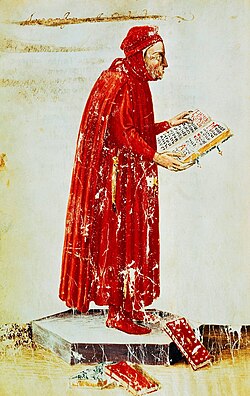
The movement sparked a flowering of literary Latin and a surge in vernacular literatures (works written in the native languages of the people). This resurgence of learning, credited largely to the scholar Petrarch, encouraged a widespread reform in education and a deeper engagement with classical sources.
Artistic and Technological Revolutions
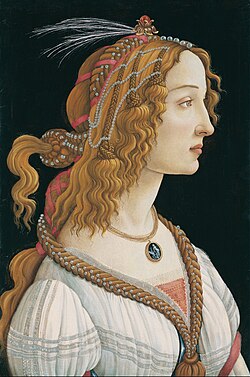
Renaissance art broke away from the stylized forms of the Middle Ages, striving instead for a more natural reality. This was achieved through the development of linear perspective—a mathematical system for creating the illusion of depth on a flat surface—and a more profound study of human anatomy.
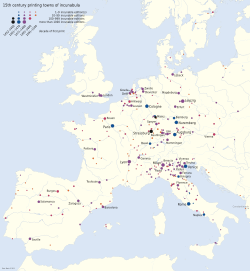
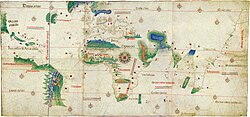
The impact of the Renaissance extended far beyond the canvas. The invention of metal movable type in the later 15th century revolutionized the dissemination of ideas, making knowledge accessible to a broader audience than ever before. Simultaneously, advancements in navigation and geography opened the world to unprecedented exploration.
Science, Medicine, and Finance
The period witnessed significant leaps in natural philosophy and medicine. In the realm of commerce, the introduction of modern banking and the formalization of accounting (pioneered by figures like Luca Pacioli) provided the economic infrastructure necessary to support the arts and global trade.
![Portrait of Luca Pacioli, father of accounting, painted by Jacopo de' Barbari,[f] 1495 (Museo di Capodimonte)](/images/d3/4d/d34daf66a097e572b24f1e875d4deab2d095563d429d329b4b4651c918254080.jpg)
The Spread Across Europe
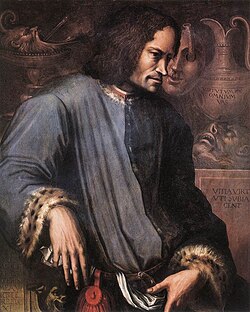
Although the Renaissance began in Italy, it adapted as it moved north of the Alps and into Spain. In Italy, the period is often seen as ending with the Reformation in 1517 or the Sack of Rome in 1527. However, in other parts of Europe, the "long Renaissance" continued well into the 17th century.
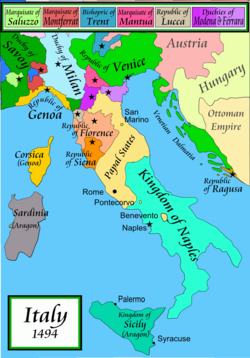
Regional Highlights
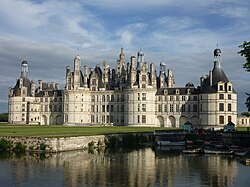
- France: Notable for its grand architecture, such as the Château de Chambord.
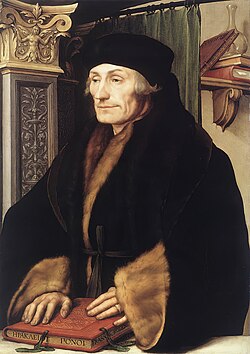
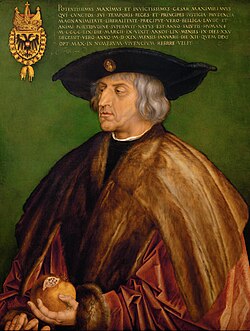
- Germany and Northern Europe: Characterized by the works of Albrecht Dürer and the intellectual contributions of Erasmus of Rotterdam.
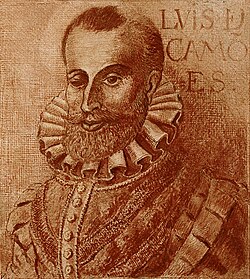
- Portugal and Spain: Marked by maritime exploration and the creation of seminal literary works like Os Lusíadas.
Summary of Renaissance Contributions
| Field | Key Innovation/Contribution | Impact |
|---|---|---|
| Art | Linear Perspective & Anatomy | Created naturalistic, three-dimensional representations. |
| Technology | Movable Type Printing Press | Rapid spread of literacy and humanist ideas. |
| Philosophy | Humanism | Shifted focus toward human reason and individuality. |
| Navigation | Advanced Cartography | Enabled the Age of Discovery and global exploration. |
| Economics | Modern Banking & Accounting | Stabilized trade and funded artistic patronage. |
Frequently Asked Questions
What does the word "Renaissance" actually mean?
The word is borrowed from French and means "rebirth." It refers to the revival of interest in the classical learning and values of ancient Greece and Rome.
Where did the Renaissance begin?
The movement first centered in the Republic of Florence, Italy, before spreading to other Italian city-states and eventually the rest of Europe.
Who is considered a "Renaissance Man"?
A Renaissance man is a polymath—someone whose expertise spans a significant number of different subject areas. Leonardo da Vinci is the most famous example, excelling in art, science, and engineering.
How did the printing press affect the Renaissance?
The invention of metal movable type sped up the dissemination of humanist ideas, allowed for the mass production of classical texts, and increased literacy rates across Europe.
When did the Renaissance end?
The end date varies by region. In Italy, it is often associated with the Reformation (1517) or the Counter-Reformation (1545), but in other parts of Europe, the movement's influence lasted into the 17th century.