Greco-Roman Civilization: The Foundations of Classical Antiquity
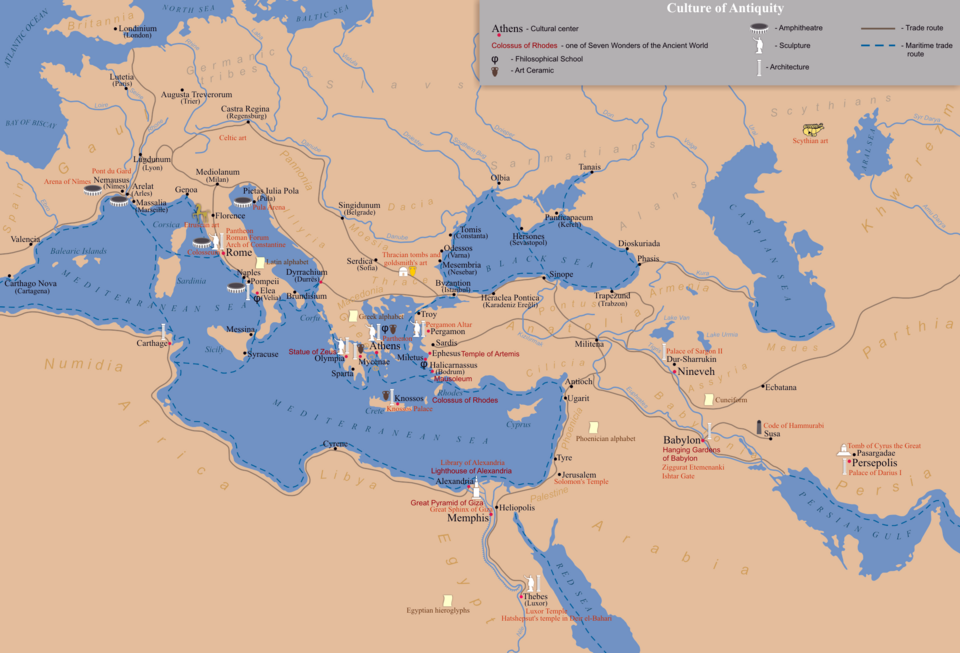
The Greco-Roman world refers to the geographical regions and cultures profoundly shaped by the language, government, religion, and societal norms of ancient Greece and Rome. Scholars often use the term classical antiquity to describe the era when this cultural synthesis exerted its peak dominance over the European continent. Centered on the Mediterranean and Black Sea basins—often described as the "swimming pool and spa" of these ancient peoples—this civilization created a legacy that continues to influence Western society today.
This cultural integration was driven by the adoption of two primary languages: Greek became the standard for commerce and intellectual pursuit in the Eastern Mediterranean, while Latin served as the language of public administration and law in the West. While rural peasants rarely spoke these tongues, Greek and Latin functioned as the lingua franca (a common bridge language) for the urban elites and cosmopolitan classes across the empire.
The inclusivity of this intellectual culture is evident in the diverse backgrounds of its most accomplished citizens. For instance, the jurist Ulpian was of Phoenician origin, the geographer Claudius Ptolemy was Greco-Egyptian, the theologian Augustine was from Berber regions, and the historian Josephus Flavius was Jewish. All of these figures wrote and spoke in the dominant languages of the era.
Key Facts
- Core Regions: Included the Italian Peninsula, Greece, Cyprus, the Iberian Peninsula, Anatolia, Gaul, Egypt, and Roman Africa.
- Linguistic Divide: Greek dominated intellectual and commercial life in the East; Latin dominated administration and law in the West.
- Political Legacy: Developed the concept of the "mixed government," combining elements of monarchy, aristocracy, and democracy.
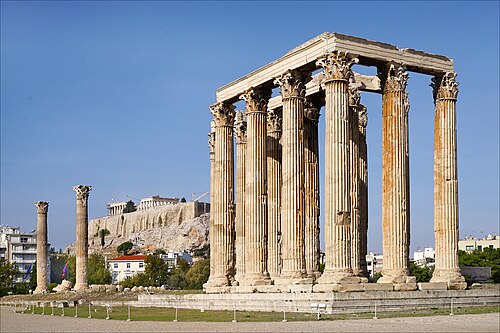
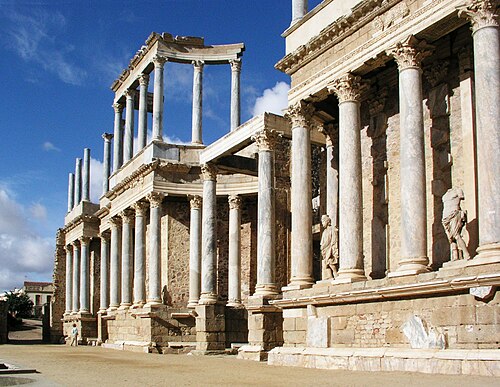
- Architectural Influence: Roman architecture heavily adopted Greek styles, specifically the Doric, Ionic, and Corinthian column orders.
- Cultural Synthesis: Classical mythology emerged from the syncretism (blending) of Greek and Roman myths.
Geographic Extent of the Greco-Roman World
The heart of the Greco-Roman world encompassed the Mediterranean coasts, including modern-day Spain, Portugal, France, Turkey, Greece, Italy, and the Levantine countries (Syria, Lebanon, Israel, and Palestine), as well as Egypt and North African territories like Tunisia and Libya.
Beyond these cores lay the periphery, which included "Roman Germany" (Austria, Switzerland, and southwestern Germany), Illyricum (the Balkans), Moesia, Pannonia, Dacia (Romania and Moldavia), and as far south as Nubia (Northern Sudan) and Mauretania (Morocco and Algeria). To the east, the Greco-Roman world maintained a complex, often volatile relationship with the Persian Empire, marked by legendary conflicts such as the Greco-Persian wars and the conquests of Alexander the Great.
Culture and Architecture
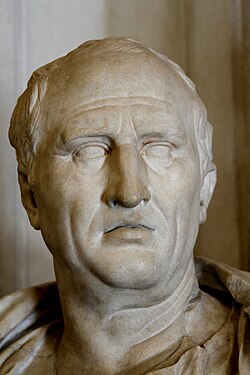
Education in the Greco-Roman world was built upon the pillars of art, philosophy, and rhetoric. This shared intellectual mantle is evidenced by the discovery of Greek papyrus volumes in Roman villas at Herculaneum and the fact that prominent Romans, including Julius Caesar and Cicero, studied in Greece.
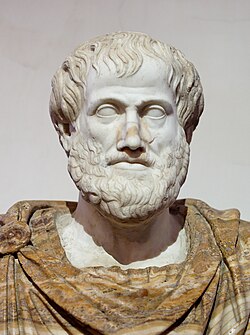
The official recognition of this dual culture is best seen in the Res Gestae, the monumental eulogy of Augustus, which was inscribed in both Greek and Latin. This bilingualism was common among the educated class, who viewed the history of both Latins and Hellenes as a single, universal history.
Architectural Principles
Roman architecture largely followed the principles established by the Greeks, with the temple serving as the most representative building type. The Greeks developed three primary column designs: Doric (seen in the Parthenon), Ionic (seen in the Erechtheum), and Corinthian. These styles were adopted by the Romans for their own temples and government buildings, such as the Roman Senate.
Political Evolution: From Republics to Empires
The concept of classical republicanism originated with Greek philosophers like Plato, Aristotle, and Polybius. They explored the idea of politeia (translated into Latin as res publica), emphasizing civic virtue and the importance of rulers possessing philosophical nature to ensure peace.
The Roman Republic
The historian Polybius described the Roman Republic as a "mixed" government that combined monarchy, aristocracy, and democracy. He argued that by balancing the strengths of these three systems, Rome achieved a level of domestic stability that allowed it to conquer the Mediterranean. This model heavily influenced Cicero, who linked the Roman res publica to the Greek politeia.
While the modern term "republic" differs from the ancient res publica, Enlightenment philosophers viewed the Roman system as an ideal due to its systematic separation of powers. Even as Rome transitioned into an Empire, the state was notionally called the Res Publica because the early emperors maintained the outward appearance of Republican offices.
The Transition to Empire and Byzantium
The shift toward absolute power became irreversible during the reign of Tiberius. By AD 211, the Constitutio Antoniniana granted citizenship to all free men in the empire to increase tax revenue. Following the fall of the Western Roman Empire, the inhabitants of the East continued to identify as Rhomaioi (Romans). This Eastern Roman Empire, known as the Byzantine Empire, persisted until the fall of Constantinople to the Turks in 1453.
Religion and Mythology
Classical mythology is the result of syncretism between Greek and Roman myths. This blending of deities and stories remains one of the most significant contributions of antiquity to Western culture. Furthermore, the Greco-Roman world provided the cultural and geographic cradle for the birth of early Christianity, which was deeply influenced by the existing societal structures.
| Category | Greek Influence | Roman Influence |
|---|---|---|
| Language | Intellectual culture & commerce (East) | Public administration & law (West) |
| Politics | Politeia & Civic Virtue | Res Publica & Mixed Government |
| Architecture | Doric, Ionic, Corinthian orders | Adaptation of Greek styles for state buildings |
| Religion | Original mythological frameworks | Syncretism and expansion of myths |
Frequently Asked Questions
What is the difference between the Greco-Roman world and classical antiquity?
The Greco-Roman world refers to the geographical regions and cultures influenced by Greece and Rome, while classical antiquity refers specifically to the time period when this influence was at its peak.
Were Greek and Latin the native languages of most people in the empire?
No. Most rural peasants spoke native local languages. Greek and Latin were primarily the languages of the urban elites and served as the lingua franca for administration and intellectual exchange.
What was a "mixed government" in the Roman Republic?
As described by Polybius, it was a system that combined elements of monarchy, aristocracy, and democracy to offset the weaknesses of each, creating greater domestic stability.
How did the Roman Republic become the Roman Empire?
The transition was gradual. Early emperors kept the outward structure of the Republic (the Res Publica) but combined various Republican offices under their own control, eventually establishing permanent sovereignty.
What happened to the Greco-Roman identity after the fall of the West?
The Eastern Roman Empire (Byzantine Empire) continued the tradition, with its citizens calling themselves Rhomaioi until the fall of Constantinople in 1453.