Classicism in Art, Architecture, and Philosophy
Classicism is an aesthetic and philosophical attitude that holds the art, culture, and literature of classical antiquity—specifically ancient Greece and Rome—as the gold standard for taste and beauty. Rather than mere imitation, classicism seeks to emulate the timeless principles of form, simplicity, proportion, and clarity of structure. It prioritizes the intellect over raw emotion, favoring restrained expression and a sense of perfection and balance.
In the Western canon, classicism represents a recurring force. While it is a constant thread in post-medieval European tradition, certain eras experienced more intense revivals, most notably during the Italian Renaissance and the Age of Enlightenment.
Key Facts
- Core Values: Emphasis on symmetry, proportion, clarity, and restrained emotion.
- Foundations: Based on the cultural and artistic achievements of Ancient Greece and Rome.
- Major Movements: Includes the Italian Renaissance and Neoclassicism during the Enlightenment.
- Theatrical Rules: Defined by the "Classical unities" of time, place, and action.
- Architectural Hallmarks: Use of the golden rectangle, classical orders of columns, and hemispherical domes.
The Evolution of Classical Influence
The Renaissance and Early Revivals
While classicism appeared in Late Antique, Carolingian, and Ottonian art, it saw a durable revival during the Italian Renaissance. This era was fueled by increased trade with Islamic cultures and the fall of Byzantium, which reintroduced vast amounts of ancient knowledge to Europe. This period integrated mathematics, empiricism, and humanism into the arts, introducing a juxtaposition of ancient "pagan" polytheism with modern Christian thought.
By the 16th and 17th centuries, classicism shifted toward structural order and predictability. The court of Louis XIV became a center for this movement, utilizing the gods of Olympus as symbols of absolutism and emphasizing deductive reasoning and rigorous discipline.
The Age of Enlightenment and Neoclassicism
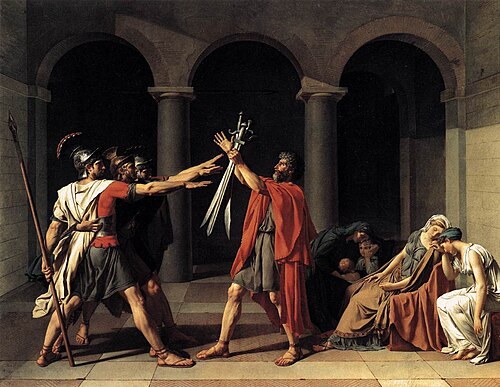
The Age of Enlightenment brought a new vision of antiquity, influenced by the physics of Sir Isaac Newton and a renewed admiration for the Greek struggle against the Persian Empire. This led to Neoclassicism, a movement that rejected the ornate and organic complexity of the Baroque style in favor of formal balance and vigor.
19th and 20th Century Perspectives
In the 19th century, classicism became a precursor to academicism and a tool for movements like the Pre-Raphaelites, who viewed it as a revolt against emotionalism. By the 20th century, the term was used paradoxically: both by traditionalists resisting social change and by modernists who aligned the "classical" with light, space, and formal coherence.
Classicism Across Different Disciplines
Architecture and Fine Arts
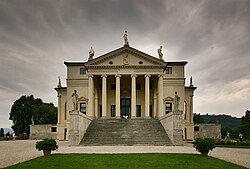
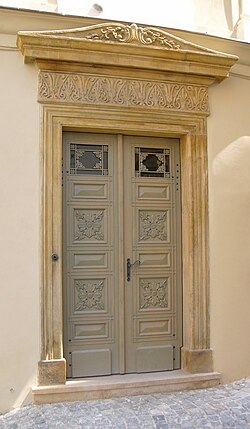
Architectural classicism, championed by figures like Leon Battista Alberti and Filippo Brunelleschi, emphasizes symmetry and geometry. It replaced irregular medieval profiles with semicircular arches, hemispherical domes, and the classical orders of columns. Andrea Palladio's influence led to the enduring tradition of Palladian architecture, later established in England by Inigo Jones and Christopher Wren.
In the fine arts, the renewal of classical motifs reached a peak in the High Renaissance with Raphael's School of Athens. Later, artists like Nicolas Poussin and Charles Le Brun adopted a more rigid form of classicism before the movement evolved into Neoclassicism in the 18th century.
Theatre and Literature
17th-century French playwrights, including Molière, Pierre Corneille, and Jean Racine, developed a strict set of rules based on Aristotle's Poetics, known as the Classical unities:
- Unity of Time: The action must occur within a 24-hour period.
- Unity of Place: The action must unfold in a single location.
- Unity of Action: The play must follow a single plot-line.
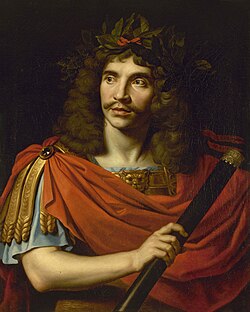
Literary classicism similarly drew from the proportion and structure of Greek and Latin works, influencing poets and writers such as Alexander Pope, Voltaire, and John Dryden.
Political Philosophy
Classical political philosophy originated in Ancient Greece, with Plato and Aristotle formulating theories on constitutions and government tied to their ethical beliefs. Socrates further influenced this field by challenging citizens to reflect on the values that should shape community life, arguing against the excessive influence of wealth and power in Athenian politics.
Summary of Classical Influence
| Domain | Key Characteristics | Notable Figures/Examples |
|---|---|---|
| Architecture | Symmetry, Golden Rectangle, Classical Orders | Palladio, Brunelleschi, Christopher Wren |
| Theatre | Classical Unities (Time, Place, Action) | Molière, Racine, Corneille |
| Fine Arts | Formal balance, clarity, naturalism | Raphael, Jacques-Louis David |
| Philosophy | Rationality, Ethics, Governance | Socrates, Plato, Aristotle |
Frequently Asked Questions
What are the Classical unities in theatre?
The Classical unities are three rules derived from Aristotle's Poetics: unity of time (action occurs within 24 hours), unity of place (a single location), and unity of action (a single plot-line).
How does Neoclassicism differ from general Classicism?
While classicism is a general regard for antiquity, Neoclassicism was a specific movement during the Age of Enlightenment that explicitly rejected the ornate Baroque style to return to the formal balance and vigor of the Greeks and Romans.
What is the "Apollonian" impulse in modern philosophy?
In present-day philosophy, classicism is often associated with the Apollonian impulse, which represents a preference for rationality and order over the emotionalism associated with the Dionysian impulse.
Who were the primary architects of the Italian Renaissance classicism?
Leon Battista Alberti and Filippo Brunelleschi were pivotal in developing the architectural emphasis on symmetry, proportion, and geometry based on Ancient Roman models.
Did William Shakespeare follow the rules of Classicism?
Generally, no. Shakespeare did not conform to the French Classical unities. However, some of his plays, such as The Tempest, show a familiarity with actual models from classical antiquity.