Hellenic RepublicGreek historyAthensAncient GreeceByzantine Empire

Greece: A Journey Through the Cradle of Western Civilization

Greece: A Journey Through the Cradle of Western Civilization The Hellenic Republic, known globally as Greece, is a land where antiquity and modernity coexist. From the sun-drenched island...

Greece: A Journey Through the Cradle of Western Civilization

The Hellenic Republic, known globally as Greece, is a land where antiquity and modernity coexist. From the sun-drenched islands of the Aegean to the rugged peaks of the mainland, Greece has served as a foundational pillar of Western civilization. Today, it is a unitary parliamentary republic and a member of the European Union, balancing a rich historical legacy with the challenges and triumphs of a contemporary nation-state.

With its capital in Athens, the largest city and a timeless symbol of democracy, Greece continues to influence the world through its philosophy, arts, and enduring spirit of Elefthería í Thánatos (Freedom or Death).
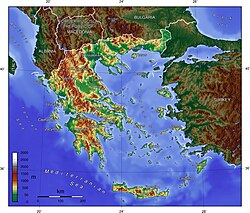
Topographic map of Greece

Key Facts

ภาพประกอบบทความ
ภาพประกอบจากบทความต้นฉบับ
  • Official Name: Hellenic Republic (Ellinikí Dimokratía).
  • Capital: Athens.
  • Government: Unitary parliamentary republic.
  • Population: Approximately 10.37 million (2025 estimate).
  • Official Language: Greek.
  • Currency: Euro (€).
  • Religion: Predominantly Greek Orthodoxy (90%).
  • Highest Point: Mount Olympus.

A Timeline of Greek History

Representation through:[196] embassy embassy in another country general consulate no representation Greece

Prehistory and Ancient Greece

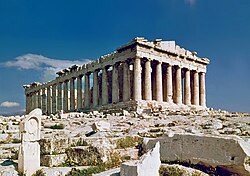
The story of Greece begins with the Aegean civilizations, evolving into the Classical period where the foundations of philosophy, science, and politics were laid. The Parthenon on the Acropolis remains the most iconic symbol of this era's architectural and intellectual achievement.
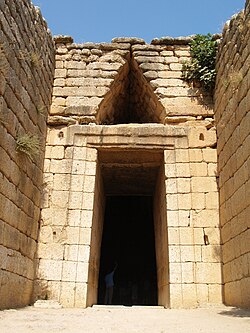
The entrance of the "Treasury of Atreus" (13th century BC) in Mycenae

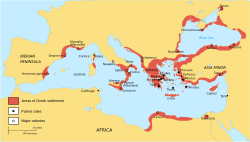
Greek territories and colonies during the Archaic period (750–550 BC)

The Parthenon on the Acropolis of Athens, icon of classical Greece

Roman and Byzantine Eras

Following the Roman conquest in 146 BC, Greece became a Roman province. This transitioned into the Byzantine (Eastern Roman) Empire, which preserved Greek culture and Orthodox Christianity for centuries. The empire reached significant heights under leaders like Basil II before eventually facing the rise of the Ottoman Empire.
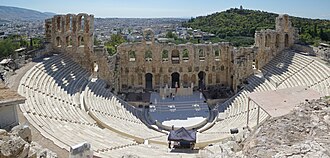
The Odeon of Herodes Atticus in Athens, built in 161 AD

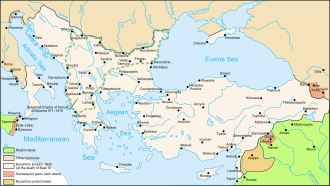
The Byzantine (Eastern Roman) Empire after the death of Basil II in 1025

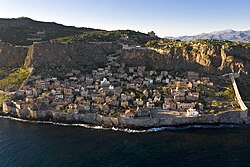
View of the medieval fortress city of Monemvasia

The Path to Independence

After centuries of Ottoman rule and periods of Venetian possession, the Greek War of Independence began in 1821. This struggle led to the official recognition of the Greek state in 1830 and the subsequent establishment of the Kingdom of Greece under King Otto.

The Byzantine castle of Angelokastro successfully repulsed the Ottomans during the first great siege of Corfu in 1537, the siege of 1571, and the second great siege of Corfu in 1716, causing them to abandon their plans to conquer Corfu.[85]

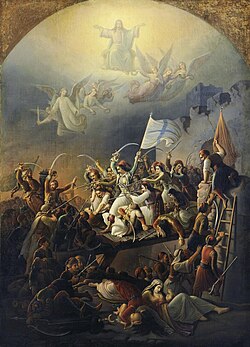
The sortie (exodus) of Messolonghi, depicting the third siege of Missolonghi, painted by Theodoros Vryzakis

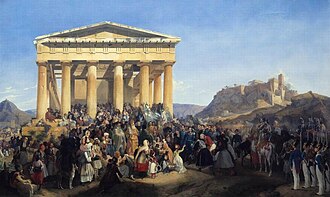
The Entry of King Otto of Greece into Athens, painted by Peter von Hess in 1839

The Modern Era

The 20th century was marked by territorial expansion, the tragedy of the 1922 genocide in Smyrna, and the hardships of World War II. Following the liberation from Axis powers in 1944 and a subsequent civil war, the Third Hellenic Republic was established in 1974, with a new constitution adopted in 1975. Greece joined the European Communities in 1979, cementing its place in the modern European political landscape.
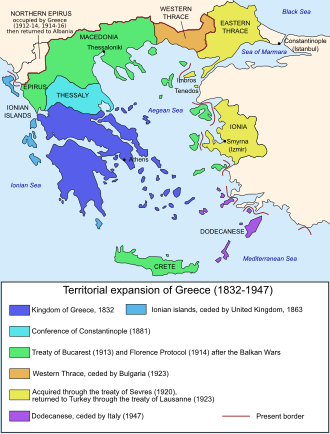
The territorial evolution of the Kingdom of Greece from 1832 to 1947

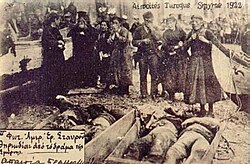
Greek civilians mourn their relatives killed in the Great Fire of Smyrna during the Greek genocide in 1922.

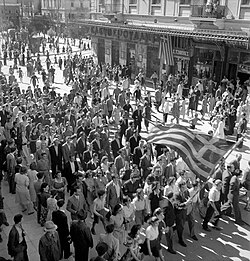
People in Athens celebrate the liberation from the Axis powers, October 1944. Postwar Greece would soon experience the Greek Civil War and political polarisation

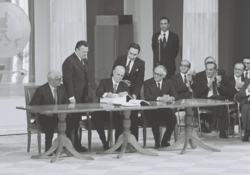
Signing at Zappeion by Constantine Karamanlis of the documents for the accession of Greece to the European Communities in 1979

Geography and Environment

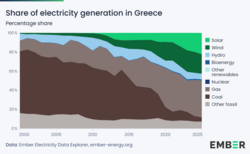
Electricity generation in Greece - percentage share

Greece is characterized by its mountainous terrain and an extensive coastline. Mount Olympus, the highest peak, is not only a geographical landmark but also the mythical home of the gods.
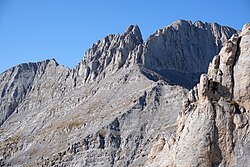
Mount Olympus is the highest mountain in Greece and mythical abode of the Gods of Olympus.

The climate is predominantly Mediterranean, though it varies across different regions. The country is composed of a mainland and thousands of islands, with Santorini being one of the most world-renowned destinations for its unique volcanic landscapes.
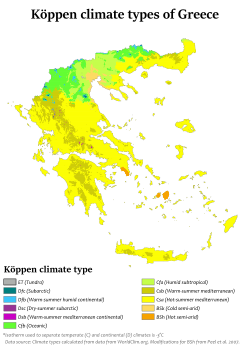
Greece's Köppen Climate Types

Santorini, a popular tourist destination, is ranked as the world's top island in many travel magazines and sites.[284][285]

Government and Economy

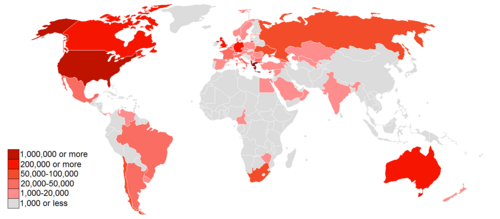
A map of the fifty countries with the largest Greek diaspora communities

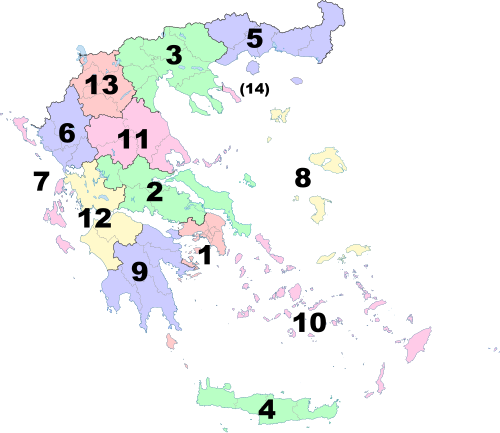
Greece is governed by the Hellenic Parliament, based in the Old Royal Palace in Athens. The state is divided into 13 administrative regions, with Attica being the most populous and economically dominant.
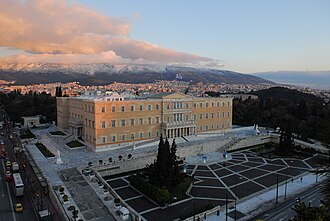
The building of the Hellenic Parliament (Old Royal Palace) in central Athens

Economic Structure

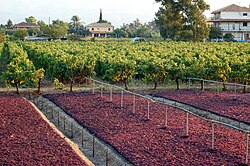
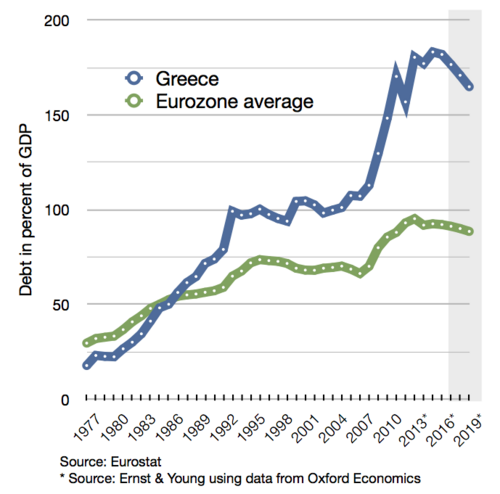
The Greek economy is diverse, with a strong emphasis on tourism, maritime shipping, and agriculture (notably currants and pistachios). While the country faced a severe debt crisis between 2010 and 2018, it has since undergone a period of reconstruction and recovery.
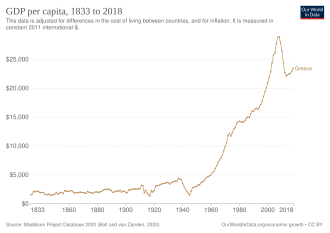
GDP per capita development

Greece's debt percentage since 1977, compared to the average of the eurozone

Sun-drying of Zante currant on Zakynthos

Infrastructure and Technology

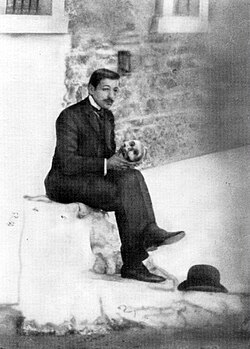
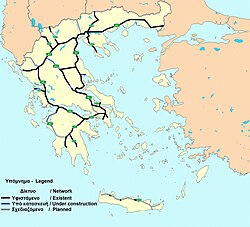
Modern Greece has invested heavily in connectivity, exemplified by the Rio–Antirrio bridge and an expanding motorway network. In science, Greece has contributed significantly to medicine, such as Georgios Papanikolaou's work in cytopathology (the study of cells to detect cancer).
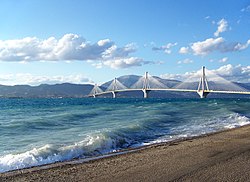
The Rio–Antirrio bridge connects mainland Greece to the Peloponnese

Map of Greece's motorway network as of 2022. Black=Completed routes, Blue=Under Construction, Grey=Planned routes

Georgios Papanikolaou, a pioneer in cytopathology and early cancer detection

Society and Culture

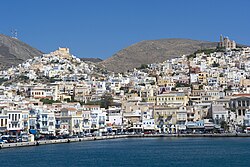
Harbour of Ermoupolis, on the island Syros, first capital of independent Greece.

Greek society is deeply rooted in tradition, yet it is highly educated and cosmopolitan. Greek remains the dominant language, though various regional linguistic influences exist.
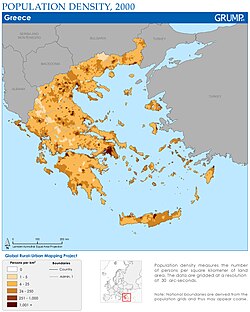
Greece population density, 2000

Regions with a traditional presence of languages other than Greek. Today, Greek is the dominant language throughout the country.[322][323][324][325][326][327]

Arts and Intellectual Legacy

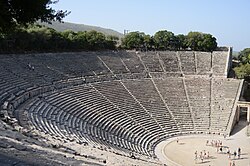
From the Ancient Theatre of Epidaurus to the modern National Library of Greece, the pursuit of knowledge and art is central to Greek identity. The country's legacy includes the philosophy of Socrates and Plato, and the music of composers like Mikis Theodorakis.
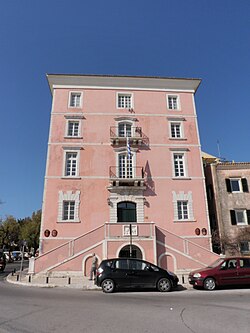
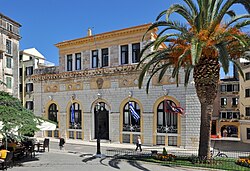
The Ionian Academy in Corfu, the first academic institution of modern Greece

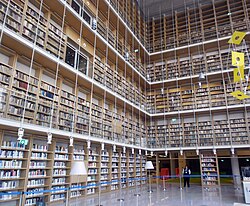
The new National Library of Greece at the Stavros Niarchos Foundation Cultural Centre

The Ancient Theatre of Epidaurus, annually used for theatrical plays since 1955

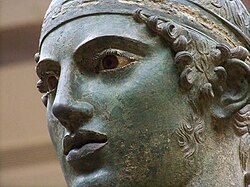
Close-up of the Charioteer of Delphi, a celebrated statue from the 5th century BC

Nobile Teatro di San Giacomo di Corfù, the first theatre and opera house of modern Greece

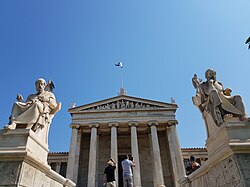
Statues of Plato (left) and Socrates (right) in front of the Academy of Athens, Greece's national academy and highest research establishment.

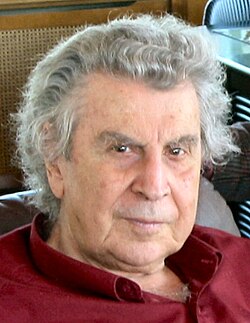
Mikis Theodorakis was one of the most popular and significant Greek composers.

Lifestyle and Traditions

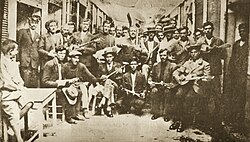
Greek culture is celebrated through its folk dances, the soulful sounds of the bouzouki in Rebetiko music, and a world-famous cuisine featuring feta and olives. Sports also play a vital role, from the origin of the Olympic Games to modern successes in football.
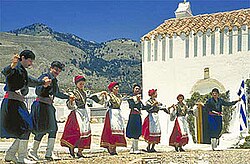
Cretan dancers of traditional folk music

Rebetes in Karaiskaki, Piraeus (1933). Left Markos Vamvakaris with bouzouki.

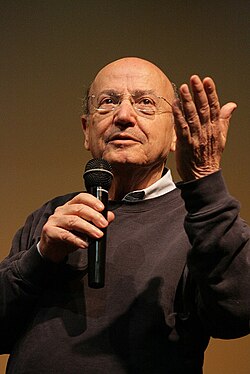
Theodoros Angelopoulos, winner of the Palme d'Or in 1998, notable director in the history of the European cinema

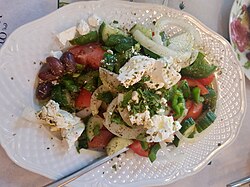
A Greek salad, with feta and olives

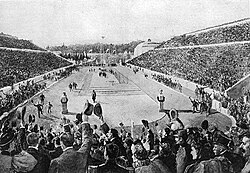
Spyridon Louis entering the Panathenaic Stadium at the end of the marathon; 1896 Summer Olympics

Angelos Charisteas scoring Greece's winning goal in the UEFA Euro 2004 Final

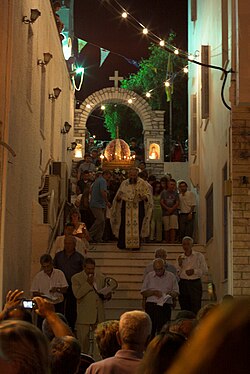
Procession in honour of the Assumption of Virgin Mary (15 August), a major holiday

Regional Overview

The following table provides a snapshot of the administrative regions of Greece.

Administrative Regions of Greece (Selected Data)
Region Capital Population GDP (bn)
Attica Athens 3,814,064 €84
Central Macedonia Thessaloniki 1,795,669 €24
Crete Heraklion 624,408 €9
Thessaly Larissa 688,255 €9
Peloponnese Tripoli 539,535 €8

Frequently Asked Questions

What is the official religion of Greece?

The official religion is Greek Orthodoxy, which is practiced by approximately 90% of the population.

When did Greece gain its independence?

The Greek War of Independence began on March 25, 1821, and the state received official recognition on February 3, 1830.

What are the primary drivers of the Greek economy?

The economy relies heavily on tourism, maritime shipping, and agriculture, alongside a growing focus on science and technology.

What is the significance of Mount Olympus?

Mount Olympus is the highest mountain in Greece and is known in mythology as the abode of the Gods of Olympus.

Which city is the capital of Greece?

Athens is the capital and largest city of the Hellenic Republic.