Middle Ages: A Millennium of European Transformation
The Middle Ages, spanning roughly from AD 500 to 1500, represent a transformative era of human history. Often mistakenly viewed as a static period, this millennium saw Europe evolve from the fragmented ruins of the Western Roman Empire into a complex network of sovereign states, vibrant cities, and sophisticated intellectual centers. This era is traditionally divided into three phases: the Early, High, and Late Middle Ages.
The transition began with the collapse of centralized Roman authority, leading to a period of migration and the emergence of new Germanic kingdoms. While the West decentralized, the Eastern Roman Empire—known as the Byzantine Empire—survived and thrived, preserving classical knowledge and governing from Constantinople.
![A late Roman sculpture depicting the four Tetrarchs, now in Venice, Italy[21]](/images/9b/7f/9b7fba96b23950c0d798df0518cd18dadb875a7d35f9529d0f84eb298ee5e237.jpg)
Key Facts
- Duration: Approximately 1,000 years (c. AD 500 – 1500).
- Core Regions: Primarily Europe, with significant interactions across the Mediterranean.
- Major Transitions: Shift from Roman antiquity to the Renaissance and the Age of Discovery.
- Defining Systems: Feudalism (political/military) and Manorialism (economic/agricultural).
- Key Turning Points: The Fall of Rome, the spread of Islam, the Black Death, and the Fall of Constantinople.
The Early Middle Ages (c. 500 – 1000)
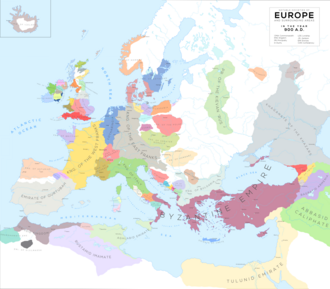
The Emergence of New Societies
Following the fall of the Western Roman Empire, Europe became a mosaic of barbarian kingdoms and tribes. These groups integrated Roman administrative remnants with their own tribal customs, creating a hybrid social structure.
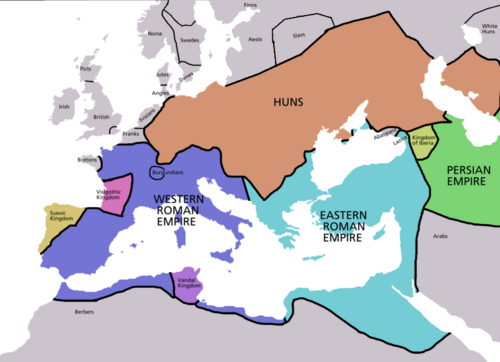
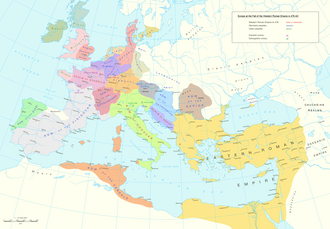
Among these, the Ostrogoths and other Germanic tribes established early dominance, as seen in the leadership of Theoderic the Great.
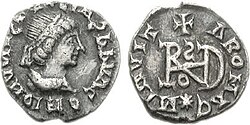
The Rise of Islam and Byzantine Survival
While Western Europe fragmented, the Byzantine Empire maintained Roman law and culture. Simultaneously, the 7th century witnessed the rapid spread of Islam, which fundamentally altered the geopolitical landscape of the Mediterranean and North Africa.
![A mosaic showing Justinian with the bishop of Ravenna (Italy), bodyguards, and courtiers.[59]](/images/75/71/7571031e46e8d7c7ff043739753851e9e1de085ff6a4e9e2040f47035a2d169f.jpg)
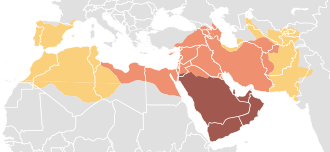
The Carolingian Era
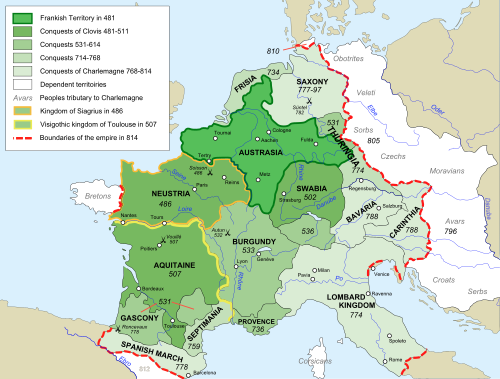
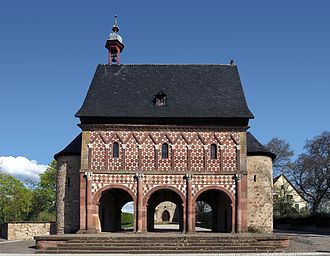
The rise of the Franks marked a pivotal shift toward unification. Under Charlemagne, the Carolingian Empire attempted to revive the glory of Rome, sparking the Carolingian Renaissance—a period of renewed interest in classical learning, art, and architecture.
![Charlemagne's palace chapel at Aachen, completed in 805[107]](/images/17/54/17547fb4107c3d6fcda9db80752a7012864290c2d89b2774f715c812b9418d42.jpg)
However, this unity was short-lived. The Treaty of Verdun eventually led to the breakup of the empire, paving the way for the emergence of distinct European kingdoms.
The High Middle Ages (c. 1000 – 1300)
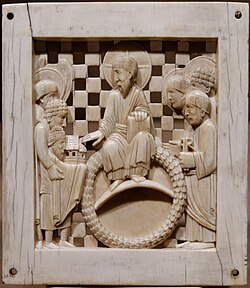
Society and the Feudal Order
The High Middle Ages were characterized by the stabilization of feudalism, a hierarchical system where land was granted in exchange for military service. Society was broadly divided into three classes: the clergy (those who prayed), the nobility (those who fought), and the peasantry (those who worked).
![Medieval French manuscript illustration of the three classes of medieval society: those who prayed (the clergy) those who fought (the knights), and those who worked (the peasantry).[160] The relationship between these classes was governed by feudalism and manorialism.[161] (Li Livres dou Sante, 13th century)](/images/9a/9e/9a9e43c54f9a1856facdd3f3d7c53a9e8926a04dd9457d8601b956f20de167f5.jpg)
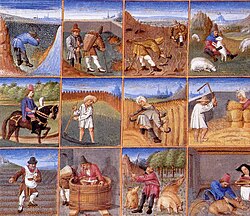
The peasantry lived under manorialism, an economic system where peasants worked the lord's land in exchange for protection and a small plot for their own subsistence.
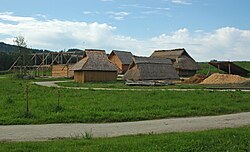
The Crusades and Intellectual Growth
Driven by religious zeal and political ambition, the Crusades were a series of military expeditions to reclaim the Holy Land. These conflicts, while violent, increased trade and the exchange of ideas between Europe and the East.
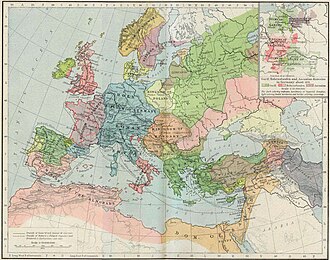
![Krak des Chevaliers was built during the Crusades for the Knights Hospitallers.[212]](/images/a3/85/a385671d2ef87236e08afd8e6a6889398bf8a15b03a919b1e26122742b4b15d9.jpg)
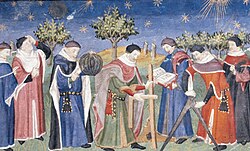
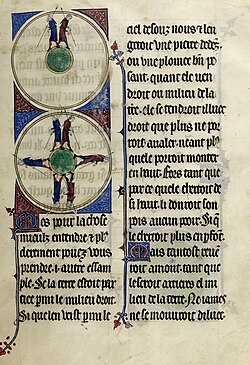
This era also saw the birth of universities and the rise of scholasticism, a method of critical thought that sought to reconcile faith with reason. Intellectuals began making precise measurements and studying astronomy and geometry.
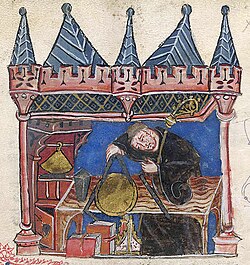
Art and Architecture
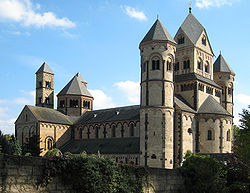
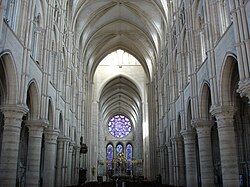
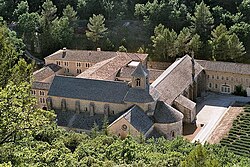
Architecture evolved from the heavy, rounded arches of the Romanesque style to the soaring heights and light-filled interiors of Gothic architecture, characterized by pointed arches and flying buttresses.
The Late Middle Ages (c. 1300 – 1500)
![A page from the Book of Kells, an illuminated manuscript created in the British Isles in the late 8th or early 9th century[139]](/images/1d/f3/1df3b3538ab46016010fee36834008e58ad0650d1ef5d2eecf838f79a8e48ce4.jpg)
Crisis and Collapse
The 14th century brought unprecedented hardship. The Black Death, a devastating plague, wiped out a significant portion of the population, leading to labor shortages and social unrest, such as the jacquerie (peasant revolts).
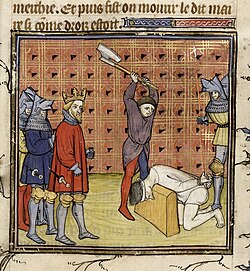
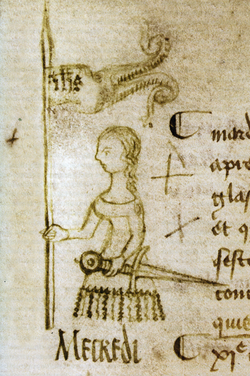
Political instability was further exacerbated by the Hundred Years' War between England and France, which saw the rise of national identities and figures like Joan of Arc.
The Transition to Modernity
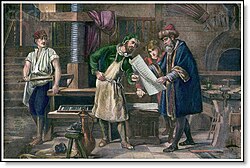
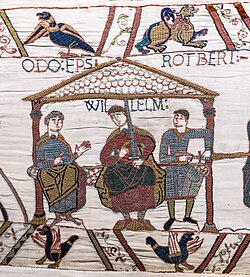
Despite the crises, the late medieval period laid the groundwork for the modern world. The invention of the printing press by Johannes Gutenberg in Mainz, Germany, revolutionized the spread of information.
The fall of Constantinople in 1453 marked the final end of the Roman political legacy, while explorers began venturing toward North America, signaling the start of the Age of Discovery.
Summary of Medieval Eras
| Period | Approx. Dates | Key Characteristics | Major Events |
|---|---|---|---|
| Early Middle Ages | 500 – 1000 | Fragmentation, Migration, Monasticism | Fall of Rome, Rise of Islam, Carolingian Empire |
| High Middle Ages | 1000 – 1300 | Feudalism, Urban Growth, Gothic Art | The Crusades, Magna Carta, Rise of Universities |
| Late Middle Ages | 1300 – 1500 | Plague, War, State Centralization | Black Death, Hundred Years' War, Printing Press |
Frequently Asked Questions
![Portrait of Cardinal Hugh of Saint-Cher by Tommaso da Modena, 1352, the first known depiction of spectacles[235]](/images/58/8a/588a2ca45e838f5281bdf9a36ffee40fd07d45fa9e358d1bc04b79d6ae7e47ee.jpg)
![Francis of Assisi, depicted by Bonaventura Berlinghieri in 1235, founded the Franciscan Order.[260]](/images/82/ee/82ee1a8b0c389640f749b97e884f3102d2899e78d216a2c2f99c43569daab2a1.jpg)
What was the "Dark Ages"?
The term "Dark Ages" was historically used to describe the Early Middle Ages, suggesting a lack of cultural and scientific progress after the fall of Rome. Modern historians generally reject this term, noting the significant achievements of the Byzantine Empire and the Carolingian Renaissance.
What is the difference between feudalism and manorialism?
Feudalism refers to the political and military relationship between nobles (lords and vassals) based on land tenure. Manorialism refers to the economic relationship between the lord of the manor and the peasants who worked the land.
How did the Black Death change Europe?
The plague caused a massive population drop, which led to a shortage of labor. This gave surviving peasants more bargaining power, contributing to the decline of serfdom and the eventual shift toward a wage-based economy.
What role did the Church play in medieval life?
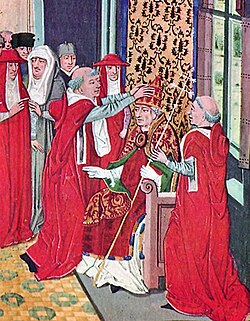
The Christian Church was the most powerful institution in Europe, providing spiritual guidance, education, and social services. It influenced everything from law and politics to art and architecture, and was often the primary patron of the arts.
When did the Middle Ages officially end?
There is no single date, but historians often point to the fall of Constantinople (1453), the arrival of Columbus in the Americas (1492), or the invention of the printing press as markers of the transition to the Renaissance and Early Modern period.