Middle Ages: A Millennium of Transformation in Europe
Spanning approximately 1,000 years from roughly AD 500 to 1500, the Middle Ages represent a profound era of transition in European history. This period serves as the bridge between Antiquity—the era of classical civilizations—and the Early Modern period, which eventually led to the Renaissance and the Age of Discovery. Far from being a static age, the medieval era was characterized by shifting political boundaries, religious evolution, and significant social restructuring.
To understand this vast timeline, historians typically divide it into three distinct phases: the Early, High, and Late Middle Ages. Each phase brought unique challenges and advancements that reshaped the continent.
![A late Roman sculpture depicting the four Tetrarchs, now in Venice, Italy[21]](/images/9b/7f/9b7fba96b23950c0d798df0518cd18dadb875a7d35f9529d0f84eb298ee5e237.jpg)
Key Facts
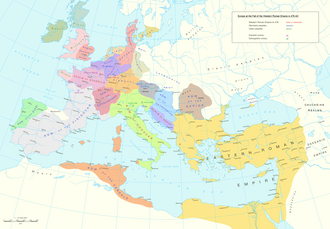
- Duration: Approximately 1,000 years (c. AD 500 – 1500).
- Primary Location: Europe.
- Major Eras: Early Middle Ages, High Middle Ages, and Late Middle Ages.
- Defining Events: The Fall of the Western Roman Empire, the spread of Islam, the Crusades, and the Black Death.
- Social Structure: Governed largely by feudalism and manorialism.
The Early Middle Ages: Foundations and New Societies
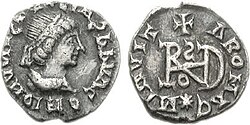
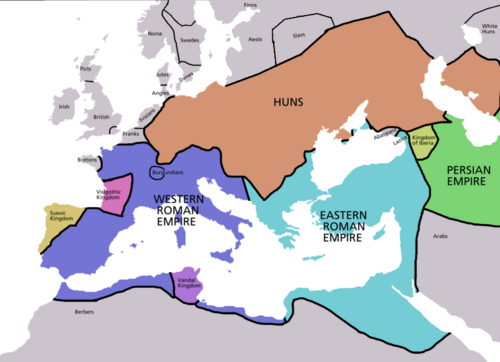
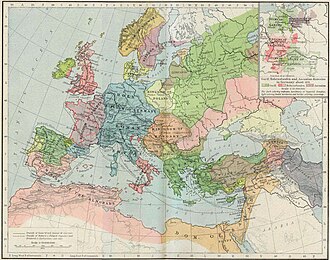
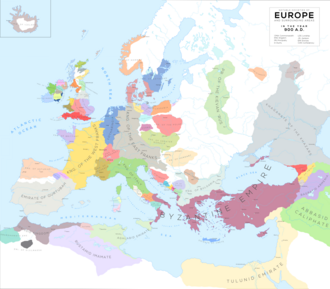
The era began in the wake of the Fall of the Western Roman Empire. As Roman central authority dissolved, new political entities began to emerge across Europe. This period saw the rise of various barbarian kingdoms and the survival of the Byzantine Empire in the East.
The Carolingian Era and the Rise of Islam
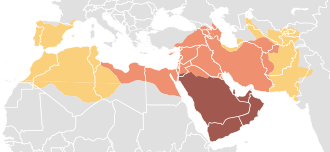
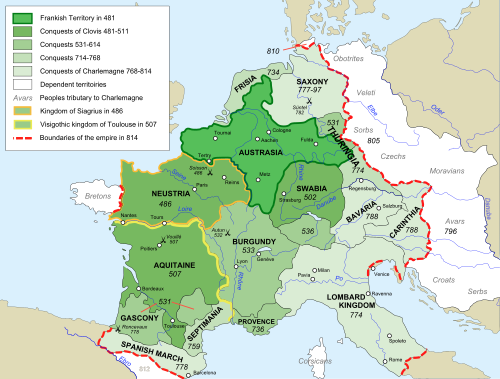
One of the most significant developments during the Early Middle Ages was the rise of the Frankish power and the subsequent Carolingian Renaissance, a period of cultural and intellectual revival. The empire established by Charlemagne eventually underwent a breakup, leading to the formation of new kingdoms. Simultaneously, the rapid expansion of Islam began to influence the Mediterranean landscape and trade routes.
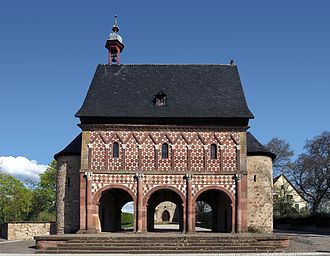
![Charlemagne's palace chapel at Aachen, completed in 805[107]](/images/17/54/17547fb4107c3d6fcda9db80752a7012864290c2d89b2774f715c812b9418d42.jpg)
The High Middle Ages: Expansion and Complexity
![A mosaic showing Justinian with the bishop of Ravenna (Italy), bodyguards, and courtiers.[59]](/images/75/71/7571031e46e8d7c7ff043739753851e9e1de085ff6a4e9e2040f47035a2d169f.jpg)
The High Middle Ages saw a period of increased stability, population growth, and the rise of state power. This era was marked by the Crusades—military expeditions to the Holy Land—and the deepening influence of the Christian Church in both spiritual and political life.
![Krak des Chevaliers was built during the Crusades for the Knights Hospitallers.[212]](/images/a3/85/a385671d2ef87236e08afd8e6a6889398bf8a15b03a919b1e26122742b4b15d9.jpg)
Social Hierarchy and Economic Life
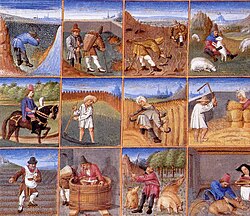
Society was organized into a structured hierarchy often described through the lens of feudalism (the political and military system) and manorialism (the economic system). The population was generally divided into three classes: the clergy (those who prayed), the nobility (those who fought), and the peasantry (those who worked).
![Medieval French manuscript illustration of the three classes of medieval society: those who prayed (the clergy) those who fought (the knights), and those who worked (the peasantry).[160] The relationship between these classes was governed by feudalism and manorialism.[161] (Li Livres dou Sante, 13th century)](/images/9a/9e/9a9e43c54f9a1856facdd3f3d7c53a9e8926a04dd9457d8601b956f20de167f5.jpg)
Art, Architecture, and Intellectual Growth
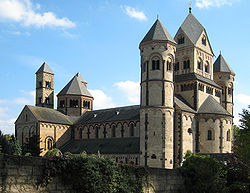
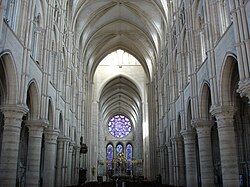
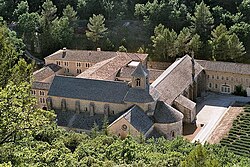
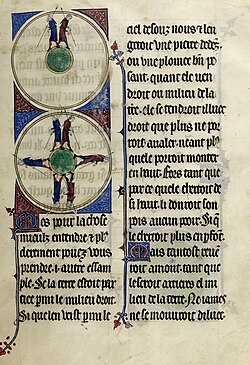
This period witnessed the evolution of architectural styles, moving from the heavy, rounded arches of the Romanesque style to the soaring, light-filled structures of the Gothic era. Intellectual life also flourished through the development of scholasticism and the growth of universities.
The Late Middle Ages: Crisis and Transition
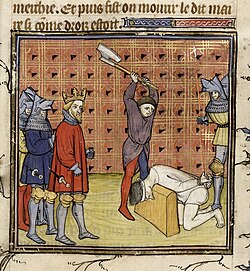
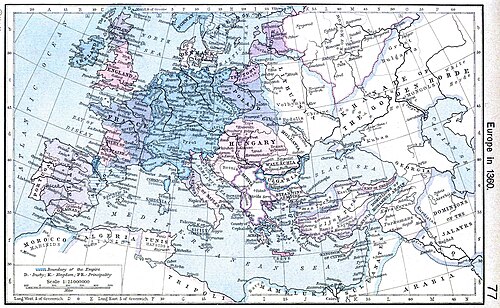
The Late Middle Ages was a period of intense upheaval. Europe faced the devastating impact of the Black Death (a bubonic plague pandemic), widespread famine, and continuous warfare, such as the Hundred Years' War. These crises led to social unrest and significant shifts in the economic and political landscape.
The Path to the Modern Era
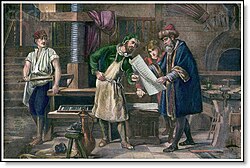
Despite the hardships, the late medieval period also saw the resurgence of states and technological advancements. The invention of the printing press by Johannes Gutenberg revolutionized the spread of information, setting the stage for the Renaissance and the eventual transition into the modern age.
As the Byzantine Empire collapsed and the focus of European exploration began to shift, the medieval world gradually gave way to a new era of global connectivity and scientific inquiry.
Summary of Medieval Eras
| Period | Approximate Dates | Key Characteristics |
|---|---|---|
| Early Middle Ages | c. 500 – 1000 | Fall of Rome, rise of Germanic kingdoms, Carolingian era. |
| High Middle Ages | c. 1000 – 1300 | Crusades, rise of feudalism, Gothic architecture. |
| Late Middle Ages | c. 1300 – 1500 | Black Death, Hundred Years' War, invention of printing. |
Frequently Asked Questions
![A page from the Book of Kells, an illuminated manuscript created in the British Isles in the late 8th or early 9th century[139]](/images/1d/f3/1df3b3538ab46016010fee36834008e58ad0650d1ef5d2eecf838f79a8e48ce4.jpg)
![Portrait of Cardinal Hugh of Saint-Cher by Tommaso da Modena, 1352, the first known depiction of spectacles[235]](/images/58/8a/588a2ca45e838f5281bdf9a36ffee40fd07d45fa9e358d1bc04b79d6ae7e47ee.jpg)
![Francis of Assisi, depicted by Bonaventura Berlinghieri in 1235, founded the Franciscan Order.[260]](/images/82/ee/82ee1a8b0c389640f749b97e884f3102d2899e78d216a2c2f99c43569daab2a1.jpg)
How long did the Middle Ages last?
The Middle Ages lasted for approximately 1,000 years, beginning around AD 500 and ending around AD 1500.
What were the three main social classes in medieval society?
Medieval society was largely divided into the clergy (those who prayed), the nobility or knights (those who fought), and the peasantry (those who worked).
What was the difference between Romanesque and Gothic architecture?
Romanesque architecture is characterized by thick walls and rounded arches, while Gothic architecture is known for its height, light, and pointed arches.
What major event marked the end of the Middle Ages?
While there is no single end date, the period transitioned into the Renaissance and the Age of Discovery, influenced by events like the fall of Constantinople and the invention of the printing press.
What was the impact of the Black Death?
The Black Death was a devastating plague that caused massive population loss, contributing to social and economic upheaval during the Late Middle Ages.