Ancient Greece: The Cradle of Mediterranean Civilization
Ancient Greece, known in its own tongue as Hellás, represents one of the most influential civilizations in human history. Spanning from the Greek Dark Ages in the 12th century BC through the end of classical antiquity around 600 AD, this northeastern Mediterranean civilization was not a single unified empire for most of its existence. Instead, it was a vibrant, loose collection of culturally and linguistically related polis (independent city-states), polities, and communities.
From the philosophical inquiries of Athens to the military might of Sparta and the sweeping conquests of Alexander the Great, the legacy of the Greeks shaped the foundations of Western thought, politics, and art. This article traces the evolution of this complex society through its distinct historical eras.
Key Facts
- Timeline: Approximately 12th century BC to 6th century AD.
- Political Unit: The polis, or independent city-state, was the primary unit of organization.
- Major Eras: Dark Ages, Archaic Period, Classical Period, Hellenistic Period, and Roman Greece.
- Unification: Most regions were only officially unified once, under the Kingdom of Macedon (338–323 BC).
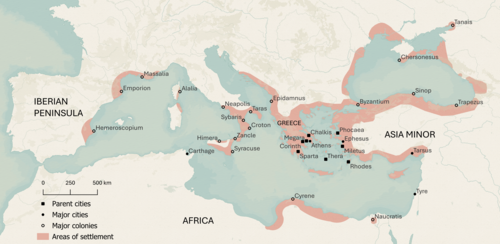
- Cultural Expansion: Greek colonies were established across the Mediterranean, reaching as far as Italy and the Near East.
Chronological Evolution of Greece
The Dark Ages and the Archaic Period
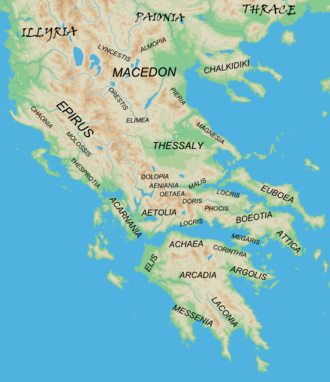
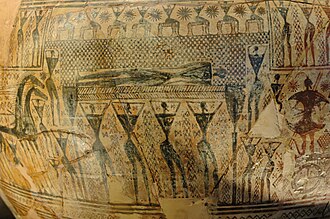
The history of Greece begins with the Greek Dark Ages (c. 1200–800 BC), a period characterized archaeologically by geometric designs on pottery. This era preceded the Archaic period (c. 800–500 BC), a transformative time when the polis emerged as the central political structure. Due to the mountainous terrain of the Greek peninsula, small, independent settlements flourished rather than a single centralized state.
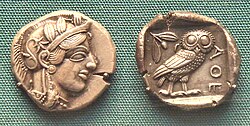
During the Archaic period, Greece saw the rise of tyrants and the establishment of widespread colonies. These settlements were not mere dependencies of a mother-city but were independent city-states in their own right. Contact with the Near East during this time spurred vital advancements, including the adoption of coinage and the development of the Greek alphabet.
The Classical Period: Hegemony and Conflict
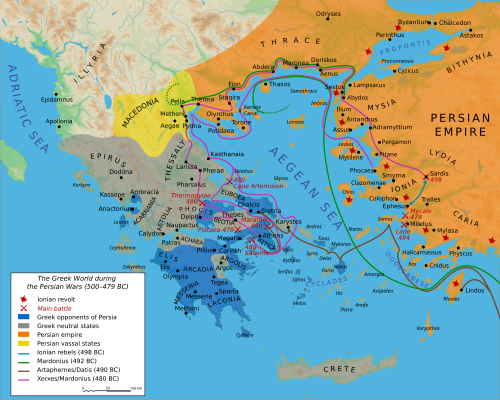
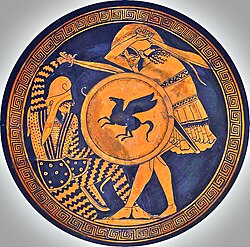
The Classical period (c. 480 BC–323 BC) is often viewed as the pinnacle of Greek culture, defined by a "classical" style of art and architecture. This era was shaped by intense conflict, beginning with the Greco-Persian Wars. Following decisive Greek victories at the battles of Salamis and Plataea, the Delian League was formed. Initially a defensive alliance, it eventually transformed into an Athenian empire as Athens leveraged its naval supremacy.
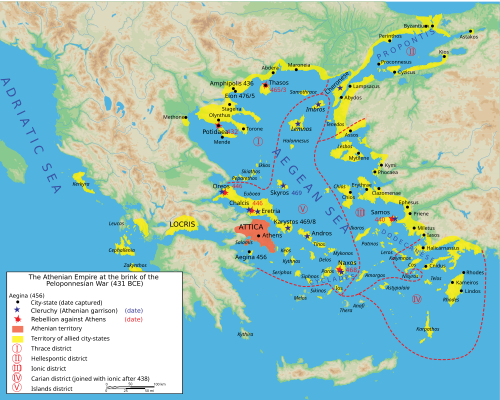
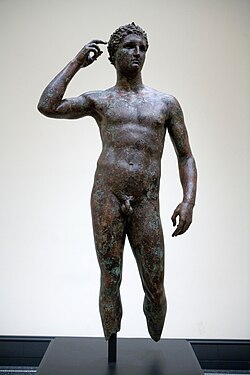
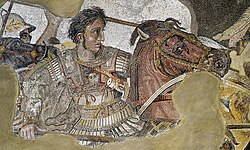
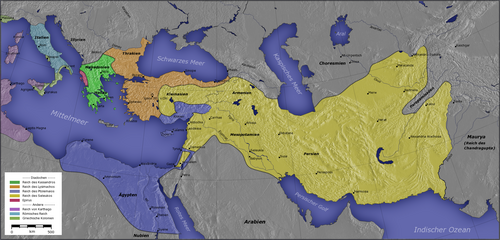
Political dominance shifted throughout the 4th century BC. After the Peloponnesian War, Spartan hegemony gave way to the rise of Thebes. However, the resulting power vacuum allowed the Kingdom of Macedon to ascend. Under Philip II, Macedon defeated a Greek alliance at the Battle of Chaeronea in 338 BC, eventually leading to the reign of his son, Alexander the Great.
![Marble bust of Pericles with a Corinthian helmet, Roman copy of a Greek original, Museo Chiaramonti, Vatican Museums; Pericles was a key populist political figure in the development of the radical Athenian democracy.[80]](/images/49/cb/49cb993e54c63f33890f11f814b9b173839d12a21fe8405b2a09f3d0081edd27.jpg)
The Hellenistic and Roman Eras
Following the death of Alexander the Great in 323 BC, the Hellenistic period began. During this time, Greek culture expanded deep into the Near East. This era lasted until the Roman conquest, which saw the gradual absorption of Greek territories. By 146 BC, after the Battle of Corinth, Greece fell under Roman rule, eventually becoming the province of Achaea under Augustus.
Society, Economy, and Technology
Political Structure and Law
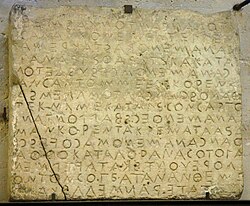
Greek governance evolved from early petty kingdoms and ceremonial kingships (basileus) toward aristocratic oligarchies. In some cities, like Athens, this transitioned into more complex systems, including elected magistracies known as archons. Legal frameworks also became more sophisticated, as evidenced by historical fragments like the Gortyn code in Crete.
Economic Prosperity and Warfare
At its height in the 5th and 4th centuries BC, Classical Greece possessed one of the most advanced pre-industrial economies. Urban workers in Athens, for instance, earned significantly higher daily wages in wheat than unskilled laborers in other contemporary regions. This wealth supported massive military endeavors, such as the Athenian navy, which utilized over 200 triremes—ships powered by 170 oarsmen each.
Scientific and Artistic Achievements
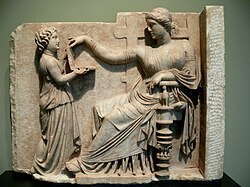
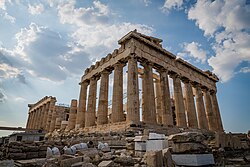
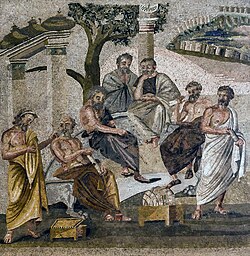
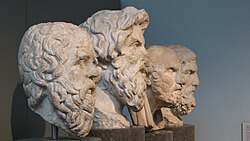
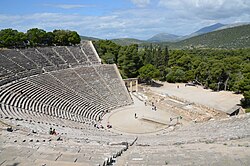
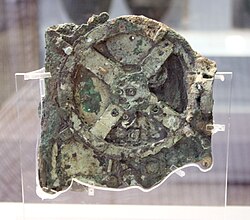
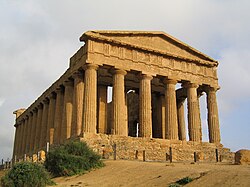
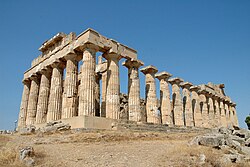
The Greeks made profound contributions to science, philosophy, and the arts. From the complex astronomical calculations possible with the Antikythera mechanism to the philosophical schools of Socrates and Plato, their intellectual reach was vast. Their architectural mastery is still visible in the ruins of temples and theaters across the Mediterranean.
| Period | Approximate Dates | Key Characteristics |
|---|---|---|
| Dark Ages | c. 1200–800 BC | Protogeometric and geometric pottery styles. |
| Archaic Period | c. 800–500 BC | Rise of the polis and Greek colonization. |
| Classical Period | c. 480–323 BC | Greco-Persian Wars, Athenian dominance, and Alexander the Great. |
| Hellenistic Period | 323–146 BC | Expansion of Greek culture into the Near East. |
| Roman Greece | 146 BC–330 AD | Integration into the Roman Republic and Empire. |

Frequently Asked Questions
What was a polis?
A polis was an independent city-state that served as the fundamental political unit in ancient Greece. Each polis typically functioned as its own sovereign entity with its own laws and government.
How did the Greek geography affect their politics?
The mountainous terrain of mainland Greece acted as a natural barrier, separating many settlements from one another. This encouraged the development of small, independent city-states rather than a single unified nation.
What characterized the Hellenistic period?
The Hellenistic period was defined by the spread of Greek culture and influence across the Near East following the conquests of Alexander the Great, lasting until the Roman conquest of the region.
Was ancient Greece a single country?
No. For most of its history, ancient Greece was a collection of independent city-states and communities that shared a common language and culture, but were only unified under a single rule during the Macedonian period.
What was the significance of the Delian League?
The Delian League began as a defensive alliance of Greek states against the Persian Empire, but it eventually evolved into an Athenian empire as Athens gained significant naval and political control over its allies.