Classical Antiquity: The Legacy of the Greco-Roman World
Classical antiquity, often referred to as the classical era or classical age, represents a pivotal epoch in European history spanning from the 8th century BC to the 5th century AD. This era followed the Greek Dark Ages and laid the cultural, political, and philosophical foundations of the Mediterranean basin. Defined by the interwoven civilizations of ancient Greece and Rome—collectively known as the Greco-Roman world—this period exerted a profound influence across Europe, North Africa, and West Asia.
The enduring impact of this era is visible not only in ancient ruins like the Parthenon and the Colosseum but also in the later intellectual revivals of the 14th-century Renaissance and the neo-classical movements of the 18th and 19th centuries.
Key Facts
- Timeframe: Approximately 8th century BC to 5th century AD.
- Core Civilizations: Ancient Greece and Ancient Rome.
- Geographic Reach: Europe, North Africa, and West Asia.
- Major Transitions: From the Archaic period and Classical Greece to the Roman Republic, the Roman Empire, and finally Late Antiquity.
- Cultural Legacy: Provided the basis for the Renaissance and modern Western legal and political systems.
The Archaic Period (c. 8th to 6th Centuries BC)
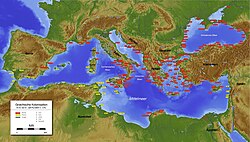
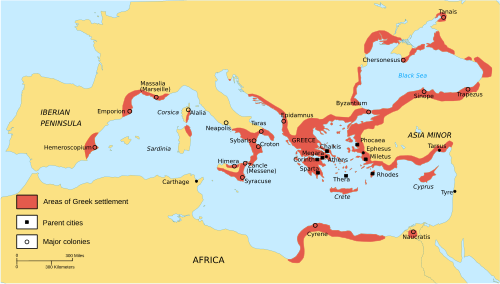
The dawn of classical antiquity was marked by a gradual resurgence of historical records following the Late Bronze Age collapse. The 8th and 7th centuries BC are considered protohistorical, as the earliest Greek alphabetic inscriptions began to appear. This era is traditionally anchored by the lifetime of the poet Homer and the establishment of the Ancient Olympic Games in 776 BC.
While Greece was emerging, other powers dominated the Mediterranean. The Phoenicians, expanding from Canaan, controlled trade by the 8th century BC. They founded Carthage in 814 BC, eventually establishing strongholds in Italy, Sicily, and Sardinia. Simultaneously, the Neo-Assyrian Empire expanded its reach, as evidenced by King Sargon II's victory over the kings of Cyprus in 709 BC.
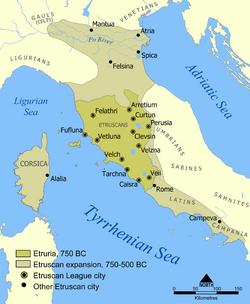
In Italy, this period saw the rise of the Etruscan civilization in the north and the early foundations of the Roman kingdom.
Classical Greece (5th to 4th Centuries BC)
The classical period of Greece is generally defined from the end of the Athenian tyranny in 510 BC to the death of Alexander the Great in 323 BC. This era was characterized by intense political shifts and legendary conflicts.
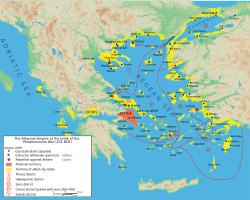
The Greco-Persian Wars (499–449 BC) liberated Greece, Macedon, Thrace, and Ionia from Persian rule. This victory elevated Athens to a position of dominance within the Delian League (an alliance of Greek city-states), which eventually sparked the Peloponnesian War (431–404 BC) against Sparta. While Sparta emerged victorious, its hegemony was short-lived, eventually giving way to Theban dominance following the Battle of Leuctra in 371 BC.
The era concluded with the rise of Macedon. Under Philip II, Macedon expanded its territory, setting the stage for his son, Alexander the Great. Alexander extended Macedonian power across the central Greek city-states and into the Persian Empire, reaching as far as Egypt and the borders of India. His death in 323 BC led to the fragmentation of his empire among his successors, the Diadochi, marking the start of the Hellenistic period.
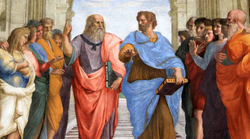
The Rise and Fall of Rome
The Roman Republic (5th to 1st Centuries BC)
The Roman Republic began around 509 BC after the overthrow of the monarchy. Over the next 450 years, Rome evolved from a regional power in Latium to the dominant force in Italy through the Samnite, Latin, and Pyrrhic Wars. Victory in the Punic and Macedonian Wars established Rome as a super-regional power by the 2nd century BC, leading to the acquisition of Asia Minor and Greece.
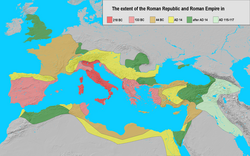
The Roman Empire (1st Century BC to 5th Century AD)
The transition from Republic to Empire was a gradual process of subversion through civil wars. By the reign of Trajan in AD 117, the Roman Empire reached its maximum territorial extension, controlling the entire Mediterranean, Britannia, Gaul, Dacia, Mesopotamia, and the Caucasus.
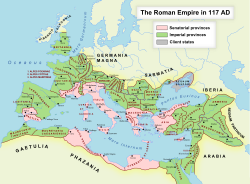
Late Antiquity and the Transition to the Middle Ages
The end of antiquity is a subject of historical debate, with several symbolic dates proposed: the deposition of the last Western Roman Emperor in 476, the closing of the Platonic Academy in 529, or the Muslim conquests between 634 and 718.
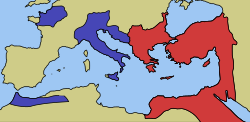
The Muslim conquests of Syria, Egypt, and North Africa severed the traditional economic and political links of the Mediterranean. While the Western Empire collapsed, the Eastern Roman Empire (Byzantine Empire) persisted. Its capital, Constantinople, remained the largest city in Europe and a bastion of classical scholarship, preserving Roman cuisine, law, and literature.
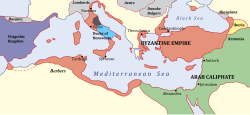
The eventual fall of Constantinople in 1453 saw refugees flee to the West, bringing preserved classical texts that helped ignite the Renaissance.
Summary of Classical Eras
| Period | Approximate Dates | Key Characteristics | Major Powers |
|---|---|---|---|
| Archaic Period | 8th – 6th Century BC | Resurgence of literacy, early colonization | Phoenicians, Early Greeks, Etruscans |
| Classical Greece | 5th – 4th Century BC | Democracy, Greco-Persian Wars, Philosophy | Athens, Sparta, Macedon |
| Hellenistic Period | 323 – 146 BC | Spread of Greek culture across Asia | Diadochi, Early Rome |
| Roman Republic | 509 – 1st Century BC | Expansion across Italy and Mediterranean | Roman Republic |
| Roman Empire | 1st Century BC – 5th Century AD | Imperial administration, maximum expansion | Roman Empire |
| Late Antiquity | 4th – 6th Century AD | Fragmentation, rise of Byzantium | Eastern Roman Empire, Early Caliphates |
Frequently Asked Questions
When exactly did classical antiquity end?
There is no single agreed-upon date. Historians suggest 476 AD (fall of the Western Roman Empire), 529 AD (closing of the Platonic Academy), or the 7th-century Muslim conquests that severed Mediterranean unity.
What is the difference between the Roman Republic and the Roman Empire?
The Republic was a system of government that began around 509 BC and lasted over 450 years. The Empire emerged in the 1st century BC following a series of civil wars, transitioning to a centralized imperial authority (the Principate).
Who were the Diadochi?
The Diadochi were the generals and successors of Alexander the Great who divided his vast empire among themselves after his death in 323 BC.
How did the Byzantine Empire preserve classical culture?
Constantinople remained a major urban center that maintained classical books, sculptures, and scholarly traditions long after the West had fallen. These were later rediscovered by Westerners or brought to Europe by refugees after 1453.
What was the Delian League?
The Delian League was an alliance of Greek city-states led by Athens after the Greco-Persian Wars, which eventually became an instrument of Athenian dominance, leading to conflict with Sparta.