The Dong-A Ilbo: A History of Korean Journalism and Resistance
The history of the Korean press is a mirror of the nation's struggle for sovereignty, identity, and democracy. Among the most influential voices in this journey is The Dong-A Ilbo, a newspaper that has evolved from a vanguard of the independence movement into one of South Korea's most prominent conservative media outlets. Its trajectory reflects the volatile shifts of the 20th century, from colonial suppression to the challenges of military dictatorship.
The Struggle for a Free Press under Japanese Rule
During the early Korean Empire, modern newspapers flourished, but the encroaching Empire of Japan systematically dismantled Korean sovereignty. By the time of official colonization in 1910, most Korean-owned papers were forced to close. For years, the Maeil sinbo—which was effectively operated by the Japanese colonial government—remained the only permitted Korean-language publication.
The tide shifted following the March First Movement of 1919, a nationwide protest against Japanese rule. To prevent further unrest, the colonial government eased restrictions, allowing a limited number of Korean-owned newspapers to launch. The Dong-A Ilbo was among the first three approved, beginning publication on April 1, 1920.
Founding and Rapid Growth
The newspaper was established by journalist Kim Seong-su and a staff of 78 people. With Pak Yŏnghyo as president and Chang Tŏksu as the first editor-in-chief, the paper expanded rapidly. Within its first month, it established offices in every province of Korea. Initially a four-page publication, it grew to twelve pages by 1936 and became the first Korean newspaper to publish both morning and evening editions.
The Dong-A Ilbo quickly became a prestigious institution and a primary venue for introducing foreign ideas to the Korean public. By 1928, its circulation reached 40,968, surpassing both the Maeil sinbo and The Chosun Ilbo.
Advocacy for Independence and Colonial Conflict
Throughout the colonial era, The Dong-A Ilbo served as a platform for the Korean independence movement, which frequently brought it into conflict with Japanese authorities. The paper faced multiple suspensions for publishing articles on protests and content deemed insulting to the Japanese Imperial Regalia.
The risks were not only professional but physical. In November 1920, journalist Chang Tŏkjun became the first Korean reporter killed in the line of duty while investigating a massacre of Koreans in Hunchun, Manchuria. Other incidents, such as the 1924 Sikdowon Incident, saw the paper's leadership threatened at gunpoint by pro-Japanese organizations after the publication of critical reports.
The Sohn Kee-chung Uniform Scandal
One of the most defiant acts in the paper's history occurred during the 1936 Berlin Olympics. When ethnic Korean marathoner Sohn Kee-chung won the gold medal, he was forced to wear a uniform featuring the Japanese flag. In a bold act of editorial resistance, The Dong-A Ilbo published a photo of Sohn with the Japanese flag digitally erased from his uniform. The retaliation was swift: ten journalists were arrested and tortured, and the paper was suspended until June 1937.
Forced Closure and the Path to Liberation
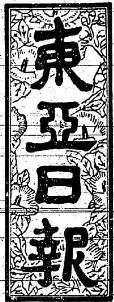
As the Second Sino-Japanese War began in 1937, repression intensified. The colonial government forced the paper to remove the mugunghwa (Hibiscus syriacus), the national symbol of Korea, from its logo. In 1940, the "One Province, One Company" policy forced the consolidation of regional press, leading to the forced closure of The Dong-A Ilbo on August 10, 1940.
The paper remained silent until after the liberation of Korea on August 15, 1945. With the support of the United States Army Military Government in Korea (USAMGIK), which facilitated the transfer of printing equipment from Japanese-owned papers, The Dong-A Ilbo resumed publication on December 1, 1945, aligning itself with right-leaning political factions.
War, Dictatorship, and the Fight for Press Freedom
The Korean War (1950–1953) caused further disruptions. The paper was forced to relocate to the provisional capital of Busan after the fall of Seoul, struggling to print even two-page issues. During this era, the paper's criticism of the Syngman Rhee administration's dictatorial tendencies led to its fifth indefinite suspension in 1955.
Under the military dictatorship of Park Chung Hee, the press faced strict page limits and censorship. By the 1970s, The Dong-A Ilbo launched the "Fight for Press Freedom." When the government censored an issue in October 1974, the paper responded with a public demand for liberty. The administration retaliated by pressuring advertisers to boycott the publication.
This resulted in the blank advertisement incident of December 1974, where the paper published issues devoid of ads for several months. The conflict culminated in 1975 with the firing of vocal journalists and a violent crackdown on staff hunger strikes. Following this period of turmoil, the paper shifted toward a more conservative, pro-government stance.
Key Facts
- Founded: April 1, 1920, by Kim Seong-su.
- Independence Role: Actively advocated for Korean sovereignty and the independence movement during Japanese rule.
- Historic Defiance: Erased the Japanese flag from Sohn Kee-chung's 1936 Olympic photo.
- Censorship: Suffered multiple suspensions under both Japanese colonial rule and the Syngman Rhee and Park Chung Hee administrations.
- Blank Ad Incident: A 1974-1975 event where government pressure led to a total loss of advertising revenue.
| Period/Year | Key Event | Outcome |
|---|---|---|
| 1920 | Founding | Launched as one of the first approved Korean-owned papers. |
| 1936 | Sohn Kee-chung Scandal | Flag erased from photo; journalists tortured; paper suspended. |
| 1940 | Forced Closure | Closed under the "One Province, One Company" policy. |
| 1945 | Resumption | Returned to print after liberation from Japan. |
| 1974-75 | Press Freedom Fight | Blank advertisement incident and mass staff firings. |
Frequently Asked Questions
Why was The Dong-A Ilbo suspended so many times?
The paper frequently published content that challenged the ruling authorities, whether it was the Japanese colonial government's restrictions or the dictatorial tendencies of later South Korean administrations.
What was the significance of the Sohn Kee-chung photo?
By erasing the Japanese flag from the gold medalist's uniform, the paper committed a symbolic act of national resistance, asserting Korean identity over Japanese colonial imposition.
What was the "blank advertisement incident"?
It was a form of economic censorship where the Park Chung Hee administration pressured companies to stop advertising in The Dong-A Ilbo to punish the paper for its demands for press freedom.
How did the paper's political leaning change over time?
While it began as a nationalist vanguard for independence, the turmoil and purges of the mid-1970s led the publication to become more conservative and pro-government.
Who was Kim Seong-su?
Kim Seong-su was the journalist who applied for the paper's creation and later served as the Vice President of South Korea.