Governor-General of Chōsen
The Governor-General of Chōsen was the chief administrator of the Government-General of Chōsen, a central administrative organ established by the Imperial government of Japan. Operating from 1910 to 1945, this position served as the primary authority over the Korean Peninsula following its formal annexation by the Empire of Japan.
The office was created shortly after the Japan–Korea Treaty of 1910, replacing the previous role of the Resident-General. Appointed directly from Tokyo, the Governor-General was accountable only to the Emperor of Japan. The scope of the role was vast, encompassing the management of infrastructure, culture, justice, and censorship, as well as the active suppression of the Korean independence movement.
Key Facts
- Duration: The office existed from October 1, 1910, until September 12, 1945.
- Authority: The Governor-General held sweeping plenipotentiary powers, including legislative and judicial oversight.
- Leadership: Most holders were ranking full generals of the Imperial Japanese Army, with Viscount Saitō Makoto (a retired admiral) being the sole exception.
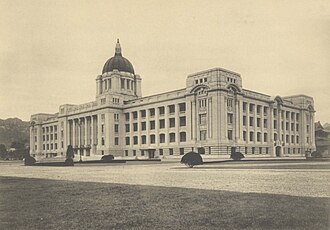
- Seat of Power: The administration was based in the Government-General Building in Keijō (modern-day Seoul).
- Succession: Following the abolition of the office, administration passed to the Soviet Civil Administration and the United States Army Military Government in Korea.
Administrative Structure and Residences
The Governor-General wielded unique power compared to other Japanese external possessions. While the role included immense administrative control, by 1944, the Governor-General no longer commanded the Imperial Japanese Army or Navy units stationed within Chōsen.
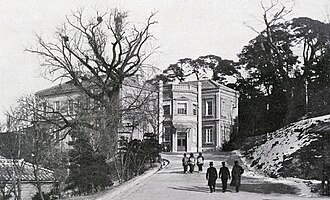
The physical seat of this power evolved over time. Initially, the Governor-General resided at Namsan. This changed upon the completion of the massive Government-General Building in Keijō in 1926, which served as the official headquarters until the end of the colonial period.
The administration also maintained a police organization that played a significant role in colonial control and was partly involved in the forced mobilization of Korean women as comfort women.
Political Intersections with the Japanese Premiership
There was a significant overlap between the leadership of Chōsen and the highest levels of the Japanese government. Four individuals who served as Governor-General also held the office of Prime Minister of Japan:
- Terauchi Masatake, Saitō Makoto, and Koiso Kuniaki served as Governor-General before becoming Prime Minister.
- Abe Nobuyuki served as Prime Minister prior to his appointment as Governor-General.
Additionally, Resident-General Itō Hirobumi had served four terms as Prime Minister before his appointment to Korea. Kazushige Ugaki was named prime minister-designate but never took office due to his inability to form a cabinet.
Summary of Governors-General
The following table outlines the succession of leaders who held the office of Governor-General of Chōsen.
| Name | Term(s) | Rank/Title |
|---|---|---|
| Terauchi Masatake | 1910–1916 | General Count |
| Hasegawa Yoshimichi | 1916–1919 | Gensui Count |
| Saitō Makoto | 1919–1927; 1929–1931 | Admiral Viscount |
| Ugaki Kazushige | 1927; 1931–1936 | General |
| Yamanashi Hanzō | 1927–1929 | General |
| Minami Jirō | 1936–1942 | General |
| Koiso Kuniaki | 1942–1944 | General (ret'd) |
| Abe Nobuyuki | 1944–1945 | General (ret'd) |
Post-War Legacy
Following Japan's defeat in World War II, the office was abolished on September 12, 1945. The Korean Peninsula was subsequently administered by the Republic of Korea and the Democratic People's Republic of Korea. A symbolic end to the colonial architectural legacy occurred on August 15, 1995, when the Government-General Building was demolished under the administration of South Korean President Kim Young-sam.
Frequently Asked Questions
Who was the first Governor-General of Chōsen?
The first holder of the position was General Count Terauchi Masatake, who took office upon the formation of the role on October 1, 1910.
What were the primary responsibilities of the Governor-General?
The Governor-General was responsible for the entire administrative ministry of the Chōsen region, including justice, culture, infrastructure, censorship, and the suppression of movements seeking Korean independence.
Who was the longest-serving Governor-General?
Viscount Saitō Makoto was the longest-serving, holding the position across two separate terms: from August 12, 1919, to April 14, 1927, and again from August 17, 1929, to June 17, 1931.
Did the Governor-General control the military?
While the position held sweeping administrative and legislative powers, as of 1944, the Governor-General did not command the Imperial Japanese Army or Navy units stationed in Chōsen.
What happened to the Government-General Building?
The building, which served as the seat of power in Keijō, was demolished on August 15, 1995, during the presidency of Kim Young-sam.