The Era of Japanese Colonial Rule in Korea (1910–1945)
Between 1910 and 1945, the Korean Peninsula underwent a period of profound and turbulent transformation under the administration of the Empire of Japan. This era, characterized by intense political struggle, rapid industrialization, and significant social upheaval, fundamentally reshaped the trajectory of Korean history. From the formal annexation in 1910 to the eventual liberation following Japan's surrender in 1945, the period remains a central pillar of modern East Asian studies.
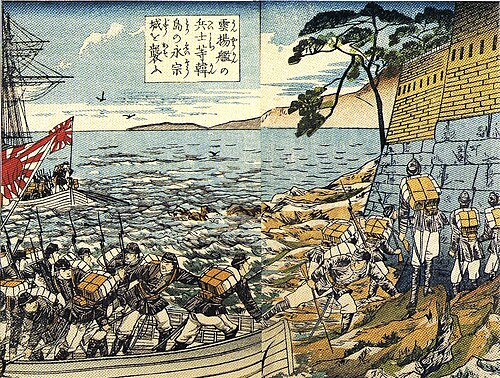
The Path to Annexation
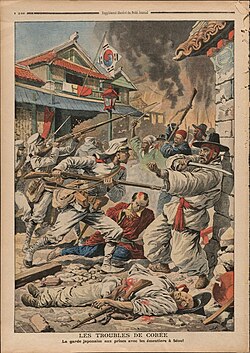
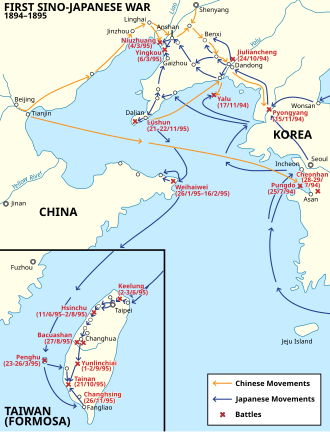
The transition from the Korean Empire to a Japanese colony was not an overnight event but the result of escalating geopolitical tensions. Following the Japan–Korea Treaty of 1876, various incidents—including the Imo Incident, the Kapsin Coup, and the Donghak Revolution—set the stage for increased Japanese influence. The First Sino-Japanese War further weakened regional resistance, leading to the establishment of a Japanese protectorate in 1905.
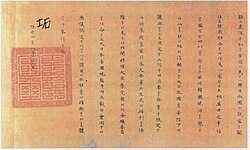
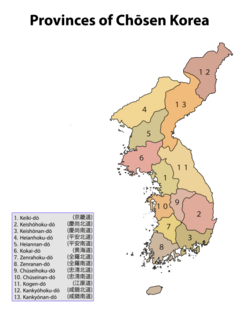
The formal end of Korean sovereignty occurred on 22 August 1910, when the annexation treaty was signed. By 29 August 1910, Japan had officially annexed Korea, establishing a colonial administration governed by a Governor-General. The capital was designated as Keijō (modern-day Seoul).
Colonial Administration and Governance
![In 1921, Japan turned a Korean royal cemetery into a golf course, with the graves still directly on the course. This occurred at what is now Hyochang Park.[61][62][63]](/images/7a/d5/7ad5fe3de58fb337007738d41da5258b2ae3631dcf671adc8ea298381c835831.jpg)
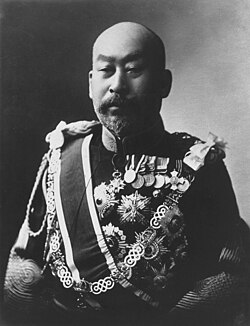
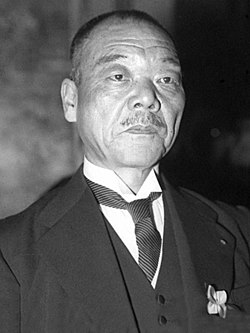
The Japanese administration was structured to maintain strict control over the peninsula. The Governor-General held supreme authority, with notable figures including Terauchi Masatake, the first Governor-General, and Kuniaki Koiso, who served during the height of World War II. The administration utilized a military police system to enforce order and manage the population.
A significant aspect of colonial policy was the attempt at cultural assimilation. This included the Sōshi-kaimei order, which mandated that Koreans adopt Japanese surnames. This policy aimed to integrate the Korean population into the Japanese imperial structure, a concept sometimes promoted through the notion of "Japan-Korea Cooperative Unity."
![Japan-Korea Cooperative Unity, World Leader. – The notion of racial and imperial unity of Korea and Japan gained widespread following among the literate minority of the middle and upper classes.[83]](/images/c5/72/c5723d3efa457f254b16097fef6a7c84cc3efc234b2b35e926467faa41e2e64f.png)
Resistance and the Independence Movement
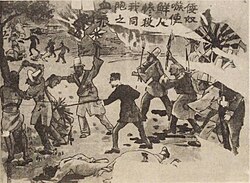
Despite the pressures of colonial rule, the Korean people maintained a persistent spirit of resistance. The March First Movement in 1919 served as a massive turning point, sparking widespread protests against Japanese rule. In response to such movements, the colonial government often employed harsh measures, including the suppression of religious groups.
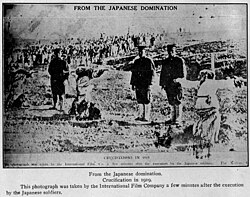
Resistance took many forms, including guerrilla warfare in Manchuria and Russia, and the establishment of the Provisional Government of the Republic of Korea in 1919. These movements sought to reclaim sovereignty and provide a political framework for a future independent nation.
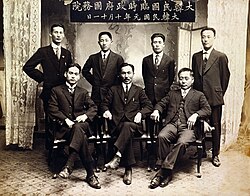
Economic and Social Transformation
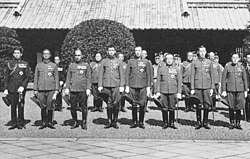
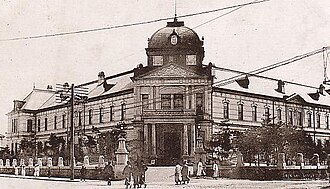
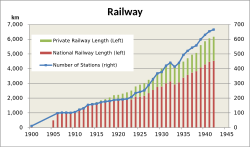
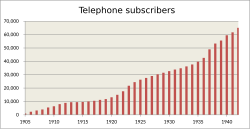
The colonial period saw significant shifts in the Korean economy and infrastructure. Japan implemented large-scale industrialization and expanded the railway network, such as the Keijō–Fuzan line, to facilitate movement and resource extraction. While these developments modernized certain sectors, they were primarily designed to serve the interests of the Japanese Empire.
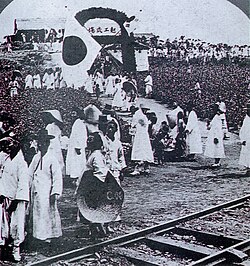
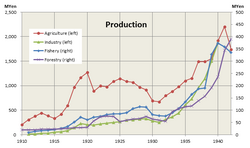
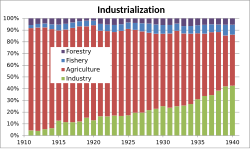
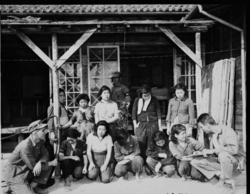
Land ownership and migration patterns also shifted significantly. The Oriental Development Company played a major role in managing land and resources. However, these economic shifts often came at a high human cost, including the forced mobilization of Korean labor and the mobilization of women into sexual slavery, known as "comfort women," during World War II.
Education and Demographics
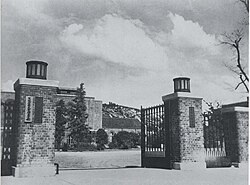
The educational landscape under Japanese rule was highly stratified. While the number of schools increased, the curriculum and access were heavily controlled. A vast majority of the population remained uneducated, with only a tiny fraction reaching university-level studies. This educational system was designed to facilitate assimilation and prepare a workforce for the colonial economy.
![Number of public regular schools (公立普通学校) and students under Japanese rule[191][192][193]](/images/9d/56/9d56e9708730b549cdf27da1d494cdc67dd043e837a6636fae53c6fe91a82782.webp)
![Enrollment rate of public regular schools (公立普通学校) under Japanese rule[194]](/images/aa/57/aa57f3efabc657dd06e221826230ee05febe682bd39a7a98f559a2dcb44c04a7.webp)
Key Facts
- Period of Rule: 1910 to 1945.
- Capital City: Keijō (now Seoul).
- Official Languages: Japanese and Korean.
- Major Resistance Event: The March First Movement (1919).
- End of Rule: Following the surrender of Japan on 2 September 1945.
Statistical Overview of Colonial Korea
| Category | Key Metric/Detail | Context |
|---|---|---|
| Education | 86.2% Uneducated | Reflects the limited access to formal schooling for the general population. |
| Military Labor | Increasing Applicants | Wartime mobilization saw a rise in applicants, though acceptance rates fluctuated. |
| Infrastructure | Railway Expansion | Significant growth in kilometers of railway to support industrial needs. |
| Administration | Governor-General | The highest authority in the colonial government. |
Frequently Asked Questions
What was the Sōshi-kaimei order?
The Sōshi-kaimei was an order issued in 1939 that required Koreans to adopt Japanese-style surnames, as part of a broader policy of cultural assimilation into the Japanese Empire.
How did the March First Movement impact Korean history?
The March First Movement of 1919 was a massive non-violent protest against Japanese colonial rule. It became a symbol of Korean independence and led to the establishment of the Provisional Government of the Republic of Korea.
What was the role of the Governor-General in Korea?
The Governor-General was the supreme administrative and military leader of the Korean colony, appointed by the Japanese Emperor to oversee all aspects of governance, from law enforcement to economic policy.
What happened to Korea after the Japanese surrender in 1945?
Following Japan's surrender on 2 September 1945, the colonial administration was disestablished. The peninsula subsequently entered a period of transition, eventually leading to the division into North and South Korea.
How did education function during the colonial period?
Education was highly controlled and stratified. While elementary and vocational schools existed, the vast majority of the population (over 86%) remained uneducated, and higher education was limited to a very small percentage of the population.